
The Role of Regents in Developing Regional Infrastructure
Gusti Ayu Tita P
12 Agustus 2026
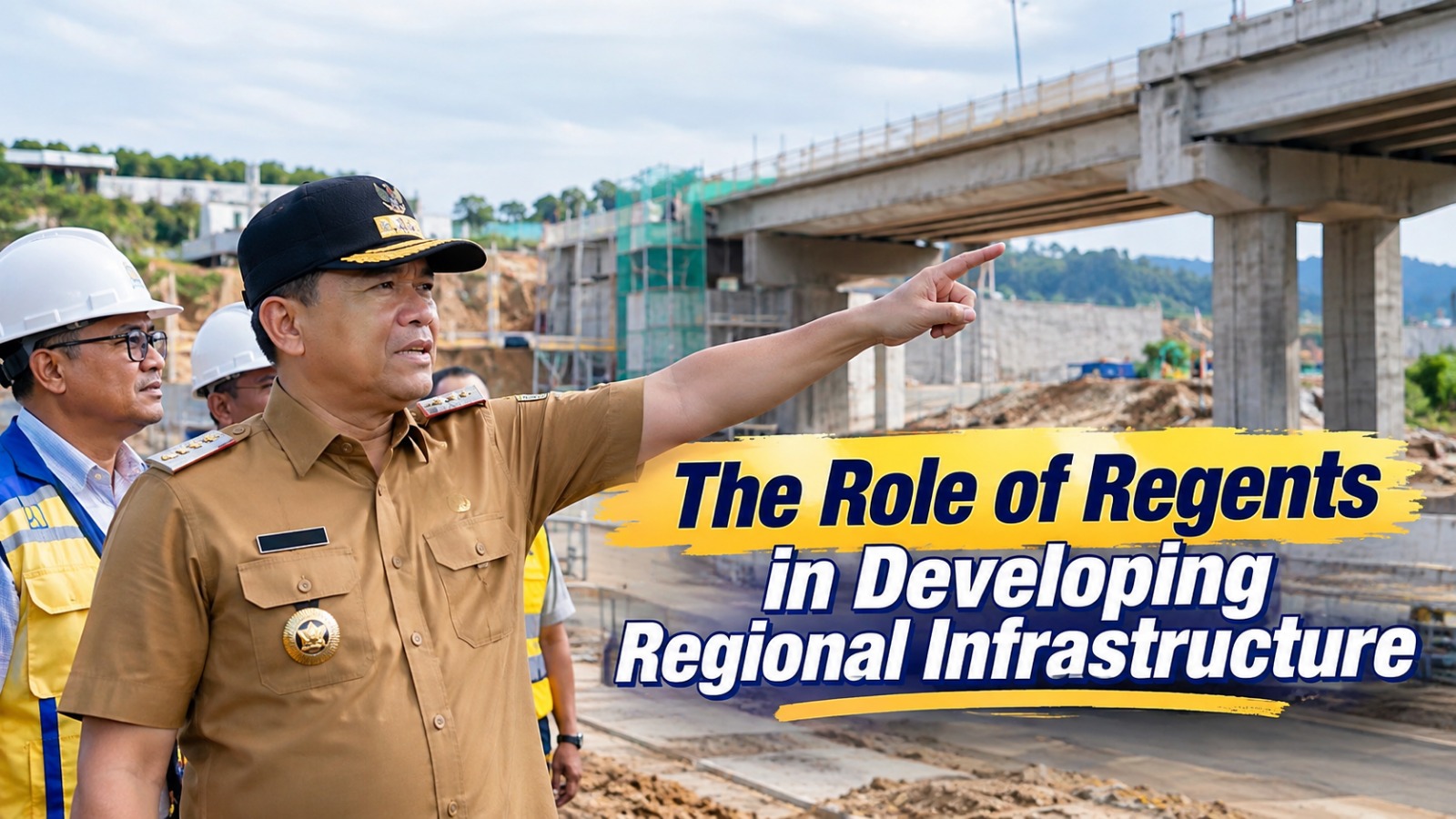
Regional infrastructure is one of the most important foundations for economic growth and community welfare. Roads, bridges, drainage systems, public buildings, clean water facilities, transportation networks, and digital connectivity can directly affect how people live and work. A regent has an important role in planning, coordinating, implementing, and monitoring infrastructure development within the authority of the regional government. Good infrastructure can improve access to education, healthcare, markets, employment, and public services. Therefore, regional infrastructure development should be treated as a long-term priority.
UNDERSTANDING THE ROLE OF A REGENT IN INFRASTRUCTURE DEVELOPMENT
A regent leads the regional government and coordinates infrastructure programs carried out by relevant regional agencies. The regent does not personally build every project but provides leadership and direction so that development priorities are properly planned and implemented. Infrastructure decisions should consider regional needs, development plans, available resources, technical requirements, and applicable regulations. Strategic infrastructure planning can help ensure that limited public resources are directed toward projects with meaningful benefits.
Infrastructure needs vary from one region to another. Some regencies may require better agricultural roads, while others may prioritize urban transportation, tourism infrastructure, water systems, or digital connectivity. A regent needs to understand these differences when determining regional priorities. Consultation with communities and technical agencies can provide important information about infrastructure conditions. This helps create development programs based on real local needs.
IMPROVING ROADS AND BRIDGES
Roads and bridges are essential for connecting communities with economic and public services. Good transportation infrastructure can make it easier for residents to reach schools, hospitals, markets, workplaces, and government facilities. A regent can prioritize the construction, rehabilitation, and maintenance of regional roads and bridges according to applicable responsibilities. Road infrastructure can also reduce transportation costs for local businesses and farmers.
Rural areas may require particular attention because poor road conditions can isolate communities and limit economic opportunities. Farmers, fishermen, and small businesses may experience difficulties transporting products when transportation networks are inadequate. Better connectivity can help local products reach wider markets more efficiently. Infrastructure planning should also consider safety, durability, and long-term maintenance. Strong road networks can contribute to regional economic development.
DEVELOPING CLEAN WATER AND SANITATION SYSTEMS
Access to clean water and adequate sanitation is closely connected to public health and quality of life. A regent can support regional programs that improve water supply, sanitation facilities, drainage, and environmental health within the government's authority. Communities without reliable access to these services may face greater health and social challenges. Clean water infrastructure should therefore be considered an important component of regional welfare.
Infrastructure development should also account for population growth and environmental conditions. Water resources need to be managed responsibly so that supply remains sustainable. Sanitation systems should be properly maintained to prevent environmental pollution and health risks. Community education can complement infrastructure investment by encouraging responsible water and sanitation practices. Better basic infrastructure can improve community health and living standards.
SUPPORTING DIGITAL CONNECTIVITY
Modern regional development increasingly depends on digital connectivity. Internet access can support education, business, government services, communication, and employment opportunities. A regent can support efforts to improve digital infrastructure within the regional government's role and coordinate with other relevant institutions and service providers. Digital infrastructure can help communities participate more actively in the modern economy.
The digital divide can become a serious challenge when some areas have limited connectivity. Rural and remote communities may need additional attention to ensure that digital development is more inclusive. Infrastructure programs should be accompanied by digital literacy so residents can use available technology effectively. Public institutions can also use connectivity to expand access to digital services. Better internet access can strengthen regional competitiveness and social inclusion.
DEVELOPING PUBLIC FACILITIES
Public facilities such as schools, healthcare centers, markets, government offices, transportation facilities, and community spaces support daily activities. A regent can coordinate programs to construct, rehabilitate, or maintain appropriate public facilities based on regional priorities. Public infrastructure should be safe, functional, accessible, and suitable for community needs. Facility planning should consider both current demand and future population changes.
Public facilities should also be distributed fairly across different areas. Concentrating development in one location can make it difficult for residents in other communities to access essential services. Local conditions and population distribution should therefore be considered when determining infrastructure priorities. Proper maintenance is equally important after a facility has been built. Well-managed facilities can provide long-term benefits for community welfare.
SUPPORTING AGRICULTURE AND LOCAL INDUSTRIES
Infrastructure plays a major role in supporting productive economic sectors. Agricultural roads, irrigation-related infrastructure where applicable, storage facilities, marketplaces, electricity, transportation, and internet connectivity can improve the efficiency of local businesses. A regent can prioritize infrastructure that supports important regional industries according to development plans and available resources. Economic infrastructure can help producers connect with suppliers and customers.
For agricultural communities, transportation and supporting infrastructure can reduce losses and improve market access. Local industries can also benefit from reliable electricity, water, logistics, and communication systems. Infrastructure investment should be coordinated with economic development programs so that facilities support actual productive activities. This can increase the impact of public investment. Strong infrastructure can help create local employment and business opportunities.
PROMOTING BALANCED REGIONAL DEVELOPMENT
Infrastructure development should help reduce differences between urban centers and rural or remote communities. Regions with inadequate infrastructure may face greater barriers to education, healthcare, employment, and business opportunities. A regent can use regional development data to identify areas that require additional infrastructure attention. Balanced regional development can provide more communities with access to essential facilities and economic opportunities.
Prioritization does not necessarily mean every area receives the same type or amount of infrastructure. Projects should be based on needs, population, accessibility, urgency, and expected public benefits. Transparent planning can help citizens understand why certain projects are prioritized. Community participation can also provide valuable information about local conditions. This approach can make infrastructure development more equitable and effective.
ENSURING QUALITY AND SAFETY
Infrastructure projects must meet appropriate technical, safety, and quality requirements. Poorly planned or constructed infrastructure can create safety risks and waste public resources. A regent should ensure that regional agencies follow applicable procurement, planning, construction, and monitoring procedures. Infrastructure quality should be considered throughout the project cycle rather than only after construction is completed.
Monitoring is important to identify problems early. Technical inspections, progress evaluations, and appropriate documentation can support better project management. After completion, infrastructure should be maintained according to its intended use and technical requirements. Citizens can also provide information about visible problems through official channels. Quality control helps ensure that public infrastructure investment provides lasting value.
CONSIDERING ENVIRONMENTAL SUSTAINABILITY
Infrastructure development can affect land, water, ecosystems, and local communities. A regent therefore needs to consider environmental impacts and applicable environmental requirements when supporting regional projects. Sustainable infrastructure should provide economic and social benefits without creating unnecessary long-term environmental damage. Planning should take local environmental conditions and disaster risks into account.
Climate-related hazards can also threaten infrastructure. Floods, landslides, erosion, drought, and other risks may damage roads and public facilities. Appropriate risk assessment and resilient design can help reduce potential losses. Environmental protection should be integrated into regional development rather than treated as a separate issue. Sustainable planning can make infrastructure more resilient and beneficial for future generations.
INVOLVING THE COMMUNITY
Community participation can improve infrastructure planning and monitoring. Residents often understand local conditions because they use roads, public facilities, water systems, and other infrastructure every day. A regent can encourage appropriate consultation before and during major development projects. Community participation can help identify priorities and potential problems early.
Public communication is also important during implementation. Citizens should receive appropriate information about project objectives, schedules, and potential impacts within the framework of applicable regulations. Feedback mechanisms can help authorities respond to problems and improve project management. Community involvement can also encourage residents to take better care of completed facilities. Cooperation between government and citizens can strengthen the long-term value of regional infrastructure.
CONCLUSION
Regents have an important leadership role in developing regional infrastructure that supports economic growth and community welfare. Key priorities can include roads and bridges, clean water and sanitation, digital connectivity, public facilities, economic infrastructure, balanced development, quality control, environmental sustainability, and community participation. Infrastructure projects should be based on reliable data, clear priorities, applicable regulations, and long-term planning. Construction must also be followed by proper maintenance and evaluation. With responsible leadership and effective coordination, regional infrastructure can become a strong foundation for a more connected, prosperous, resilient, and developed region.
About the Author
Gusti Ayu Tita P
Author — STEKOM University
An active author focused on academic issues, educational technology, and human resource development in the campus environment.















