The Role of Regents in Promoting Digital Government Services
Gusti Ayu Tita P
12 Agustus 2026
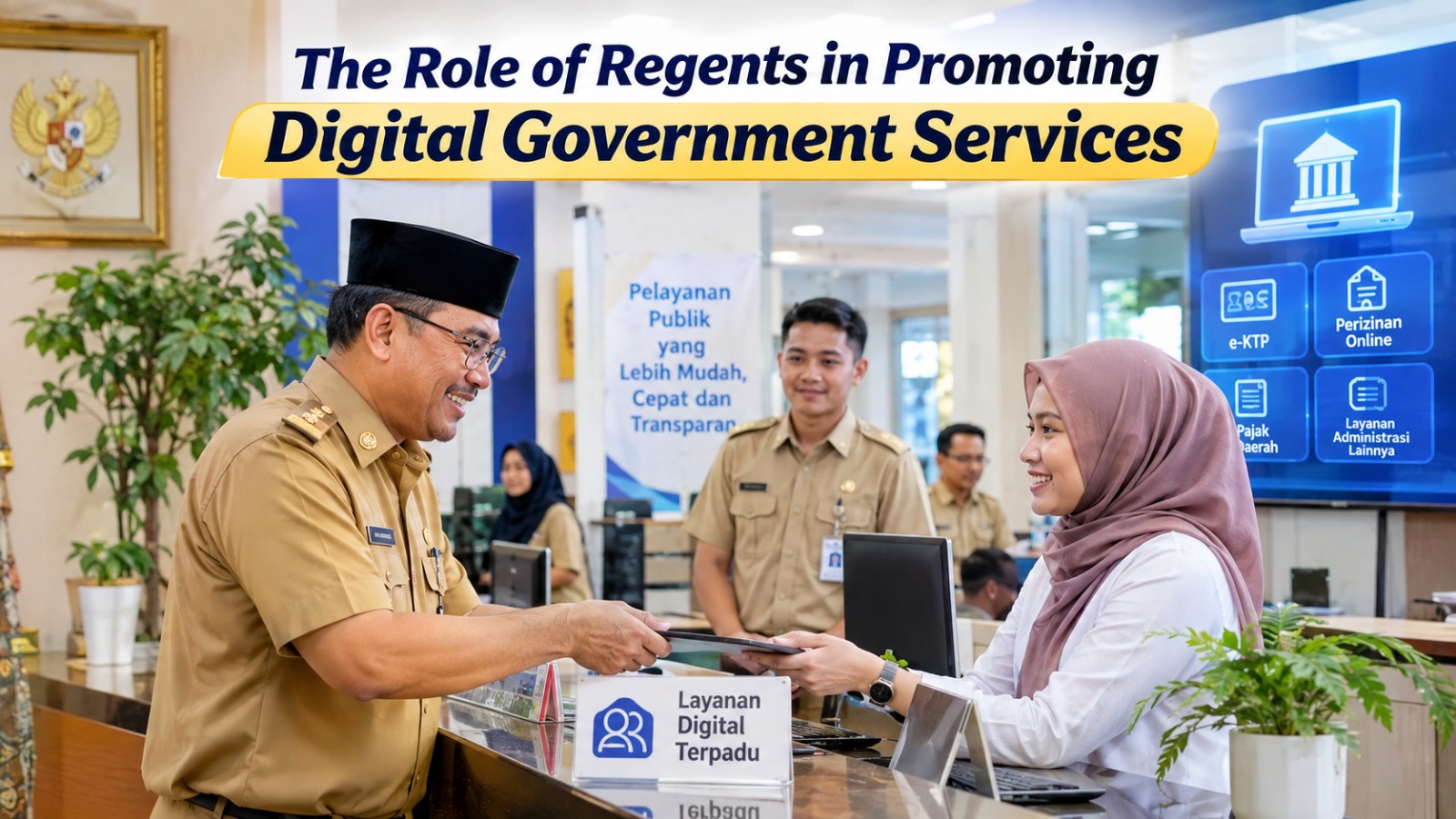
Digital technology has changed the way governments deliver services to citizens. Regional governments can use technology to make administrative processes faster, improve access to information, and strengthen communication with communities. A regent has an important leadership role in supporting digital transformation within the responsibilities of regional government. Properly implemented, digital government services can make public administration more efficient, transparent, accessible, and responsive. However, digital transformation must also consider infrastructure, digital literacy, data security, and equal access.
UNDERSTANDING DIGITAL GOVERNMENT SERVICES
Digital government services involve the use of technology to support government administration and provide services to citizens. These services can include online administrative applications, digital information systems, complaint platforms, electronic documents, public information portals, and other appropriate digital solutions. A regent can encourage regional agencies to adopt technology where it can genuinely improve service delivery. Digital government should focus on solving real administrative and community needs rather than simply introducing new technology.
Each region has different levels of technological readiness. Some communities may already have reliable internet access, while others may still face connectivity challenges. Regional government therefore needs to understand local conditions before expanding digital services. Careful planning can ensure that digital transformation is practical, inclusive, and sustainable.
IMPROVING ACCESS TO PUBLIC SERVICES
One major advantage of digital government is the ability to make certain public services easier to access. Citizens may be able to submit applications, obtain information, or track administrative processes without repeatedly visiting government offices. This can save time and reduce unnecessary transportation costs. Accessible public services can be particularly useful for residents who live far from regional government offices.
Digital services should be designed with users in mind. Instructions need to be clear, processes should not be unnecessarily complicated, and platforms should be accessible through commonly used devices. Government agencies should also provide appropriate assistance for residents who experience difficulties using digital platforms. A citizen-centered approach can make online government services more useful and effective.
SIMPLIFYING ADMINISTRATIVE PROCEDURES
Traditional administrative processes can sometimes involve multiple steps and physical documents. Digital systems can help reduce repetitive procedures by allowing information to be submitted and processed electronically where legally and technically appropriate. A regent can encourage regional agencies to review their processes before converting them into digital systems. Digital administrative services should simplify procedures rather than merely transfer complicated processes to an online platform.
Government agencies should clearly explain requirements, processing times, and service procedures. Digital tracking systems can also allow citizens to understand the status of their applications. This can reduce uncertainty and unnecessary visits to government offices. Properly designed systems can improve government service efficiency.
STRENGTHENING DIGITAL INFRASTRUCTURE
Digital government cannot function effectively without adequate infrastructure. Reliable internet connections, computer systems, servers, electricity, and other technological resources are important components of digital services. A regent can support efforts to strengthen regional digital infrastructure within the authority of the local government. Digital infrastructure development can also benefit schools, businesses, healthcare facilities, and communities.
Remote areas may face greater challenges in accessing reliable connectivity. Regional government should consider these differences when planning digital programs and coordinate with relevant institutions and service providers. Public facilities may also become important access points for residents who lack reliable connectivity at home. Better infrastructure can help reduce the digital divide.
DEVELOPING DIGITAL SKILLS AMONG PUBLIC SERVANTS
Technology alone cannot guarantee successful digital transformation. Government employees need sufficient skills to operate digital platforms, manage information, communicate online, and resolve technical problems. A regent can support appropriate training and professional development for public servants. Digital skills development can improve employees' ability to deliver modern government services.
Training should be practical and connected to actual work responsibilities. Employees should understand not only how to operate systems but also how digital processes affect citizens. They should also learn basic cybersecurity practices and responsible data handling. Skilled public servants can make digital public services more reliable and user-friendly.
IMPROVING DIGITAL LITERACY AMONG CITIZENS
Some residents may not be familiar with online government platforms. Elderly citizens, people in remote areas, and individuals with limited digital experience may require additional assistance. A regent can support digital literacy programs that help residents understand how to access and use government services safely.
Public information campaigns can explain how digital platforms work and where citizens can obtain assistance. Government offices can also provide support for residents who need help completing online procedures. Digital literacy should be presented in simple language and practical examples. This can help ensure that digital transformation does not exclude vulnerable communities.
STRENGTHENING DATA SECURITY AND PRIVACY
Digital government involves the management of information that may require appropriate protection. Government agencies need systems and procedures that support data security, privacy, access control, and responsible information management according to applicable laws and regulations. A regent should encourage agencies to take data protection seriously when developing digital services.
Employees also need to understand the risks associated with weak passwords, unauthorized access, phishing, malware, and improper handling of information. Technical systems should be maintained and reviewed regularly. Citizens should receive appropriate information about how their data is processed when using digital services. Strong security practices can increase public confidence in digital government.
PROVIDING INTEGRATED GOVERNMENT SYSTEMS
Regional government agencies often manage different types of information and services. If systems are completely disconnected, citizens may have to provide the same information repeatedly. Appropriate system integration can help agencies coordinate their work while respecting legal requirements and data protection principles. Integrated government systems can improve administrative efficiency.
Integration should be carefully planned because different agencies may use different technologies and procedures. Government needs clear standards for data management and system interoperability. Staff should also understand their responsibilities when using shared systems. Better integration can support more coordinated regional government services.
USING DIGITAL PLATFORMS FOR PUBLIC FEEDBACK
Technology can create new ways for citizens to communicate with government. Online complaint platforms, surveys, feedback forms, and information channels can make it easier for residents to report problems or provide suggestions. A regent can encourage regional agencies to use appropriate digital feedback systems to understand community concerns.
Receiving feedback is only the beginning. Government agencies need to review complaints, identify recurring problems, and take appropriate action. Citizens should receive clear information about how complaints are handled where possible. An effective feedback system can help improve services and strengthen government responsiveness.
PROMOTING TRANSPARENCY THROUGH DIGITAL SERVICES
Digital platforms can also improve access to public information. Regional governments can publish appropriate information about programs, services, regulations, development activities, and other public matters through official channels. Digital transparency can help citizens better understand government activities.
Information should be accurate, updated, and presented in a way that residents can understand. Government agencies should avoid publishing confusing or incomplete information. Appropriate transparency can encourage greater public participation and accountability. This can contribute to trustworthy regional governance.
SUPPORTING THE LOCAL DIGITAL ECONOMY
Digital government development can have wider economic benefits. Improved internet connectivity and digital skills can help local entrepreneurs access online markets, digital payments, remote work, and other economic opportunities. A regent can coordinate digital government initiatives with broader programs for local economic development.
SMEs can benefit from training in digital marketing, e-commerce, online customer service, and digital financial tools. Young people can also gain skills that are increasingly relevant to modern employment. Government, educational institutions, businesses, and technology organizations can cooperate to strengthen local digital capabilities. This can help create a more competitive regional economy.
EVALUATING DIGITAL GOVERNMENT PROGRAMS
Digital services should be evaluated regularly to determine whether they actually improve public services. A system may be technologically advanced but still difficult for citizens to use. Regional government should monitor indicators such as service usage, processing time, technical problems, user feedback, and accessibility. Digital service evaluation can identify areas that need improvement.
Evaluation should also consider costs, maintenance, security, and long-term sustainability. Systems that are no longer effective may need to be upgraded or redesigned. Feedback from citizens and public servants can provide useful information about practical problems. Continuous improvement can help ensure that digital government remains effective and relevant to community needs.
CONCLUSION
Regents have an important role in promoting digital government services that improve the relationship between regional government and citizens. Important steps include strengthening digital infrastructure, simplifying administrative procedures, developing public servant skills, improving digital literacy, protecting data, integrating systems, collecting feedback, and increasing transparency. Digital transformation should remain inclusive so that residents without strong technological access or skills are not left behind. Regular evaluation is also necessary to ensure that technology delivers real public benefits. With responsible leadership and careful planning, digital government services can create faster, more accessible, transparent, and citizen-focused regional administration.
About the Author
Gusti Ayu Tita P
Author — STEKOM University
An active author focused on academic issues, educational technology, and human resource development in the campus environment.