The Role Of Rental Houses In Meeting Community Housing Needs
Gusti Ayu Tita P
21 Agustus 2026
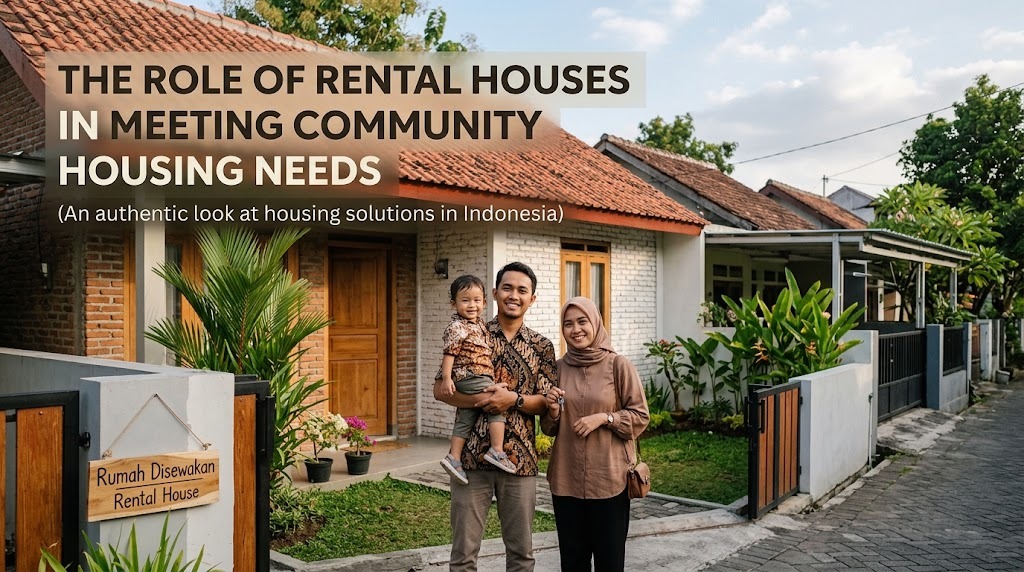
Housing is one of the basic needs that supports people's safety, comfort, and quality of life. However, not everyone has the financial ability or personal circumstances to purchase a home. Rental houses provide an alternative that allows individuals and families to obtain suitable accommodation without making a large property purchase. This option is particularly relevant in areas where housing prices continue to rise. As cities develop and populations become more mobile, rental housing can play an important role in meeting community housing needs.
RENTAL HOUSES PROVIDE MORE ACCESSIBLE HOUSING
One of the main roles of rental houses is to provide housing for people who cannot or do not want to purchase property. Buying a home often requires substantial savings, a down payment, and long term financial commitments. Renting generally requires a lower initial financial commitment, although tenants still need to consider deposits and regular rental payments. Affordable rental options can therefore make housing more accessible to different groups of people.
Rental housing can serve workers, students, young adults, newly married couples, and families who are still building their financial stability. It can also help people who have recently moved to a new city for employment or education. By providing different property sizes and price ranges, the rental market can accommodate diverse housing preferences. Housing accessibility becomes stronger when rental options are available in suitable locations and at reasonable prices.
SUPPORTING PEOPLE WITH MOBILE LIFESTYLES
Modern employment and education often require people to move between cities or regions. A worker may relocate because of a new job, while a student may need accommodation near a university for several years. Purchasing a home may not be practical when someone expects to move again in the future. Rental housing offers greater flexibility for people with changing locations and circumstances.
Rental agreements can provide temporary or medium term housing without requiring tenants to sell a property when they move. This flexibility can reduce some of the difficulties associated with relocation. It also allows people to experience different neighborhoods before deciding where they may want to settle permanently. Flexible housing is increasingly valuable in communities with active employment and education opportunities.
HELPING PEOPLE LIVE NEAR JOB OPPORTUNITIES
The availability of rental houses near employment centers can help workers access job opportunities more easily. People may choose to rent closer to their workplaces rather than purchase expensive homes in the same area. Shorter commutes can reduce travel time and transportation expenses. This can make employment in major urban centers more accessible to people with different income levels.
Rental properties near business districts, industrial areas, and commercial centers can also support local economic activity. Workers who live nearby may spend more time and money within the surrounding community. However, rental prices in strategic areas can still be high, so affordability remains an important consideration. Well-planned rental housing can help connect residents with employment while supporting efficient urban development.
SUPPORTING STUDENTS AND YOUNG ADULTS
Students and young adults are another group that can benefit significantly from rental housing. Many students need accommodation near universities or training institutions but may not have the resources to purchase property. Renting provides access to temporary accommodation while they complete their education. After graduation, they can move to another location based on their employment opportunities.
Young adults who are beginning their careers may also prefer renting while they establish financial independence. They can focus on building savings and developing their careers before deciding whether home ownership is appropriate. This does not mean renting is always cheaper in the long term, but it can provide useful flexibility during an early stage of life. Rental housing for students and workers can therefore support education and career mobility.
REDUCING PRESSURE ON URBAN HOUSING
Large cities often experience high demand for housing because many people move there for work, education, and business opportunities. When affordable housing supply is limited, residents may face high property prices and increasing living costs. Rental houses can add another housing option for people who cannot afford to buy property in the city. A diverse housing supply can help communities accommodate different income groups.
Rental housing alone cannot solve every urban housing problem. Local governments, developers, property owners, and communities may need to work together to increase the supply of safe and reasonably priced homes. Housing policies should also consider infrastructure, transportation, and access to essential services. Balanced housing development is important for creating cities that are inclusive and functional.
PROVIDING DIFFERENT TYPES OF HOUSING
Community housing needs are not identical for everyone. A single worker may need a small house, while a family may require several bedrooms and additional outdoor or storage space. Rental markets can offer different property sizes, layouts, locations, and price levels. This variety allows residents to select housing based on their circumstances.
Rental properties can also include different levels of facilities and services. Some may be simple and affordable, while others may offer additional features for families or professionals. The key is ensuring that the available options correspond with actual community demand. Housing diversity can make the rental sector more responsive to changing population needs.
SUPPORTING FAMILIES DURING DIFFERENT LIFE STAGES
Families often experience changes in their housing needs over time. A newly married couple may initially need a smaller property, while a growing family may later require more space. Renting allows families to move to a more suitable home without immediately committing to property ownership. Flexible family housing can therefore support different stages of household development.
Rental housing can also be useful for families experiencing temporary financial difficulties or major life changes. It may provide a stable place to live while they reorganize their finances or employment situation. However, tenants need to choose properties carefully and ensure that rental payments remain affordable. Stable and suitable accommodation is essential for family wellbeing.
CREATING OPPORTUNITIES FOR LOCAL PROPERTY OWNERS
Rental houses do not only benefit tenants. Property owners can also generate income by renting out homes that they own. Rental income may help owners cover property maintenance, taxes, financing costs, and other expenses, depending on their individual circumstances. Responsible property management can also contribute to the availability of housing within a community.
However, landlords have responsibilities toward their tenants and should maintain properties in safe and habitable condition according to applicable laws and agreements. Fair rental practices can build better relationships between property owners and residents. Well-managed properties can contribute positively to the surrounding neighborhood. Responsible landlords therefore play an important role in maintaining a healthy rental housing market.
ENCOURAGING BETTER URBAN PLANNING
The development of rental housing can influence how cities grow. When rental homes are located near transportation, employment, schools, healthcare, and other essential facilities, residents can access daily services more efficiently. This can support compact and connected communities and potentially reduce unnecessary travel. Good planning also helps prevent housing developments from becoming isolated from important infrastructure.
Urban planners need to consider rental housing as part of broader housing strategies. New developments should include adequate roads, drainage, public transportation, sanitation, and community facilities. Housing quality should also be considered alongside quantity. Integrated housing planning can help cities respond to population growth while maintaining a good quality of life.
CONCLUSION
Rental houses play an important role in meeting community housing needs by providing accessible, flexible, and diverse housing options. They can support workers, students, families, young adults, and people who need temporary accommodation during periods of transition. Rental housing can also help people live closer to employment and essential services while giving property owners opportunities to generate income. However, successful rental housing systems require responsible property management, fair agreements, suitable infrastructure, and attention to affordability. With effective planning and cooperation, rental housing can become an important part of a more inclusive and sustainable community.
About the Author
Gusti Ayu Tita P
Author — STEKOM University
An active author focused on academic issues, educational technology, and human resource development in the campus environment.