The Role of Royal Palaces in Preserving Javanese Arts
Gusti Ayu Tita P
4 September 2026
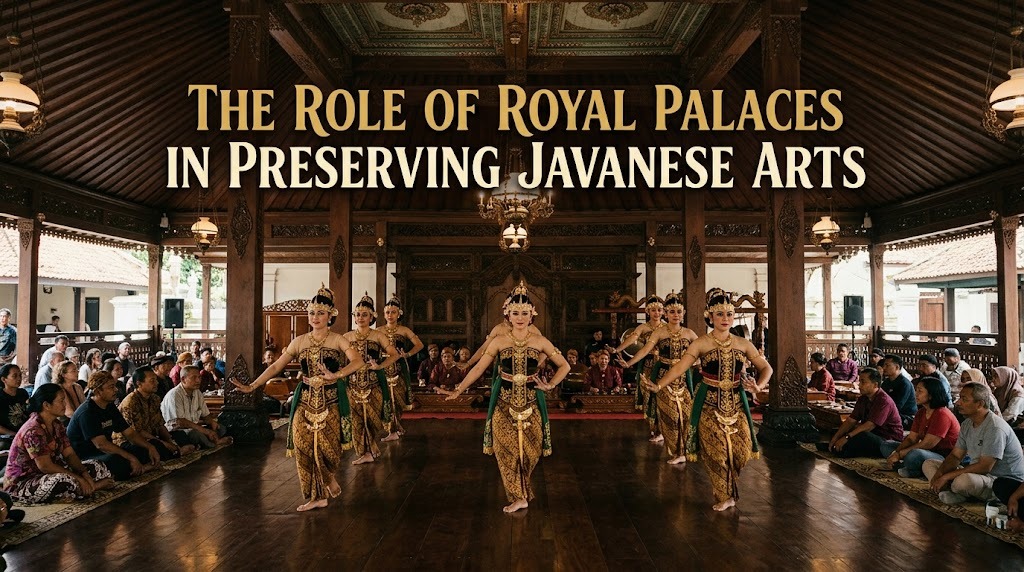
Royal palaces have an important place in the cultural history of Java. Beyond their role as historic residences, these palaces have become centers for traditional arts, cultural education, ceremonies, and heritage preservation. For generations, Javanese royal families and palace communities have helped maintain artistic traditions that continue to be practiced today. From classical dance and gamelan music to traditional ceremonies, many forms of Javanese art remain closely connected to palace culture.
The existence of royal palaces also provides an opportunity for younger generations and visitors to understand the values behind traditional Javanese arts. Cultural preservation is not only about protecting old buildings but also about keeping traditions alive through practice and education.
ROYAL PALACES AS CULTURAL CENTERS
Javanese royal palaces have historically functioned as important cultural centers where various forms of art developed and were passed from one generation to another. Palaces such as the Yogyakarta Palace and the Surakarta Palace have strong connections with traditional Javanese performing arts. Artists, musicians, dancers, and cultural practitioners have traditionally gathered around these environments to learn and practice their skills. This relationship has helped create an artistic ecosystem that supports the continuity of traditional culture.
The palace environment also provides a space where traditional values can be introduced to younger generations. Respect, discipline, harmony, and responsibility are often reflected in the practice of Javanese arts. Through regular performances, cultural events, and educational activities, royal palaces help ensure that these values remain relevant in modern society.
PRESERVING JAVANESE DANCE AND MUSIC
One of the most visible contributions of royal palaces is the preservation of Javanese dance and gamelan music. Traditional dances performed in palace environments often have distinctive movements, costumes, music, and symbolic meanings. Some dances are associated with important palace ceremonies and cultural events. Their continued performance allows dancers and audiences to experience artistic traditions that have developed over many generations.
Gamelan is another essential part of palace culture. The traditional ensemble uses instruments such as gong, kendang, metallophones, and other percussion instruments to create distinctive musical patterns. Palace communities have helped maintain knowledge about traditional musical structures, performance techniques, and ceremonial uses. As a result, gamelan remains an important part of Javanese cultural identity both in Indonesia and internationally.
PROTECTING TRADITIONAL CEREMONIES AND VALUES
Traditional ceremonies are another important way royal palaces preserve Javanese arts. Many palace ceremonies combine music, dance, clothing, architecture, language, and symbolic objects into a single cultural experience. These elements are not simply forms of entertainment because they often represent values, beliefs, and historical memories. By continuing selected traditional ceremonies, palace institutions help keep these cultural practices visible to the public.
Ceremonies can also teach younger generations about the meaning of cultural heritage. Participants learn that traditional arts are connected to social relationships and community responsibilities. The continuity of these practices depends on active participation, not merely on preserving objects in museums. This makes palace ceremonies an important part of living heritage.
TEACHING TRADITIONAL ARTS TO NEW GENERATIONS
Cultural preservation requires knowledge to be transferred from experienced practitioners to younger people. Royal palaces can support this process through dance training, music practice, cultural performances, workshops, and other educational activities. Young artists can learn directly from people who understand traditional techniques and the cultural meanings behind them. This kind of direct learning helps prevent traditional knowledge from disappearing.
Education also allows traditional arts to adapt carefully to changing times. Young practitioners may introduce new audiences to Javanese culture through schools, cultural events, tourism programs, and digital platforms. However, adaptation should still respect the historical context and essential values of the original traditions. In this way, modernization can become a tool for cultural preservation rather than a threat to tradition.
PALACES AS DESTINATIONS FOR CULTURAL TOURISM
Royal palaces also contribute to cultural preservation through heritage tourism. Visitors can explore palace architecture, traditional performances, historical collections, ceremonies, and local customs. These experiences can increase public appreciation of Javanese culture and encourage people to learn more about its history. Tourism can also provide economic opportunities for artists, guides, craftsmen, and communities connected to cultural activities.
However, cultural tourism needs to be managed responsibly. Traditional performances and ceremonies should not be treated only as commercial attractions because they have cultural and historical significance. Respect for local customs and palace traditions is essential when presenting them to visitors. Responsible tourism can help create a balance between public access, economic benefits, and the protection of cultural heritage.
CONCLUSION
Royal palaces play a significant role in preserving Javanese arts by supporting dance, gamelan music, traditional ceremonies, cultural education, and heritage tourism. Their importance extends beyond historic buildings because they can serve as living spaces where cultural knowledge continues to be practiced and transmitted. Through the involvement of artists, palace communities, younger generations, and cultural visitors, traditional arts can remain meaningful in modern society.
Preserving Javanese arts requires continuous participation and appreciation from many groups. Royal palaces can provide an important foundation for this effort, while communities and younger generations help ensure that these traditions continue to develop. By understanding and respecting palace heritage, people can contribute to keeping the richness of Javanese culture alive for future generations.
About the Author
Gusti Ayu Tita P
Author — STEKOM University
An active author focused on academic issues, educational technology, and human resource development in the campus environment.