The Role of Schools in Shaping the Nation’s Character
Gusti Ayu Tita P
23 Juli 2026
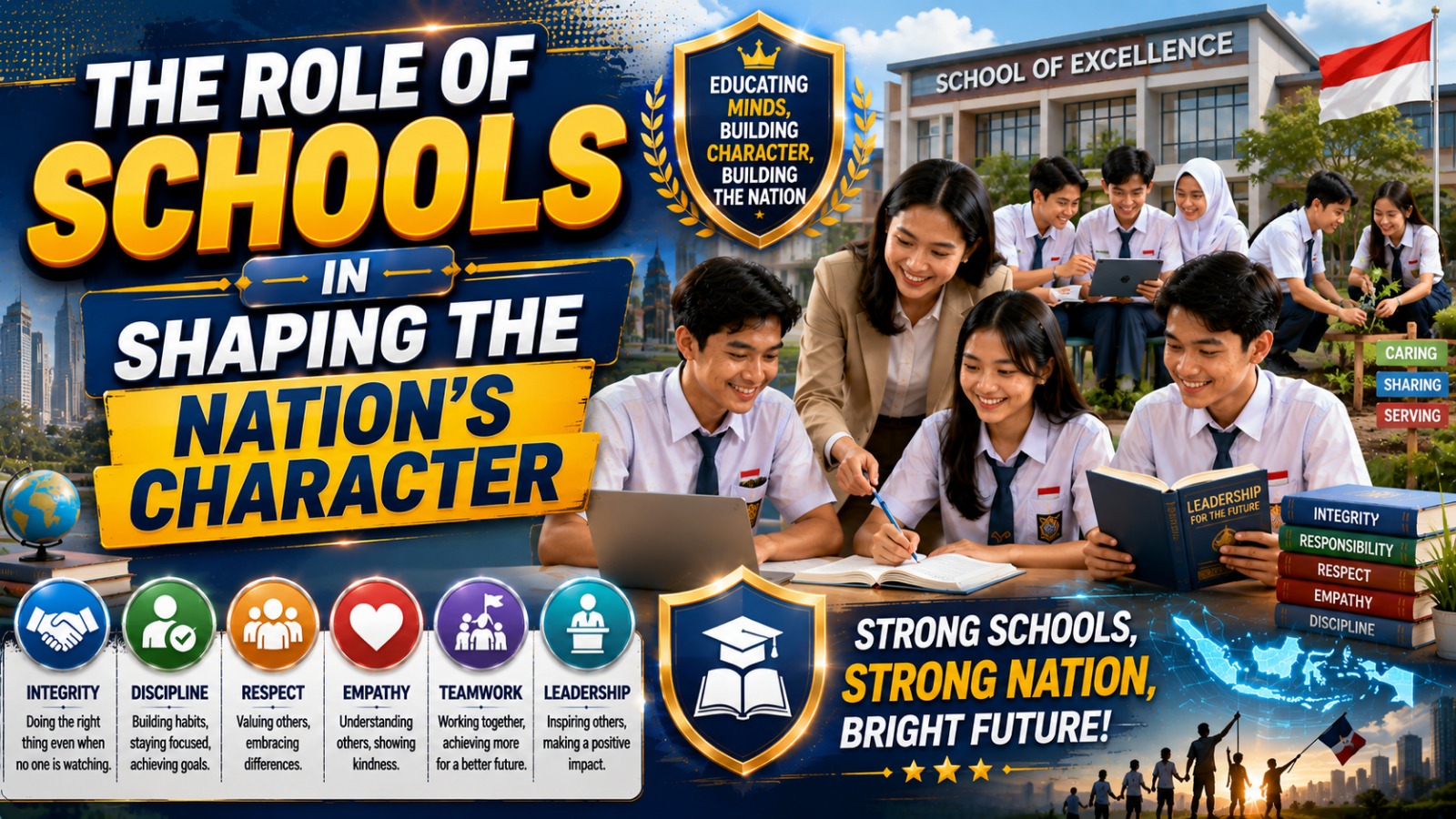
Schools play a crucial role in shaping the character of the younger generation and building the future of a nation. Education is not only about academic achievement but also about developing moral values, discipline, responsibility, and positive behavior. Through character education, schools help students become individuals who are intelligent, ethical, and ready to contribute positively to society.
In the modern digital era, students face many challenges influenced by technology, social media, and changing lifestyles. Without strong character values, young people may struggle to make wise decisions and maintain positive behavior. Therefore, schools have a significant responsibility in guiding students toward becoming responsible and morally strong citizens.
WHAT IS CHARACTER EDUCATION?
Character education is the process of teaching moral values, ethics, and positive attitudes through learning activities and daily habits. Its goal is to shape individuals who not only excel academically but also demonstrate integrity, empathy, honesty, and responsibility.
Character education is essential because it helps students build a strong foundation for personal growth and future success.
WHY SCHOOLS PLAY AN IMPORTANT ROLE?
Schools are one of the main environments where children spend most of their time. Teachers and school communities greatly influence students’ attitudes and behavior.
Some reasons why schools are important in shaping character include:
- Schools provide structured learning environments
- Teachers become role models for students
- Schools teach discipline and responsibility
- Students learn social interaction and teamwork
- Schools encourage positive habits and leadership
By creating supportive environments, schools can help students develop strong moral values and positive personalities.
IMPORTANT CHARACTER VALUES TAUGHT IN SCHOOLS
Schools help students understand and practice important values that shape responsible citizens.
HONESTY
Honesty teaches students to speak the truth, avoid cheating, and build trust with others.
DISCIPLINE
Discipline helps students manage time, follow rules, and stay focused on their goals.
RESPONSIBILITY
Students learn to take responsibility for their actions, assignments, and behavior.
RESPECT
Respect encourages students to appreciate differences and maintain healthy relationships with others.
EMPATHY
Empathy helps students understand the feelings of others and develop kindness and compassion.
TEAMWORK
Through group activities and projects, students learn cooperation and communication skills.
THE ROLE OF TEACHERS IN CHARACTER DEVELOPMENT
Teachers are not only educators but also mentors who guide students in developing positive behavior. Students often imitate the attitudes and actions of their teachers.
Teachers can support character education by:
- Demonstrating positive behavior
- Encouraging respectful communication
- Providing moral guidance
- Motivating students to do their best
- Creating inclusive and supportive classrooms
Positive teacher-student relationships can greatly influence students’ emotional and social development.
THE IMPORTANCE OF SCHOOL CULTURE
A positive school culture helps students feel safe, respected, and motivated to learn. School rules, activities, and traditions can strengthen character development.
Schools that promote kindness, discipline, and cooperation often create healthier learning environments and reduce negative behavior among students.
CHARACTER EDUCATION IN THE DIGITAL ERA
Technology has transformed education and communication. While digital tools provide many learning opportunities, they also present challenges such as cyberbullying, misinformation, and digital addiction.
Schools must teach digital ethics to help students use technology responsibly and respectfully. Digital responsibility includes:
- Respecting others online
- Avoiding harmful content
- Protecting personal information
- Using social media wisely
- Preventing plagiarism and cheating
Teaching digital ethics is now an essential part of character education.
SCHOOL ACTIVITIES THAT SUPPORT CHARACTER BUILDING
Many school activities can help strengthen students’ character and leadership skills.
EXTRACURRICULAR ACTIVITIES
Sports, arts, and clubs teach teamwork, discipline, and responsibility.
COMMUNITY SERVICE
Social activities encourage empathy, kindness, and care for others.
GROUP PROJECTS
Collaborative learning helps students improve communication and cooperation skills.
LEADERSHIP PROGRAMS
Student organizations and leadership training build confidence and responsibility.
CHALLENGES FACED BY SCHOOLS
Schools often face challenges in implementing character education effectively. Some common challenges include:
- Negative influence from social media
- Lack of parental involvement
- Peer pressure among students
- Excessive gadget use
- Limited moral guidance outside school
Because of these challenges, cooperation between schools, families, and communities is very important.
THE ROLE OF PARENTS AND COMMUNITIES
Character education becomes more effective when schools work together with parents and communities. Families should reinforce positive values taught at school through daily habits and communication.
Communities can also support young people by creating safe and positive social environments.
BENEFITS OF CHARACTER EDUCATION FOR THE FUTURE
Strong character provides long-term benefits for students and society. Young people with positive character are more likely to become responsible leaders, productive workers, and caring citizens.
Character education also helps reduce negative behavior and encourages social harmony within communities.
CONCLUSION
Schools have a vital role in shaping the nation’s character through education, discipline, and moral guidance. By teaching honesty, responsibility, empathy, and digital ethics, schools help prepare students for future challenges in the modern world.
With support from teachers, parents, and communities, schools can create a generation that is intelligent, responsible, and committed to building a better future for society.
About the Author
Gusti Ayu Tita P
Author — STEKOM University
An active author focused on academic issues, educational technology, and human resource development in the campus environment.