
The Role Of Sea Transportation In Supporting Indonesian Trade
Gusti Ayu Tita P
11 Agustus 2026
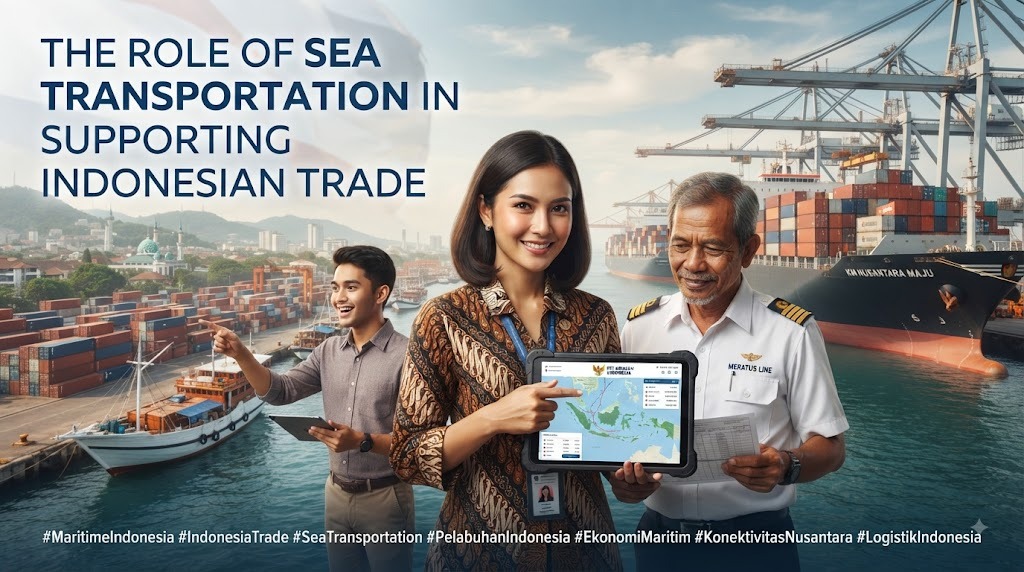
Indonesia is an archipelagic country with thousands of islands connected by extensive sea routes. This geographical condition makes sea transportation an important part of the national trade system. Ships can carry large amounts of goods between regions, making them suitable for long-distance distribution. Sea routes also connect production centers, ports, industrial areas, and consumer markets. Therefore, developing efficient sea transportation is essential for supporting Indonesian trade.
Sea transportation does not only support domestic distribution but also plays an important role in international trade. Indonesian exports and imports depend on ports and shipping networks to move goods between countries. The efficiency of ships, ports, logistics systems, technology, and human resources affects the overall performance of maritime trade. When these elements work together effectively, transportation costs and delivery times can be reduced. This can improve the competitiveness of Indonesian products in both domestic and international markets.
THE ROLE OF SEA TRANSPORTATION IN INDONESIAN TRADE
Sea transportation serves as a major connection between different regions of Indonesia. Ships can transport large quantities of goods more efficiently, especially over long distances. This makes maritime transportation important for moving raw materials, food products, industrial goods, vehicles, and other commodities. Reliable shipping services help maintain the supply of goods between islands. As a result, sea transportation supports the stability of Indonesia’s trade and distribution system.
Sea transportation is also essential for connecting Indonesia with international markets. Export goods are transported through ports before reaching destinations overseas. Imported products and raw materials enter Indonesia through the same maritime network. Efficient shipping services can help businesses manage their supply chains more effectively. Therefore, a strong maritime transportation system is closely connected to the growth of Indonesian trade.
SUPPORTING INTERISLAND GOODS DISTRIBUTION
Indonesia has production and consumption centers spread across many islands. This geographical condition creates a strong need for efficient interisland distribution. Ships can transport goods from areas with high production to regions that need additional supplies. Maritime routes are especially important for areas that have limited access to land transportation. Efficient distribution can help maintain the availability of goods across the country.
Many products, including food, construction materials, machinery, vehicles, and consumer goods, are transported by sea. Large vessels can carry significant quantities in a single trip, which can help reduce transportation costs per unit. However, distribution efficiency depends on shipping schedules, port facilities, weather conditions, and connections with land transportation. Any disruption in one part of the system can affect the entire supply chain. For this reason, maritime transportation needs to be managed as an integrated system.
SUPPORTING EXPORT AND IMPORT ACTIVITIES
Sea transportation plays a major role in Indonesia’s export and import activities. Cargo and container ships carry Indonesian products to international markets. Agricultural products, fisheries, minerals, energy resources, and manufactured goods can be transported through maritime routes. At the same time, Indonesia imports raw materials, machinery, consumer products, and other goods through international shipping networks. International trade depends heavily on reliable maritime transportation.
Efficient export and import activities require modern ports and effective cargo handling systems. Long waiting times at ports can increase logistics costs and reduce business competitiveness. Digital systems can help improve documentation, cargo tracking, and communication between companies and port authorities. Better coordination can also reduce delays during loading and unloading. These improvements can make Indonesian trade more efficient and competitive.
CREATING EMPLOYMENT OPPORTUNITIES
The maritime transportation sector creates employment in many areas. Shipping companies require crew members, engineers, administrative workers, logistics specialists, and other professionals. Ports also provide jobs in cargo handling, security, maintenance, customer service, and terminal management. The growth of maritime trade can create additional opportunities in warehousing and land transportation. Maritime employment can therefore contribute to local and national economic development.
The sector also creates demand for supporting businesses. Ship maintenance companies, logistics providers, equipment suppliers, warehouses, and transportation services can grow around major maritime hubs. Education and training institutions can also provide programs to prepare workers for maritime careers. Improving workforce skills is important as technology becomes more common in shipping and port operations. A stronger maritime workforce can support the long-term development of Indonesian trade.
SUPPORTING REGIONAL ECONOMIC GROWTH
Sea transportation can connect local economies with larger domestic and international markets. Businesses in coastal and island regions can use maritime routes to distribute agricultural products, fisheries, handicrafts, and other local goods. Better access to markets can increase sales opportunities for local businesses. Maritime connectivity can therefore help reduce economic isolation between regions.
Port development can also encourage economic activity around port areas. Warehouses, logistics services, transportation companies, and other businesses may grow as trade activities increase. However, development should be planned carefully to protect local communities and the environment. Economic benefits should reach small businesses and local workers rather than being concentrated in a limited number of companies. Well-planned maritime development can support more inclusive regional growth.
DIGITAL TECHNOLOGY IN MARITIME TRADE
Technology is changing how maritime transportation supports trade. Digital systems can be used to manage ship schedules, cargo information, shipping documents, and logistics activities. Tracking technology allows companies to monitor shipments during transportation. This information helps businesses estimate arrival times and manage inventory more accurately. Digital logistics can make maritime trade more transparent and efficient.
Data analysis can also help shipping companies identify more efficient routes and reduce fuel consumption. Port operators can use digital systems to manage ship arrivals and cargo movements. Automated processes can reduce manual work and minimize administrative errors. However, digital transformation requires skilled workers and reliable communication networks. Cybersecurity must also be strengthened because maritime trade increasingly depends on connected digital systems.
CHALLENGES FACING INDONESIAN SEA TRANSPORTATION
Despite its important role, Indonesian sea transportation still faces several challenges. Port infrastructure and service quality are not the same in every region. Limited facilities can cause delays in loading, unloading, and cargo distribution. Weather conditions can also affect shipping schedules and vessel operations. In addition, some ports still need stronger connections with roads and other forms of transportation.
Another challenge is the need to improve operational efficiency and workforce skills. Shipping companies need to adopt suitable technologies while maintaining high safety standards. Ports must also improve their services to handle growing trade volumes. Cooperation between government agencies, port operators, shipping companies, and businesses is necessary to address these issues. With proper planning, maritime challenges can become opportunities for improvement.
STRATEGIES TO IMPROVE SEA TRANSPORTATION
Improving sea transportation requires continuous investment in infrastructure and services. Ports should be developed according to regional trade needs and cargo volumes. Better connections between ports, roads, railways, warehouses, and industrial areas can improve the movement of goods. Digital systems can simplify administrative processes and improve information sharing. Safety standards must remain a priority throughout the development process.
Workforce development is equally important. Maritime workers need regular training in technology, safety procedures, logistics, and operational management. Shipping companies can use performance data to identify areas that need improvement. The government can support innovation and investment through effective policies and regulations. Integrated maritime strategies can help create a more efficient and competitive transportation system.
THE FUTURE OF SEA TRANSPORTATION AND INDONESIAN TRADE
The future of sea transportation will increasingly depend on digital technology and sustainable solutions. Smart ships, automated systems, artificial intelligence, and real-time data can improve shipping efficiency. Modern ports can use digital platforms to manage cargo and vessel operations more effectively. Cleaner technologies can also help reduce emissions from maritime activities. The future of maritime transportation will focus on efficiency, technology, safety, and sustainability.
Indonesia has significant opportunities to strengthen its maritime trade because of its geographic position and extensive sea routes. Continued investment in ports, shipping technology, logistics systems, and workforce development will be important. Better maritime connectivity can strengthen domestic distribution while supporting export and import activities. If these developments are managed consistently, Indonesia can improve its position in international trade. Sea transportation can become an even stronger foundation for Indonesia’s economic growth.
CONCLUSION
Sea transportation plays a strategic role in supporting Indonesian trade, from interisland distribution to international export and import activities. Ships can transport large quantities of goods efficiently, making them essential for a country with a vast and dispersed geography. Ports connect maritime transportation with roads, warehouses, industries, and consumer markets. The sector also creates employment and supports economic development in coastal and island communities.
Strengthening maritime transportation requires modern infrastructure, efficient ports, digital technology, skilled workers, strong logistics systems, and effective regulations. Government and private-sector cooperation is essential to overcome infrastructure and operational challenges. Technology can help reduce costs, improve cargo visibility, and increase the efficiency of shipping and port operations. With continuous improvement, sea transportation can strengthen Indonesia’s connectivity and competitiveness in global trade.
About the Author
Gusti Ayu Tita P
Author — STEKOM University
An active author focused on academic issues, educational technology, and human resource development in the campus environment.















