
The Role Of Social Media In Increasing Local Brand Popularity
Gusti Ayu Tita P
31 Agustus 2026
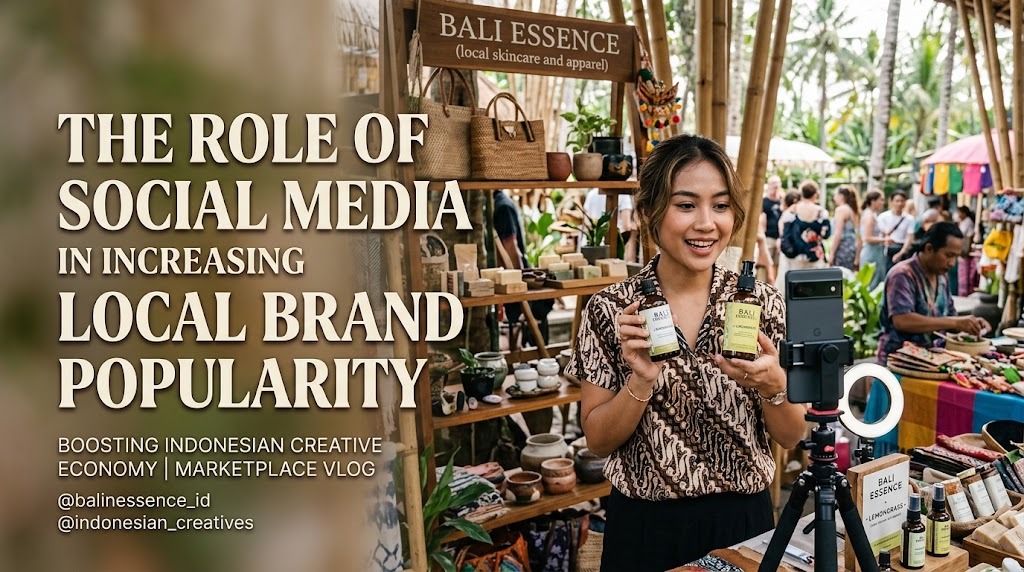
Social media has become an important communication channel for local brands to introduce their products and reach potential customers. Platforms such as Instagram, TikTok, Facebook, and YouTube allow businesses to communicate with audiences without relying entirely on traditional advertising. Even small businesses can use social media to showcase products, share stories, and interact with customers. This makes social media an accessible tool for increasing brand popularity.
The impact of social media is not limited to increasing the number of followers. When managed strategically, it can help businesses build brand awareness, customer engagement, trust, and loyalty. Local brands can also use social media to understand consumer preferences and receive direct feedback. Consistent and relevant communication can gradually strengthen the position of a brand in the market.
INCREASING BRAND AWARENESS
One of the main benefits of social media is its ability to increase brand awareness. Content can reach people who have never encountered a local brand before. Attractive product photos, short videos, educational posts, and informative captions can introduce a business to a wider audience. Repeated exposure can help consumers remember the brand when they need a particular product.
Local brands should maintain a consistent identity across their social media accounts. Logo, colors, visual style, tone, and brand messages should create a recognizable impression. Consistency makes it easier for audiences to identify the brand among many competitors. Over time, stronger awareness can create more opportunities for consumers to consider the brand.
REACHING A WIDER AUDIENCE
Social media allows local businesses to reach consumers beyond their immediate geographic area. A business that originally serves one city can attract attention from customers in other regions. Digital reach gives local brands opportunities to expand their markets without immediately opening physical stores in new locations. This can be especially useful for businesses that sell products that can be shipped easily.
Content can also spread beyond a brand's existing followers when users share, comment on, or recommend it. Engaging content has the potential to reach new communities organically. However, businesses should still understand their target audience instead of trying to reach everyone. Relevant audiences are more valuable than simply achieving a large number of views.
CREATING ENGAGING CONTENT
Content is one of the main factors that determines how audiences interact with a local brand. Businesses can create product demonstrations, tutorials, behind the scenes videos, customer stories, educational posts, and entertaining content. Different formats can be tested to discover what audiences find most useful. Content should provide value rather than consist only of repeated sales messages.
Visual quality is also important because social media is highly dependent on images and videos. However, brands do not always need expensive equipment to create effective content. Clear information, authentic presentation, and creative ideas can make simple content attractive. Consistency in publishing can also help maintain audience interest.
BUILDING DIRECT CUSTOMER INTERACTION
Social media provides local brands with opportunities for direct communication. Customers can ask questions, leave comments, send messages, and provide feedback without visiting a physical store. Businesses can use these interactions to understand customer needs and preferences. Direct communication can make customers feel closer to a brand.
Brands should respond to questions and comments in a polite and professional way. Quick and helpful responses can create a positive impression, while careless communication may harm the brand's reputation. Two way communication can turn social media from a promotional channel into a relationship building platform. Strong interactions can encourage customers to return.
BUILDING CONSUMER TRUST
Trust is an important element of long term brand popularity. Consumers are more likely to consider products from brands that provide honest information, genuine reviews, and transparent communication. Social media allows businesses to show how products are made, introduce team members, and share real customer experiences. This can make a brand appear more authentic.
Businesses should avoid misleading claims or artificial engagement. Fake reviews and exaggerated promises can damage credibility if customers discover the truth. Authenticity and transparency are therefore essential when using social media. A trustworthy online presence can encourage consumers to recommend the brand to others.
USING CUSTOMER GENERATED CONTENT
Customer generated content can help local brands demonstrate real product experiences. Customers may share photos, videos, reviews, or stories about their purchases. With appropriate permission, brands can feature this content on their social media accounts. Real customer experiences can provide social proof for potential buyers.
Businesses can encourage customers to share their experiences without forcing them to create promotional content. Simple campaigns, community activities, or branded hashtags can make participation easier. Customer content can also strengthen the relationship between the brand and its community. This creates a more natural form of promotion.
WORKING WITH CONTENT CREATORS
Local brands can collaborate with relevant content creators and influencers to introduce their products to new audiences. Creators often have communities that follow their opinions and recommendations. A suitable partnership can increase awareness among people who already have interests related to the product. This can be more effective than choosing a creator based solely on follower numbers.
Brands should evaluate the creator's audience, content quality, credibility, and values before starting a collaboration. The promotion should also clearly communicate important product information. Relevant creator partnerships can provide greater value when the collaboration feels natural and credible. Poorly matched partnerships may fail to connect with the intended audience.
USING PAID SOCIAL MEDIA ADVERTISING
Organic content is useful, but paid advertising can help local brands reach specific audiences more efficiently. Social media advertising can be targeted using factors such as location, interests, demographics, and online behavior, depending on the platform and available settings. This allows businesses to promote products to audiences that are more likely to be interested. Paid campaigns can be adjusted based on performance.
Businesses should establish clear objectives before spending money on advertisements. The goal may be to increase awareness, generate website visits, encourage inquiries, or support sales. Performance measurement is important because advertising costs should be evaluated against meaningful results. Testing different messages and creative formats can help improve campaign effectiveness.
USING SOCIAL MEDIA ANALYTICS
Social media platforms provide data that can help businesses evaluate their performance. Local brands can monitor reach, impressions, engagement, audience growth, clicks, and conversions when these metrics are available. These numbers can reveal which content performs well and which areas need improvement. Data can therefore support more informed marketing decisions.
Businesses should not focus only on follower counts. A smaller audience with strong engagement and purchasing interest may be more valuable than a large but inactive audience. Data driven marketing helps brands focus on meaningful outcomes. Regular analysis allows businesses to refine their social media strategies over time.
STRENGTHENING BRAND IDENTITY
Social media provides a space for local brands to communicate their personality and values. Businesses can share their brand story, mission, production process, local inspiration, and customer values. This helps audiences understand what makes the brand different. A clear identity can make a local business more memorable.
Consistency is important because consumers may encounter the same brand across multiple platforms. The visual appearance and communication style should remain connected even when the content format changes. A strong and consistent identity can help local brands stand out in competitive digital environments.
HANDLING NEGATIVE FEEDBACK
Not every social media interaction will be positive. Customers may publicly share complaints about products, delivery, or service. Local brands should respond to negative feedback calmly, respectfully, and transparently. A professional response can demonstrate that the business takes customer concerns seriously.
Businesses should avoid arguing with customers or responding emotionally. Legitimate complaints should be investigated and resolved when possible. If a mistake has occurred, acknowledging it and explaining the solution can protect credibility. Professional complaint management can turn difficult situations into opportunities to demonstrate responsibility.
CONCLUSION
Social media plays an important role in increasing local brand popularity by expanding reach, strengthening brand awareness, encouraging customer interaction, and creating opportunities for digital promotion. Local businesses can use content, customer generated posts, creator partnerships, and paid advertising to reach relevant audiences. Social media also provides valuable feedback that can help businesses understand their customers. These benefits make it an important part of modern brand development.
However, social media success requires more than frequent posting. Local brands need consistent branding, authentic communication, valuable content, responsive customer service, and regular performance analysis. Businesses should focus on building genuine relationships instead of chasing popularity alone. With a strategic and customer focused approach, social media can help local brands become more recognizable, trusted, and competitive.
About the Author
Gusti Ayu Tita P
Author — STEKOM University
An active author focused on academic issues, educational technology, and human resource development in the campus environment.