
The Role of Sociology in Understanding Social Change and Development
Gusti Ayu Tita P
10 Agustus 2026
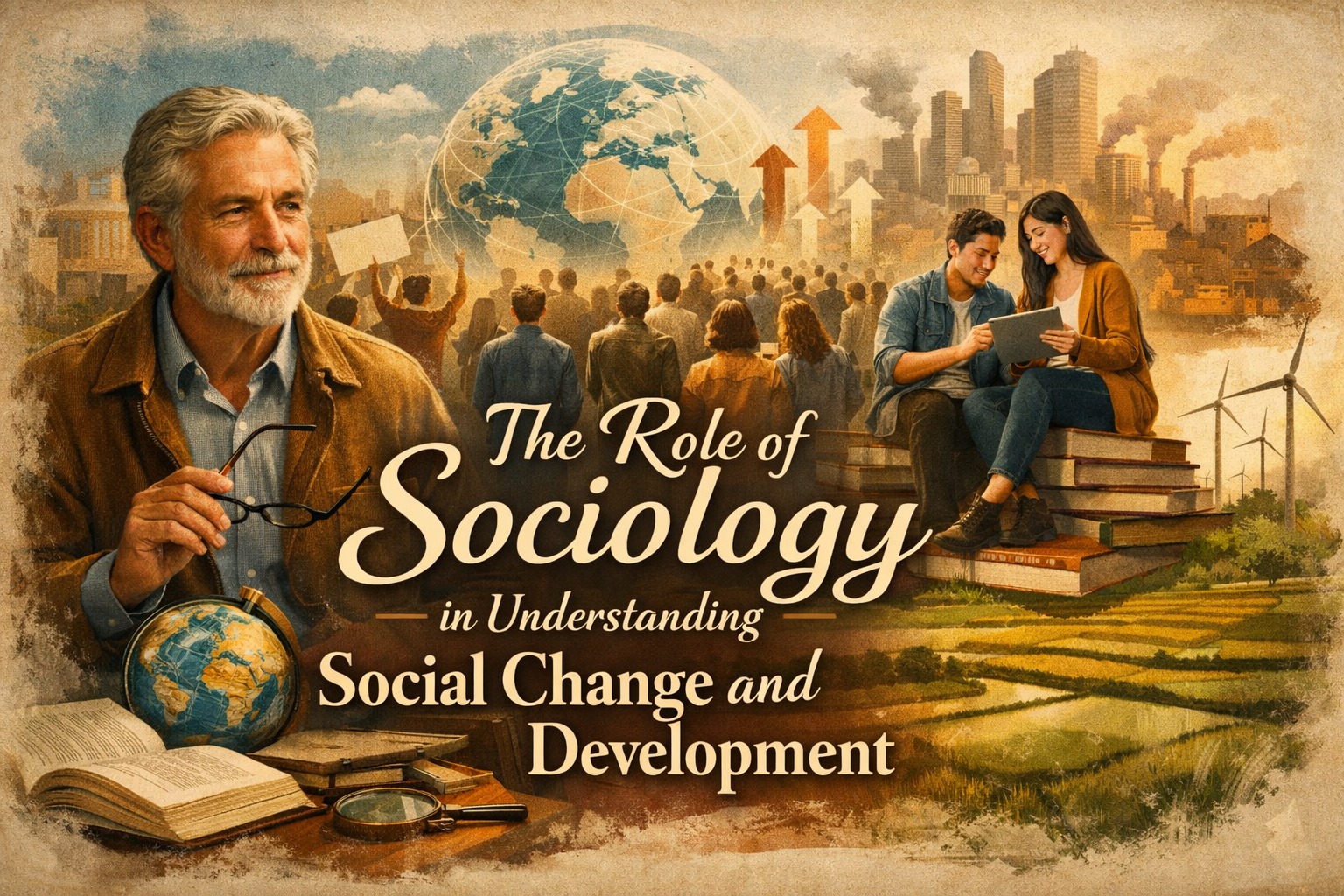
Social change is a natural process that affects every society over time. Changes in technology, culture, education, economics, and politics continuously shape how people live and interact with one another. Understanding these transformations requires a systematic approach, and this is where sociology plays a crucial role. Sociology helps individuals, communities, and governments analyze the causes and effects of social changes in order to create sustainable development.
As societies become more complex, the importance of studying social change and development continues to grow. Through research, observation, and analysis, sociology provides valuable insights into human behavior, social structures, and cultural patterns. These insights help policymakers and organizations make informed decisions that benefit society as a whole.
UNDERSTANDING THE CONNECTION BETWEEN SOCIOLOGY AND SOCIAL CHANGE
Sociology is the scientific study of human society, social relationships, and institutions. It examines how individuals interact within groups and how these interactions influence broader social systems. By analyzing social behaviors and trends, sociologists can identify factors that contribute to social transformation.
Social change refers to significant alterations in social structures, cultural values, norms, and institutions over time. Sociology helps explain why these changes occur and how they affect different segments of society. Through sociological theories and research methods, scholars can better understand the dynamics behind modernization, globalization, urbanization, and technological advancement.
HOW SOCIOLOGY HELPS EXPLAIN SOCIAL DEVELOPMENT
One of the primary functions of sociology is to study social development, which involves improvements in social well-being, equality, education, and quality of life. Sociologists examine how social policies, economic growth, and cultural shifts contribute to development within communities and nations.
By identifying social challenges such as poverty, discrimination, unemployment, and unequal access to education, sociology provides evidence-based solutions. These findings help governments and organizations design programs that promote inclusive development and social progress. As a result, sociology becomes an essential tool for achieving sustainable societal growth.
THE IMPACT OF CULTURE ON SOCIAL CHANGE
Culture plays a major role in shaping human behavior and influencing social change. Sociology studies how cultural beliefs, traditions, values, and norms evolve over time and affect social interactions. Cultural changes often emerge through education, media, migration, and technological innovation.
Understanding cultural transformation is important because it helps societies adapt to new circumstances while preserving valuable traditions. Sociologists analyze how cultural diversity contributes to social development and how cultural conflicts can be managed effectively. This knowledge supports social harmony and encourages mutual understanding among different groups.
THE ROLE OF SOCIOLOGY IN ADDRESSING SOCIAL ISSUES
Modern societies face numerous social challenges, including inequality, crime, environmental concerns, and rapid technological change. Sociology provides frameworks for understanding the root causes of these issues rather than focusing only on their symptoms. This deeper understanding allows for more effective and long-lasting solutions.
Through sociological research, experts gather data about social problems and evaluate the effectiveness of existing policies. Their findings help institutions improve public services, strengthen communities, and promote social justice. Consequently, sociology contributes significantly to creating a more balanced and equitable society.
SOCIOLOGY AND GLOBALIZATION IN THE MODERN WORLD
Globalization has transformed the way people communicate, work, and interact across national boundaries. Sociology helps explain how global connections influence local cultures, economies, and social structures. It also examines the opportunities and challenges created by increased international integration.
As globalization accelerates, sociologists study its effects on employment, education, migration, and cultural identity. Their research helps societies adapt to global changes while minimizing negative consequences. Understanding these global dynamics is essential for maintaining social stability and fostering sustainable development.
THE FUTURE IMPORTANCE OF SOCIOLOGY
The importance of sociology continues to grow as societies experience rapid technological and social transformations. Emerging issues such as artificial intelligence, digital communication, climate change, and demographic shifts require careful social analysis. Sociology provides the tools needed to understand how these developments affect individuals and communities.
In the future, sociologists will play an even greater role in helping societies navigate complex challenges. Their research will support evidence-based decision-making and encourage policies that promote social well-being. As a result, sociology will remain a key discipline for understanding and guiding social progress.
CONCLUSION
The role of sociology in understanding social change and development is essential in today's rapidly evolving world. By studying human behavior, social structures, cultural patterns, and global trends, sociology provides valuable insights into how societies transform over time. It helps identify social problems, supports effective policymaking, and promotes sustainable development.
As communities continue to face new opportunities and challenges, the knowledge provided by sociology becomes increasingly important. Understanding social change, social development, sociological research, culture, and globalization enables societies to build a more inclusive, equitable, and prosperous future for everyone.
About the Author
Gusti Ayu Tita P
Author — STEKOM University
An active author focused on academic issues, educational technology, and human resource development in the campus environment.















