
The Role of Teachers in Preparing Students for Global Challenges
Gusti Ayu Tita P
24 Juli 2026
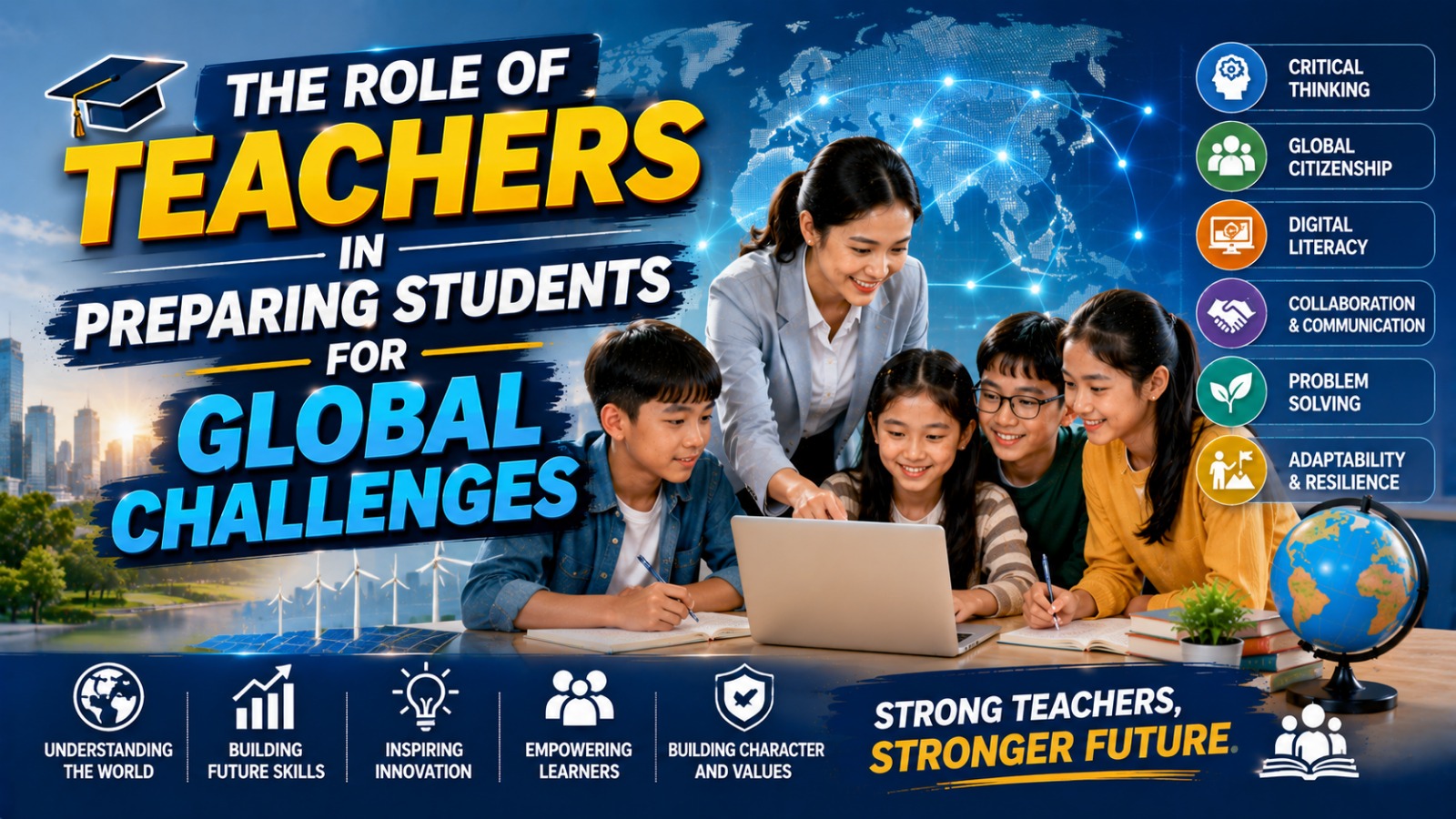
The role of teachers in preparing students for global challenges has become increasingly important in today's rapidly changing world. Students are no longer expected to master academic knowledge alone, but also to develop critical thinking, communication, problem-solving, and adaptability. The growth of technology, globalization, and international competition requires young people to possess a broader set of skills than ever before. Teachers play a vital role in guiding students toward these essential competencies.
Beyond delivering lessons, teachers inspire students to become lifelong learners who are ready to face future opportunities and uncertainties. By creating engaging learning experiences and encouraging curiosity, teachers help students build confidence and resilience. Their influence extends beyond the classroom, shaping responsible individuals who can contribute positively to society.
WHY GLOBAL CHALLENGES REQUIRE MODERN EDUCATION?
Today's world is interconnected through technology, trade, and communication. As a result, students will likely compete and collaborate with people from different countries and cultures throughout their lives. Global challenges such as climate change, digital transformation, economic shifts, and public health issues require individuals who can think creatively and work together effectively. Teachers help students understand these issues through meaningful discussions and real-world examples.
Modern education also emphasizes digital literacy, cross-cultural understanding, and ethical responsibility. Teachers encourage students to evaluate information critically rather than accepting everything they find online. This ability helps students become informed decision-makers in an era filled with vast amounts of information. By connecting classroom lessons with real-life situations, teachers make learning more relevant and practical.
DEVELOPING ESSENTIAL SKILLS FOR THE FUTURE
Teachers play a major role in helping students develop skills that employers and society increasingly value. These include critical thinking, creative problem-solving, collaboration, leadership, and effective communication. Instead of focusing only on memorization, teachers encourage students to analyze situations, ask questions, and explore multiple solutions. Such learning methods prepare students for unpredictable future careers.
In addition, teachers promote adaptability by exposing students to different learning activities and challenges. Group projects, presentations, debates, and research assignments help students gain confidence while improving teamwork. Students also learn how to manage time, accept feedback, and continuously improve their performance. These experiences build strong foundations for lifelong success.
ENCOURAGING GLOBAL AWARENESS AND CULTURAL UNDERSTANDING
One of the most valuable contributions teachers make is fostering global awareness. Students who understand different cultures, traditions, and perspectives are more likely to become respectful and open-minded individuals. Teachers introduce international topics through literature, history, geography, and current events, helping students appreciate diversity. This understanding prepares them for global collaboration in education and the workplace.
Teachers also encourage students to practice empathy and respect in everyday interactions. Classroom discussions that involve multiple viewpoints teach students to communicate thoughtfully and resolve conflicts peacefully. These social skills are essential in multicultural environments where cooperation is necessary. As a result, students become better prepared to succeed in an increasingly connected world.
INTEGRATING TECHNOLOGY INTO LEARNING
Technology has transformed the way education is delivered, making digital competence a crucial skill. Teachers guide students in using educational technology responsibly while maximizing its benefits. Digital tools such as online research platforms, educational videos, and interactive learning applications make lessons more engaging and effective. Students also learn how to evaluate reliable sources and protect their online privacy.
Teachers demonstrate that technology should support learning rather than distract from it. They encourage students to use digital resources for research, collaboration, and creativity instead of passive entertainment. By developing digital responsibility, students become more prepared for higher education and future careers that depend on technological skills. This balanced approach strengthens both academic achievement and personal growth.
BUILDING CHARACTER AND LIFELONG LEARNING HABITS
Academic excellence alone is not enough to face future challenges. Teachers also nurture integrity, discipline, responsibility, and perseverance, which are essential personal qualities for success. Through daily interactions and positive examples, teachers influence students' attitudes and behaviors both inside and outside the classroom. Strong character enables students to overcome setbacks and continue pursuing their goals.
Teachers also inspire a passion for continuous learning by encouraging curiosity and independent thinking. Students who enjoy learning are more likely to adapt successfully to changing environments and evolving careers. By fostering resilience and self-motivation, teachers prepare students to continue growing long after graduation. These habits remain valuable throughout every stage of life.
CONCLUSION
The role of teachers in preparing students for global challenges goes far beyond delivering academic knowledge. They equip students with future-ready skills, global awareness, digital literacy, and strong character, all of which are essential for success in the modern world. By creating supportive learning environments and encouraging continuous improvement, teachers help students become confident, adaptable, and responsible individuals.
As global challenges continue to evolve, the importance of dedicated teachers will only increase. Their guidance empowers students to think critically, embrace diversity, use technology wisely, and contribute positively to society. Investing in quality education and effective teaching ultimately creates a stronger generation capable of shaping a better future.
About the Author
Gusti Ayu Tita P
Author — STEKOM University
An active author focused on academic issues, educational technology, and human resource development in the campus environment.















