The Role of the Minister of Health in Improving Healthcare Services
Gusti Ayu Tita P
12 Agustus 2026
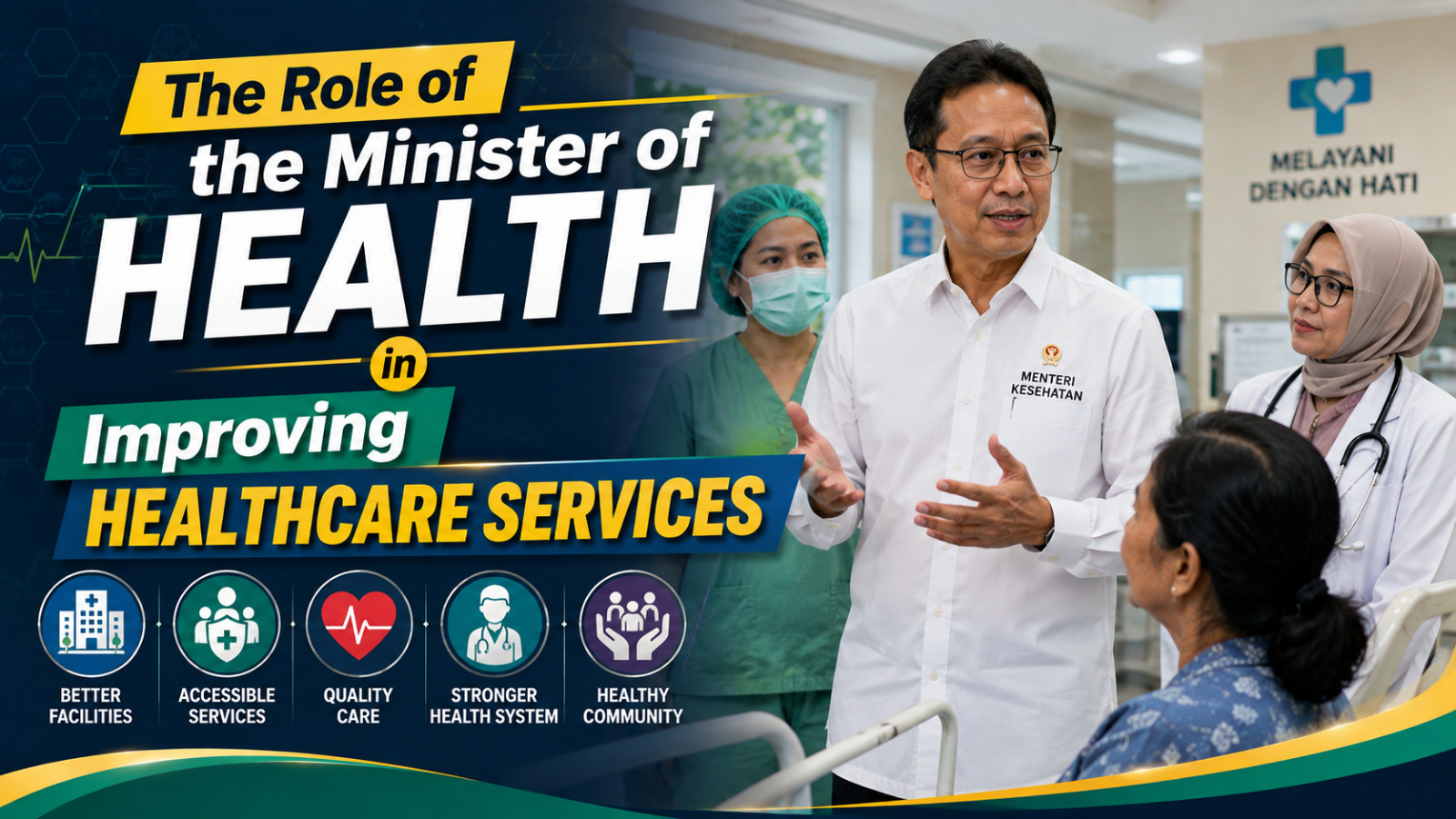
The Minister of Health has an important role in improving healthcare services in Indonesia. Through the ministry, the government develops policies and programs related to healthcare, public health, medical services, and health resources. Quality healthcare requires adequate facilities, competent health workers, effective policies, and accessible services. The minister helps direct these efforts according to national health priorities. Cooperation between the central government, local governments, healthcare facilities, and communities is also essential.
DEVELOPING HEALTH POLICIES
One of the main roles of the Minister of Health is to formulate and implement policies within the health sector according to the ministry's authority. Health policies can cover healthcare services, disease prevention, public health, medicines, health workers, and other related areas. Effective health policies should be based on health data, scientific developments, legal requirements, and community needs. Clear policies provide direction for healthcare institutions and health workers.
Health conditions can change over time due to demographic, environmental, technological, and social factors. Therefore, health policies need to be evaluated and adjusted when necessary. Information from healthcare facilities and public health programs can support this process. Regular evaluation helps ensure that policies remain relevant and effective.
IMPROVING HEALTHCARE FACILITIES
Healthcare facilities are essential for providing services to patients and communities. The Minister of Health helps develop policies and programs that support the quality and availability of healthcare facilities within the government's authority. Adequate facilities and equipment can support safer and more effective healthcare services.
Healthcare facilities may have different needs depending on their location and the communities they serve. Cooperation with local governments is important for addressing regional differences in healthcare resources. Government programs can support improvements based on identified needs and priorities. Monitoring facility standards can also help maintain service quality.
DEVELOPING HEALTH WORKERS
Health workers are an important part of healthcare delivery. Doctors, nurses, midwives, pharmacists, and other professionals require appropriate knowledge and skills to provide quality services. The Minister of Health supports policies related to the development, competence, and distribution of health workers according to applicable regulations.
Professional development can help health workers keep their knowledge and skills updated. Distribution is also important because some regions may have fewer health workers than others. Government policies can consider these differences when planning health workforce programs. A competent and adequately distributed workforce can strengthen healthcare services.
EXPANDING ACCESS TO HEALTHCARE
Healthcare quality is closely connected to people's ability to access appropriate services. The Minister of Health can support policies that improve access to healthcare across different communities and regions. Accessible healthcare allows people to receive preventive, diagnostic, treatment, and other appropriate health services.
Geographical conditions, healthcare facilities, workforce availability, and other factors can influence access. Cooperation among government institutions is therefore necessary to address these challenges. Public health programs can also encourage people to prevent illness and maintain healthy behaviors. Expanding access helps ensure that healthcare improvements can benefit a wider part of the population.
CONCLUSION
The Minister of Health plays an important role in improving healthcare services through health policies, healthcare facilities, health workforce development, and expanded access to services. Each area requires careful planning, implementation, monitoring, and evaluation. Cooperation among government institutions, healthcare facilities, health workers, and communities is also necessary. Improving healthcare is a continuous process that must respond to changing public needs. Through effective policies and coordinated programs, the Minister of Health can help strengthen healthcare services in Indonesia.
About the Author
Gusti Ayu Tita P
Author — STEKOM University
An active author focused on academic issues, educational technology, and human resource development in the campus environment.