The Role of the Minister of Trade in Supporting Economic Growth
Gusti Ayu Tita P
12 Agustus 2026
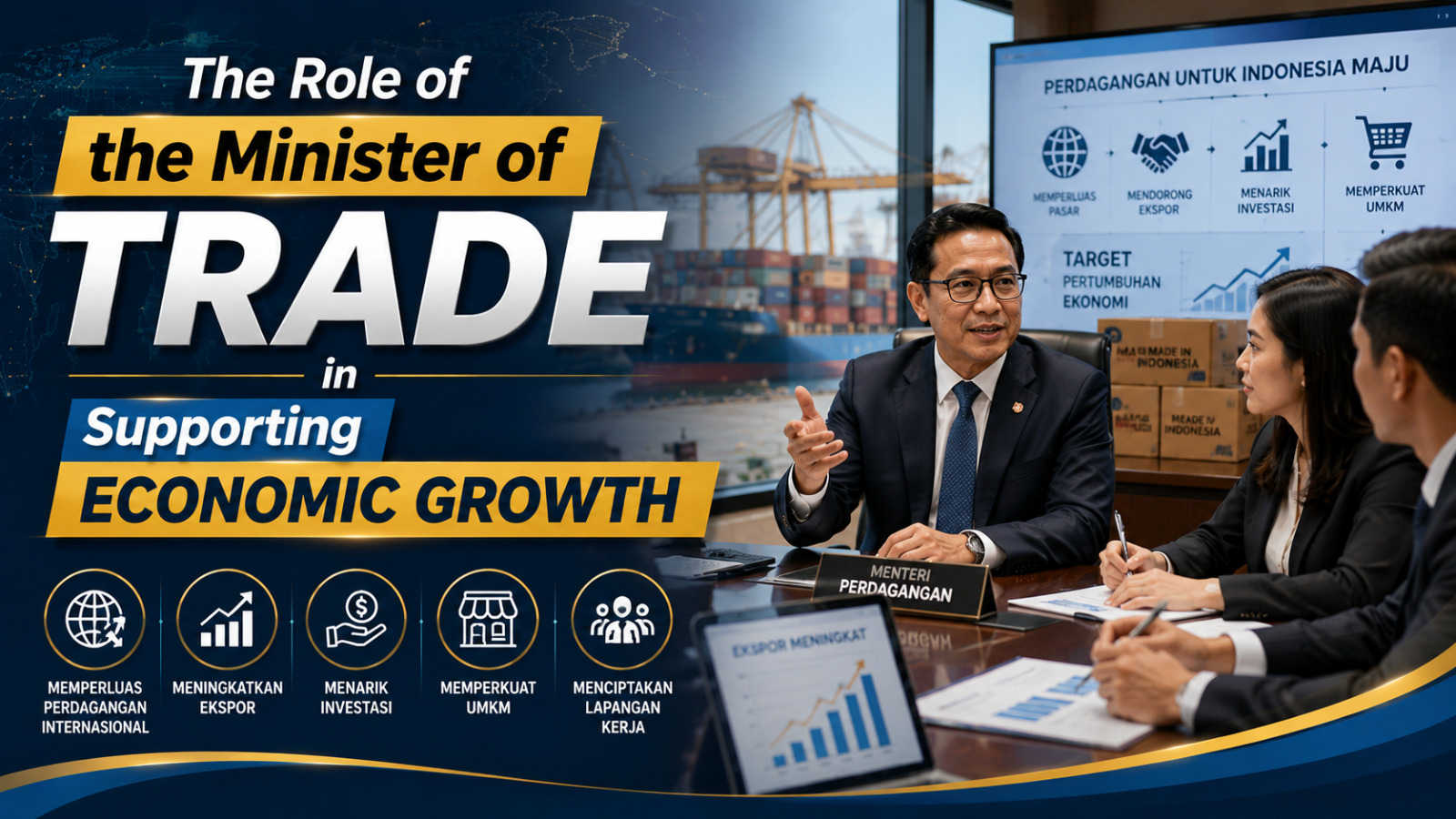
The Minister of Trade has an important role in supporting economic growth through policies and programs related to trade. Trade connects producers, businesses, distributors, and consumers while also creating opportunities for domestic products to reach wider markets. Effective trade policies can support business activity, market access, and the movement of goods. The minister helps the government manage trade affairs according to applicable laws and regulations. Cooperation with other ministries and stakeholders is also important because trade is closely connected to other economic sectors.
DEVELOPING TRADE POLICIES
One of the main roles of the Minister of Trade is to formulate and implement policies within the trade sector. These policies can cover domestic trade, foreign trade, consumer protection, and other areas within the ministry's authority. Trade policies need to consider market conditions, consumer needs, business interests, and national economic priorities. Clear policies can provide direction for businesses and support more organized trading activities.
The government can use market data and economic information when developing trade policies. Information about prices, distribution, supply, demand, and international markets can help identify important challenges. Regular evaluation can also show whether trade policies are achieving their objectives. This allows policies to be improved when economic conditions change.
SUPPORTING DOMESTIC TRADE
Domestic trade plays an important role in connecting producers with consumers across Indonesia. The Minister of Trade can support policies that encourage efficient distribution and healthy domestic markets. Efficient distribution helps goods reach consumers and businesses in different regions. This can support economic activity and reduce unnecessary obstacles in the movement of goods.
The government can also support the development of markets and trading facilities within its authority. Monitoring market conditions can provide information about changes in prices and supply. Cooperation with local governments and other institutions can help address regional trading challenges. These efforts can strengthen domestic economic activity.
EXPANDING INTERNATIONAL TRADE
International trade provides opportunities for Indonesian products to reach consumers in foreign markets. The Minister of Trade plays a role in developing policies related to exports and international trade relations within the government's authority. Greater market access can help domestic businesses expand their customer base and increase export opportunities.
International trade also requires businesses to understand foreign market requirements and applicable trade rules. Government support can include information, policy coordination, and efforts to facilitate market access. Cooperation with other ministries and institutions is important because exports depend on production capacity, product quality, logistics, and other factors. Effective trade policies can help Indonesian businesses compete in international markets.
PROTECTING CONSUMERS AND SUPPORTING BUSINESSES
Trade growth should also be accompanied by consumer protection. The Minister of Trade has responsibilities related to consumer protection within the ministry's authority. Consumer protection helps create trust and supports a fairer trading environment. Consumers need information and protection so that they can make informed purchasing decisions.
At the same time, businesses need a clear and supportive trading environment. Government policies can help businesses understand regulations, access markets, and improve competitiveness. Small and medium-sized businesses can also benefit from programs that support their participation in domestic and international markets. A balanced approach can support both business development and consumer interests.
CONCLUSION
The Minister of Trade supports economic growth through trade policies, domestic market development, international trade, consumer protection, and business support. These responsibilities help create conditions for trade activities to operate effectively. Domestic trade can strengthen distribution and economic activity, while international trade can expand opportunities for Indonesian products. Coordination with other government institutions is essential because trade is connected to many economic sectors. Through effective and responsible trade policies, the Minister of Trade can contribute to sustainable economic growth in Indonesia.
About the Author
Gusti Ayu Tita P
Author — STEKOM University
An active author focused on academic issues, educational technology, and human resource development in the campus environment.