The Role Of The Ministry Of Finance In Supporting Sustainable Economic Development
Gusti Ayu Tita P
12 Agustus 2026
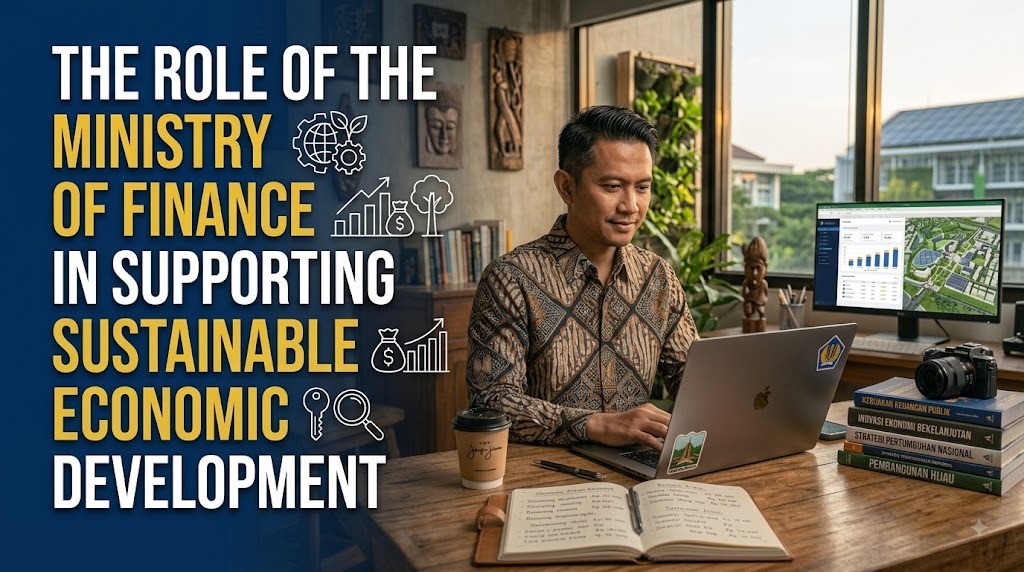
Sustainable economic development aims to improve living standards while maintaining economic stability and protecting resources for future generations. In Indonesia, the Ministry of Finance has an important role because fiscal policy influences government revenue, expenditure, financing, investment, and public services. Through responsible fiscal management, the government can support economic growth while addressing social and environmental priorities. Sustainable development therefore requires financial policies that balance short-term needs with long-term national interests.
DEVELOPING SUSTAINABLE FISCAL POLICY
Fiscal policy is one of the main instruments available to the government for supporting economic development. The Ministry of Finance develops policies concerning state revenue, government spending, and financing within the national budget framework. These policies can be adjusted to economic conditions while maintaining fiscal sustainability. Good fiscal planning helps ensure that development programs have adequate and responsible funding.
Sustainable fiscal policy should not focus only on increasing economic growth in the short term. It should also consider public welfare, economic resilience, and the government's ability to meet future financial obligations. Careful management of revenue and expenditure can reduce unnecessary fiscal risks. Fiscal sustainability is therefore an important foundation for long-term economic development.
SUPPORTING PRODUCTIVE ECONOMIC GROWTH
Economic growth can create jobs, increase household income, and expand business opportunities. The Ministry of Finance supports growth through public investment, fiscal incentives, infrastructure spending, and other budget policies. Government expenditure can help create conditions that allow businesses and communities to become more productive. These measures can strengthen the capacity of the economy to grow over time.
However, sustainable growth is not simply about achieving a high growth rate. Growth should also improve productivity and provide broader economic opportunities. Government policies need to encourage productive activities rather than activities that create excessive fiscal or environmental risks. Quality economic growth can provide more durable benefits for society.
INVESTING IN INFRASTRUCTURE
Infrastructure is essential for long-term economic development. Roads, transportation networks, energy facilities, water systems, and digital infrastructure can reduce business costs and improve access to economic opportunities. The Ministry of Finance supports infrastructure development through budget allocation and financing frameworks that enable government institutions to implement priority projects.
Infrastructure investment can also strengthen connections between regions. Better connectivity allows people to reach schools, healthcare facilities, workplaces, and markets more easily. At the same time, infrastructure projects require careful planning to ensure that their economic, social, and environmental benefits justify their costs. Sustainable infrastructure investment can strengthen economic resilience for many years.
SUPPORTING GREEN ECONOMIC DEVELOPMENT
Sustainable development increasingly requires economic policies that consider environmental impacts. The Ministry of Finance can support the transition toward a green economy through fiscal policies, financing instruments, and budget programs that encourage environmentally responsible activities. Green financing can help mobilize resources for projects related to climate and environmental objectives.
Indonesia has developed financial instruments such as green sukuk to support eligible environmentally friendly projects. These instruments demonstrate how public financial management can connect economic financing with environmental objectives. Green fiscal policies can encourage investment in renewable energy, sustainable infrastructure, and other activities that contribute to environmental resilience. Proper monitoring is important to ensure that funds are used according to established sustainability criteria.
ENCOURAGING SUSTAINABLE INVESTMENT
Investment is essential for expanding productive capacity and supporting economic transformation. Fiscal policies can influence investment decisions by affecting business costs, infrastructure availability, taxation, and economic confidence. The Ministry of Finance can create an environment that encourages productive and sustainable investment while maintaining responsible public finances.
Investment policies should also consider long-term outcomes. Projects that create employment, improve productivity, encourage innovation, or strengthen strategic industries can provide wider economic benefits. At the same time, investors need clear rules and predictable policies. Investment certainty can help attract capital and encourage businesses to commit resources to long-term projects.
STRENGTHENING HUMAN CAPITAL
Economic development depends heavily on the quality of a country's human resources. Government spending on education, healthcare, training, and social development can improve people's skills and productivity. The Ministry of Finance plays a role in ensuring that these sectors receive appropriate budget support within national fiscal priorities.
Better human capital can help workers adapt to technological changes and new economic opportunities. Education and healthcare investments can also contribute to greater social mobility and productivity. These benefits may take years to appear, which makes long-term budgeting particularly important. Human capital investment is therefore an essential part of sustainable economic development.
PROMOTING TRANSPARENT AND ACCOUNTABLE FINANCIAL MANAGEMENT
Sustainable development requires public resources to be managed responsibly. Transparency and accountability help ensure that government spending follows established priorities and regulations. The Ministry of Finance supports public financial accountability through budgeting, accounting, reporting, monitoring, and financial management systems.
Digitalization can also improve the efficiency and traceability of public financial processes. Better information allows policymakers and oversight institutions to evaluate how public funds are being used. Strong accountability can increase public confidence in government programs. Transparent financial management is therefore an important part of sustainable development.
CONCLUSION
The Ministry of Finance plays a strategic role in supporting sustainable economic development through fiscal policy, infrastructure investment, sustainable financing, social protection, human capital development, regional development, and fiscal risk management. Its policies can help Indonesia pursue economic growth while maintaining financial stability and addressing environmental and social challenges. Sustainable development requires more than increased spending because every program must be planned according to its long-term benefits and fiscal capacity. By combining responsible fiscal management, productive investment, inclusive policies, and environmental considerations, public finance can become a powerful instrument for building a stronger and more resilient economy.
About the Author
Gusti Ayu Tita P
Author — STEKOM University
An active author focused on academic issues, educational technology, and human resource development in the campus environment.