The Role of Train Stations in Supporting Modern Mobility
Gusti Ayu Tita P
10 Agustus 2026
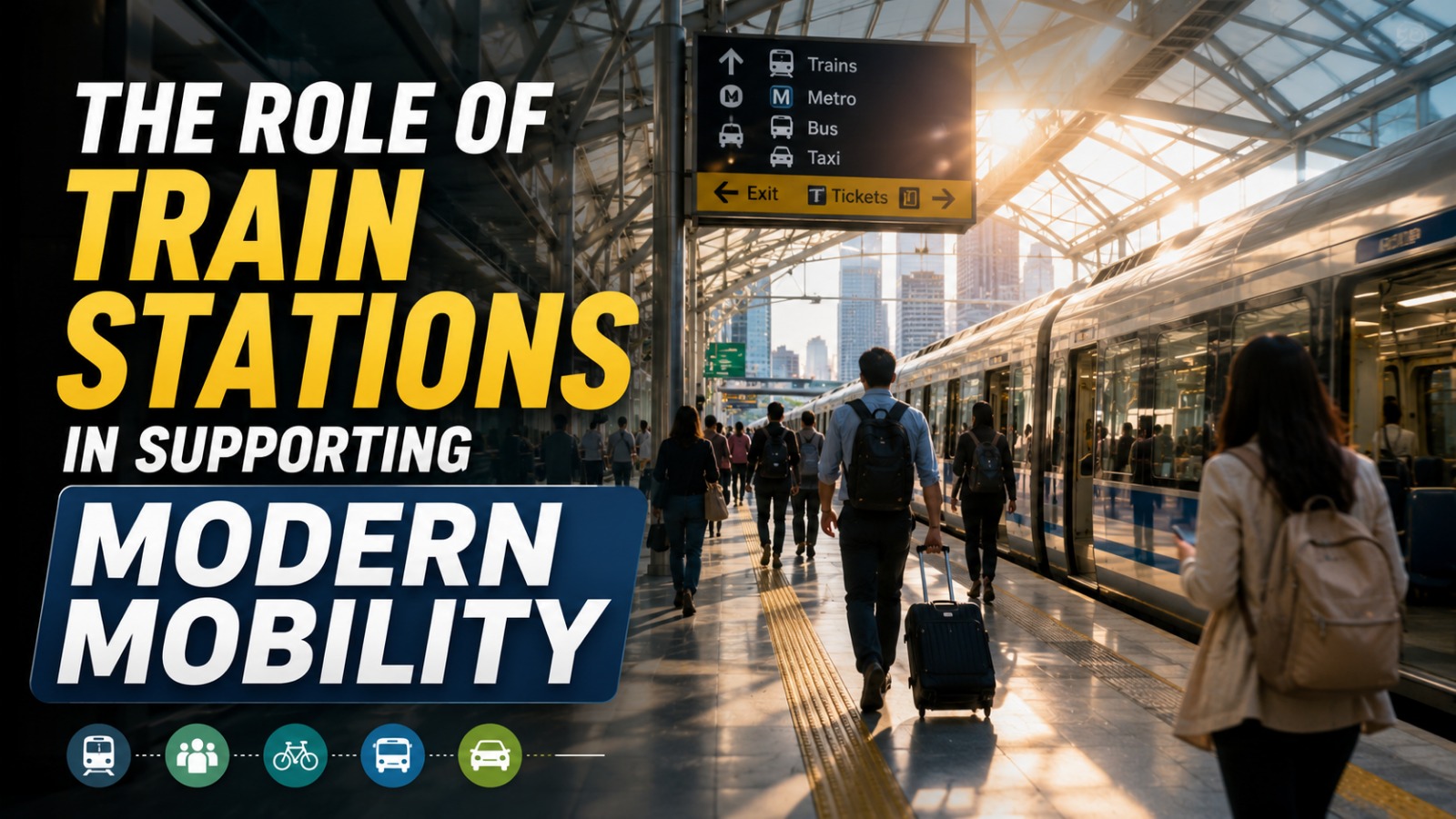
Train stations play an important role in connecting people, communities, and cities through railway transportation. As urban populations continue to grow, efficient transportation is needed to support daily activities and economic development. Train stations provide important connections between different transportation services and destinations. They are no longer simply places where passengers board and leave trains. Modern stations have become essential parts of an integrated and increasingly sustainable mobility system.
TRAIN STATIONS AS TRANSPORTATION CONNECTION POINTS
A train station functions as an important transportation connection point between railway services and other forms of mobility. Passengers may use buses, taxis, bicycles, ride-hailing services, or private vehicles to reach a station before continuing their journey by train. This connection makes it easier for people to travel between residential areas, workplaces, schools, and commercial districts. A well-connected station can reduce the difficulty of changing between different transportation modes. As a result, passengers can complete their journeys more efficiently.
Modern transportation planning increasingly focuses on integrated mobility. Instead of treating trains, buses, and other services as separate systems, transportation authorities can connect them through shared stations, schedules, and information systems. This approach makes transfers more convenient for passengers. It can also reduce unnecessary travel time between different parts of a city. Train stations therefore serve as important links within a larger transportation network.
SUPPORTING DAILY URBAN MOBILITY
In large cities, thousands of people may depend on railway services to reach their daily destinations. Commuter trains can provide an efficient option for people traveling between residential areas and employment centers. Train stations become important points where passengers begin and end their daily journeys. Reliable station operations can therefore have a direct impact on people's work and study routines. Efficient rail services can also help reduce pressure on heavily congested roads.
Stations can support daily mobility by providing organized passenger access and clear travel information. Facilities such as ticketing systems, pedestrian connections, elevators, and information displays make transportation easier to navigate. When stations are designed around passenger needs, transfers can become faster and less stressful. Convenient station design can encourage more people to consider public transportation. This can contribute to a more efficient urban mobility system.
REDUCING ROAD CONGESTION
One major advantage of railway transportation is its ability to move large numbers of passengers efficiently. When people choose trains instead of individual cars or motorcycles, fewer vehicles may need to use busy roads. Train stations support public transportation use by providing convenient access to railway networks. This can help reduce traffic pressure, particularly in densely populated urban areas. The effectiveness of this benefit depends on the quality, coverage, and reliability of the overall public transportation system.
Reducing congestion can also provide broader benefits for cities. Less traffic can improve travel predictability and reduce the time people spend commuting. Public transportation can also make better use of limited urban space than systems that depend heavily on private vehicles. However, stations must be accessible and well connected to local neighborhoods to encourage regular use. Strong connections between stations and other transport services are therefore essential.
IMPROVING ACCESS TO DIFFERENT AREAS
Train stations help connect people to jobs, education, healthcare, shopping centers, and public services. A reliable railway network can make it easier for residents to travel beyond their immediate neighborhoods. This is especially important for people who do not own private vehicles. By providing access to wider transportation networks, stations can improve people's mobility opportunities. Better accessibility can contribute to more balanced regional development.
Railway stations can also connect smaller communities with major cities. Passengers from surrounding areas may use trains to reach larger economic or educational centers. This connection can support commuting, tourism, trade, and social activities. In this way, stations contribute to stronger relationships between urban and regional communities. Transportation accessibility is therefore an important factor in supporting modern mobility.
SUPPORTING SUSTAINABLE TRANSPORTATION
Train stations are closely connected with the development of sustainable transportation. Railways can transport many passengers using a shared transportation system, potentially reducing dependence on individual vehicles. The environmental benefits vary depending on factors such as train technology, electricity sources, passenger capacity, and operational efficiency. Nevertheless, efficient railway systems are widely considered an important part of sustainable urban transportation strategies.
Stations can further support sustainability by encouraging walking, cycling, and public transportation connections. Facilities such as bicycle parking, pedestrian pathways, and bus connections can make it easier for passengers to avoid private vehicles. Energy-efficient station buildings and renewable energy systems may also reduce environmental impacts. Sustainable station design can therefore contribute to broader environmental goals.
USING TECHNOLOGY TO IMPROVE MOBILITY
Technology has changed how passengers interact with train stations. Digital ticketing, mobile applications, electronic gates, and real-time information systems can make journeys more convenient. Passengers can check train schedules, receive delay notifications, and plan connections before reaching the station. Smart transportation technology can also help operators manage passenger flows and improve station operations.
Integrated digital platforms may eventually make transportation transfers even easier. Passengers could use a single application to plan journeys involving trains, buses, bicycles, and other mobility services. Real-time data can help travelers choose alternative routes when disruptions occur. These developments can create a more responsive transportation system. Technology is therefore becoming an important tool for improving mobility and passenger experience.
TRAIN STATIONS AND ECONOMIC ACTIVITY
Train stations can also support economic development by improving access to commercial and employment areas. Businesses often benefit from locations with strong transportation connections and regular passenger activity. Shops, restaurants, offices, hotels, and other services may develop around major stations. This can create employment opportunities and increase economic activity in surrounding areas. The effect is particularly noticeable when station development is coordinated with urban planning.
Improved transportation access can also encourage investment in areas that were previously less connected. New commercial and residential developments may emerge near railway corridors and stations. However, development should be carefully planned to ensure that local communities benefit from improved transportation. Good planning can help stations become useful centers of economic and social activity. This demonstrates that the role of stations extends beyond transportation alone.
THE FUTURE OF MODERN MOBILITY
The future of train stations will likely focus on connectivity, accessibility, technology, and sustainability. Stations may become increasingly integrated with buses, cycling infrastructure, pedestrian networks, and other mobility services. Smart systems can provide real-time information and help passengers make better travel decisions. More accessible facilities can also ensure that elderly passengers and people with disabilities can use transportation more easily. These improvements can make railway systems more inclusive.
As cities continue to grow, the importance of efficient public transportation will increase. Train stations can serve as central points within smart mobility networks that connect people with different destinations. Successful station development will require cooperation between transportation operators, governments, businesses, and local communities. Future-ready train stations should be designed not only for trains but also for the broader needs of urban mobility. This approach can create transportation systems that are more efficient, connected, and sustainable.
CONCLUSION
Train stations play a vital role in supporting modern mobility by connecting railway services with people, communities, and other forms of transportation. They help improve accessibility, support daily commuting, reduce dependence on private vehicles, and contribute to sustainable transportation. Technology and integrated mobility services are also making stations more efficient and passenger-friendly. As urban areas continue to develop, well-designed train stations will become increasingly important. By combining reliable railway services with connectivity, accessibility, and sustainability, train stations can help create a more efficient transportation future.
About the Author
Gusti Ayu Tita P
Author — STEKOM University
An active author focused on academic issues, educational technology, and human resource development in the campus environment.