The Role Of Young Generations In Preserving Independence Through Innovation
Gusti Ayu Tita P
10 Agustus 2026
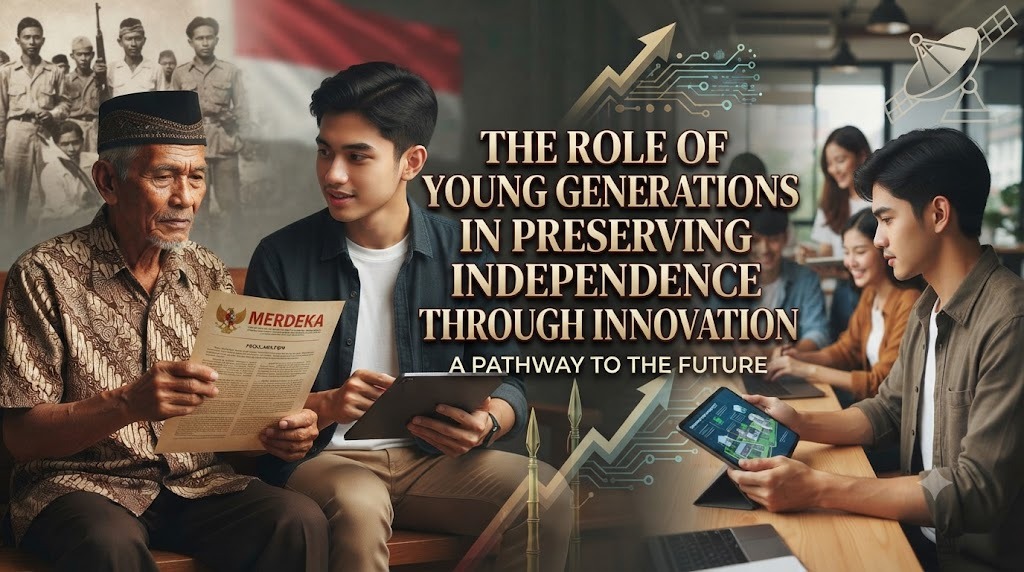
Indonesia's independence is not only a historical achievement but also a responsibility that must be maintained by every generation. Today, young people have an important role in continuing national development through innovation, creativity, education, and positive social action. Independence in the modern era is not limited to defending the country from external threats. It also involves building a strong, competitive, educated, and sustainable society.
The young generation has advantages in adapting to technological and social changes. They can use digital platforms to create solutions, share knowledge, develop businesses, and promote Indonesian culture. Through responsible innovation, young people can contribute to economic development and social progress. Their ideas can become practical solutions to challenges faced by communities and the nation.
UNDERSTANDING INDEPENDENCE IN THE MODERN ERA
Independence today has a broader meaning than the achievement of political freedom. It includes the ability of a nation and its people to develop economic, educational, technological, social, and cultural strength. Young people need to understand that maintaining independence requires continuous effort. Their contribution can take many forms, from education and entrepreneurship to community activities.
Modern independence also requires the ability to respond to global changes without losing national identity. Young people can learn from international developments while continuing to appreciate Indonesian values and culture. National resilience can become stronger when young people are educated, creative, responsible, and willing to contribute. Therefore, preserving independence is a shared responsibility across generations.
THE IMPORTANCE OF YOUTH IN NATIONAL DEVELOPMENT
Young people represent an important part of Indonesia's future workforce and leadership. Their energy, creativity, and ability to learn can support various areas of national development. They can contribute through education, entrepreneurship, science, technology, arts, sports, and social activities. Their involvement can help communities find new approaches to existing challenges.
Youth participation is also important because development requires fresh perspectives. Young people can identify problems that may be overlooked and propose alternative solutions. When their ideas are supported by knowledge and responsible action, they can create meaningful social impact. Active youth participation can therefore strengthen the country's ability to develop sustainably.
INNOVATION AS A WAY TO PRESERVE INDEPENDENCE
Innovation allows young people to transform ideas into useful solutions. It can involve technology, business models, education methods, environmental initiatives, or community programs. Innovation does not always require advanced technology or large amounts of money. Even simple ideas can create positive changes when they address real problems.
Young people can use their creativity to develop products and services that benefit society. They can also create digital platforms that make information and education more accessible. Problem solving through innovation can reduce dependence on outdated approaches and encourage communities to become more self-reliant. In this way, innovation can contribute to maintaining national independence.
USING TECHNOLOGY FOR POSITIVE CHANGE
Technology provides young people with powerful tools for learning, communication, and innovation. Digital platforms can help them access information, develop skills, promote businesses, and collaborate with people from different regions. Young people can also use technology to create educational content and campaigns about important social issues. Digital literacy is essential to ensure that technology is used responsibly.
However, technology should not be used only for entertainment or personal popularity. Young people should understand the importance of information security, responsible communication, and critical thinking. They need to verify information before sharing it and avoid spreading misinformation. Responsible technology use can help create a healthier digital environment and support national development.
SUPPORTING EDUCATION AND KNOWLEDGE
Education is one of the strongest foundations for maintaining national independence. Young people can contribute by improving their own knowledge and helping others access useful information. They can participate in literacy programs, tutoring activities, educational communities, and knowledge sharing. These activities can help strengthen human resources at the community level.
Innovation can also make education more accessible and engaging. Young people can create digital learning materials, educational videos, online study groups, and other learning resources. They can combine technology with creative teaching methods to reach different audiences. Knowledge sharing allows the benefits of education to reach more people and supports long term national development.
DEVELOPING YOUNG ENTREPRENEURS
Entrepreneurship can strengthen economic independence by creating products, services, employment, and new sources of income. Young people can explore business opportunities based on local resources, technology, creativity, and community needs. Young entrepreneurship can also encourage innovation and competition in the domestic economy.
Starting a business requires more than having a creative idea. Young entrepreneurs need to understand market research, financial management, customer needs, digital marketing, and business risks. They should also learn from failure and continuously improve their products. Independent and innovative businesses can contribute to stronger communities and a more resilient national economy.
PRESERVING CULTURE THROUGH DIGITAL INNOVATION
Independence is also connected to preserving national identity and cultural heritage. Indonesia has diverse traditions, languages, arts, crafts, and local knowledge that need to be passed to future generations. Young people can use digital technology to document and promote cultural heritage. Digital cultural preservation can make traditional knowledge more accessible to younger audiences.
Social media, websites, digital archives, and creative content can introduce Indonesian culture to both domestic and international audiences. Young creators can present traditional culture through modern formats without removing its essential identity. This approach can make cultural heritage more relevant to contemporary audiences. Cultural innovation can therefore support both preservation and global recognition.
BUILDING ENVIRONMENTAL INNOVATION
Environmental challenges can affect the quality of life and long term national development. Young people can participate in solutions related to waste management, renewable energy, conservation, sustainable agriculture, and environmental education. Innovation can help communities use resources more efficiently. Small environmental initiatives can become meaningful when implemented consistently.
Young innovators can create products from recycled materials, promote sustainable lifestyles, or develop technology that reduces environmental impact. They can also use digital platforms to educate communities about environmental responsibility. Sustainable innovation supports a healthier environment while strengthening community resilience. Protecting natural resources is also part of protecting the country's future.
BUILDING SOCIAL INNOVATION
Innovation is not limited to technology or business. Young people can also create social innovations that address problems such as education inequality, unemployment, poverty, and limited access to services. Community projects can provide practical solutions that are adapted to local conditions. These initiatives can encourage people to participate in solving problems together.
Social innovation works best when it is based on real community needs. Young people should listen to community members, understand the causes of problems, and evaluate whether their solutions are effective. Collaboration with schools, organizations, local communities, and government institutions can strengthen these efforts. Community collaboration can turn individual ideas into sustainable social programs.
STRENGTHENING NATIONAL CHARACTER
Innovation should be accompanied by strong character and national values. Young people need integrity, responsibility, discipline, creativity, cooperation, and respect for diversity. Without good values, technological and economic progress may not produce positive results. Character helps young innovators use their abilities responsibly.
National character can be strengthened through education and direct community involvement. Young people can practice cooperation by participating in social activities and community projects. They can also demonstrate respect for differences in culture, background, and ideas. Strong character combined with innovation can help create a generation capable of contributing responsibly to the country's future.
ENCOURAGING COLLABORATION AMONG YOUNG PEOPLE
Many national challenges are too complex to solve individually. Young people can achieve greater impact by working together across different fields and communities. Collaboration allows them to combine knowledge, skills, creativity, and resources. It can also create opportunities to learn from people with different experiences.
Youth communities, student organizations, entrepreneurship groups, and innovation networks can become platforms for collaboration. Digital technology makes it easier to connect young people from different regions. However, successful collaboration requires communication, trust, responsibility, and shared goals. Youth collaboration can transform individual ideas into larger initiatives with broader social impact.
PREPARING YOUNG PEOPLE FOR THE FUTURE
The future will bring new challenges related to technology, employment, climate change, economic competition, and social transformation. Young people need to develop adaptability, critical thinking, digital skills, creativity, and lifelong learning habits. These abilities can help them respond to changes without losing their values and identity. Preparation should begin through education and practical experience.
Young people should not be afraid to experiment with new ideas as long as they consider potential risks and social impacts. Failure can become a learning opportunity when evaluated properly. Continuous improvement is more important than expecting every idea to succeed immediately. Future readiness allows young people to become active contributors rather than passive observers of change.
CONCLUSION
The young generation has an important role in preserving Indonesian independence through innovation, creativity, knowledge, and responsible action. They can contribute through technology, education, entrepreneurship, cultural preservation, environmental initiatives, and social innovation. These contributions can strengthen economic resilience, human resources, national identity, and community development. Independence in the modern era requires people who are capable of creating solutions and adapting to change.
Innovation should always be combined with integrity, national values, collaboration, and social responsibility. Young people who develop their skills while caring about their communities can create meaningful and sustainable contributions. By transforming ideas into useful solutions, the younger generation can help ensure that the values of independence continue to grow and remain relevant for future generations.
About the Author
Gusti Ayu Tita P
Author — STEKOM University
An active author focused on academic issues, educational technology, and human resource development in the campus environment.