The Role Of Young Generations In Strengthening Love For The Homeland
Gusti Ayu Tita P
5 Agustus 2026
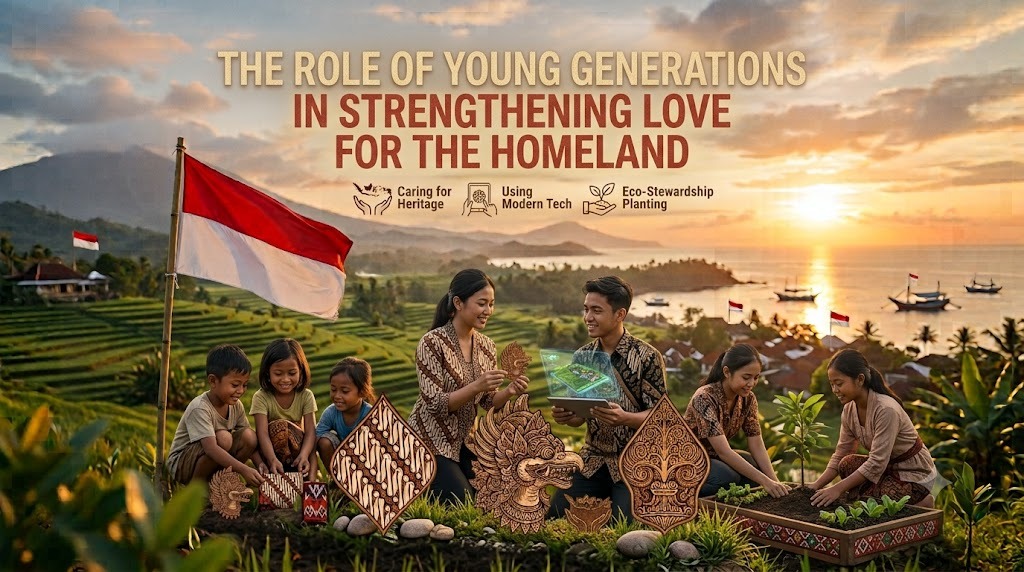
Young generations have an important role in strengthening love for the homeland. As future leaders, workers, entrepreneurs, educators, and community members, they will influence the direction of Indonesia in the coming years. Their creativity, energy, education, and familiarity with technology give them many opportunities to contribute to society. Therefore, developing a strong sense of national pride and responsibility among young people is important for Indonesia's future.
Love for the homeland is not only expressed through national ceremonies or symbolic activities. It can be shown through respecting Indonesian culture, protecting the environment, supporting local products, achieving educational goals, and maintaining social unity. Young people can make these values part of their daily lives through simple and consistent actions. When positive actions become habits, they can create a meaningful contribution to the country.
UNDERSTANDING LOVE FOR THE HOMELAND
Love for the homeland means having pride, concern, respect, and responsibility toward one's country. For young Indonesians, this attitude includes appreciating national history, respecting cultural diversity, and caring about the development of society. It also encourages young people to protect Indonesia's identity while remaining open to positive changes. National pride should therefore be reflected in behavior rather than only in words.
Young people can express their love for Indonesia through education, creativity, social activities, cultural preservation, and responsible use of technology. They do not need to wait until they become adults to make a contribution. Simple actions such as helping others, following rules, and keeping public spaces clean are already meaningful. Consistent behavior can gradually strengthen their sense of belonging to the country.
WHY YOUNG PEOPLE ARE IMPORTANT FOR INDONESIA
Young people represent an important part of Indonesia's future population and workforce. They have the opportunity to influence social, economic, cultural, and technological development. Their ideas can provide new solutions to challenges faced by communities. Because of this, young generations need both knowledge and strong character.
Their role becomes even more important in a rapidly changing world. Technology, globalization, and social media have created new opportunities while also introducing new challenges. Young people need to understand how to use these developments without losing their national identity. A balanced combination of modern skills and national values can help them contribute positively to Indonesia.
PRESERVING INDONESIAN CULTURE
Indonesia has a diverse cultural heritage that includes traditional dances, music, languages, clothing, food, crafts, and customs. Young people can help preserve this heritage by learning about and participating in local cultural activities. Understanding traditional culture can create a stronger connection between younger generations and their communities. It also helps ensure that valuable cultural knowledge continues to be passed on.
Technology can make cultural preservation more attractive to young audiences. They can create videos, articles, photographs, illustrations, podcasts, and educational content that introduce Indonesian traditions. Digital content should provide accurate information and respect the communities associated with the traditions. In this way, young people can combine creativity with cultural responsibility.
SUPPORTING LOCAL PRODUCTS AND ENTRENEURS
Supporting local products is a practical way for young people to contribute to Indonesia's economy. Local businesses create products and services that reflect the creativity and skills of Indonesian communities. Buying quality local products can help entrepreneurs maintain their businesses and create economic opportunities. Young people can also introduce local products to wider audiences.
They can use social media, digital marketing, and online marketplaces to promote Indonesian products. Young entrepreneurs can also create new businesses that use local materials, skills, and cultural inspiration. Innovation can make local products more competitive while maintaining their unique identity. Through entrepreneurship, young people can contribute to economic growth and community development.
USING TECHNOLOGY RESPONSIBLY
Young generations are among the groups most familiar with digital technology. They can use this advantage to learn, communicate, create content, and promote positive information about Indonesia. Social media can become a platform for introducing Indonesian culture, tourism, education, local businesses, and achievements. Technology can therefore support national pride when it is used responsibly.
However, young people must also understand the risks of the digital environment. False information, hate speech, online harassment, and harmful content can damage social relationships and create conflict. Before sharing information, they should check its source and accuracy. Responsible digital behavior is an important part of being a good citizen in the modern era.
STRENGTHENING UNITY AND TOLERANCE
Indonesia is a diverse country, so unity and tolerance are essential for maintaining social harmony. Young people can help strengthen unity by respecting differences in religion, ethnicity, language, culture, and opinions. They should avoid discrimination and treat others fairly. Respectful communication can help prevent unnecessary conflicts.
Young people can practice tolerance through teamwork, community activities, student organizations, and social projects. Working with people from different backgrounds can help them understand different perspectives. They can also learn to resolve disagreements through discussion rather than hostility. These experiences can build stronger social relationships and support national unity.
PROTECTING THE ENVIRONMENT
Environmental protection is another important way young people can show love for Indonesia. The country has valuable natural resources that need to be managed responsibly. Young people can develop habits such as reducing waste, saving water, protecting plants, and keeping public areas clean. These actions may seem small, but they can create positive effects when practiced by many people.
Young people can also participate in tree planting, recycling projects, clean-up campaigns, and environmental education. Social media can be used to encourage others to participate in environmental activities. Protecting nature is not only about the present but also about ensuring that future generations can enjoy a healthy environment. Environmental responsibility is therefore closely connected to national responsibility.
IMPROVING EDUCATION AND SKILLS
Education is one of the strongest foundations for Indonesia's future. Young people can show love for their homeland by taking education seriously and continuously improving their skills. Knowledge and competence can help them become productive members of society. A well-educated generation is better prepared to respond to social, economic, and technological challenges.
Learning should not be limited to formal classrooms. Young people can develop skills through reading, training, organizations, volunteering, internships, creative projects, and digital learning. These experiences can strengthen communication, leadership, problem-solving, and teamwork abilities. By improving themselves, young people prepare to make greater contributions to Indonesia.
PARTICIPATING IN SOCIAL AND COMMUNITY ACTIVITIES
Community involvement gives young people opportunities to practice responsibility, cooperation, and empathy. They can participate in social programs, volunteer activities, community clean-ups, fundraising for appropriate causes, or educational projects. Such activities help them understand the needs of people around them. They also encourage young people to become active members of society.
Participation does not have to involve large projects. Helping neighbors, supporting classmates, sharing useful knowledge, and taking care of shared facilities are also valuable contributions. When young people develop a habit of helping others, they can strengthen social relationships. A caring community can become an important foundation for a stronger nation.
DEVELOPING NATIONAL PRIDE THROUGH ACHIEVEMENTS
Young people can strengthen love for Indonesia by achieving positive accomplishments in education, sports, arts, science, technology, entrepreneurship, and other fields. Their achievements can demonstrate the potential of Indonesian youth. Hard work and discipline are important parts of reaching these goals. Success can also inspire other young people to develop their own abilities.
National pride should not mean comparing Indonesia negatively with other countries. Instead, it should encourage young people to improve their skills while appreciating the strengths and challenges of their own country. They can learn from international developments while creating solutions that are relevant to Indonesian society. This balanced perspective can support meaningful national progress.
BECOMING RESPONSIBLE DIGITAL CITIZENS
The digital environment has become an important part of modern social life. Young people should understand that their online actions can influence other people and society as a whole. Posting respectful content, protecting personal information, and checking facts are examples of responsible digital behavior. Digital citizenship is increasingly important as more activities move online.
Young people can also use digital platforms to promote education, culture, creativity, social awareness, and Indonesian achievements. Positive content can help create a healthier online environment. At the same time, young users should avoid content that encourages discrimination or social conflict. Responsible digital citizenship is a modern form of contributing to the country.
CONCLUSION
Young generations play a crucial role in strengthening love for the homeland and building Indonesia's future. They can contribute by preserving culture, supporting local products, protecting the environment, improving education, strengthening tolerance, participating in social activities, and using technology responsibly. These actions show that nationalism can be practiced through everyday behavior. Young people do not need to wait for major opportunities to start contributing.
Ultimately, strong national pride should be combined with knowledge, character, creativity, and responsibility. Young Indonesians can learn from global developments while maintaining respect for their own culture and national identity. When young people actively contribute to their communities, their positive influence can spread more widely. By empowering the younger generation, Indonesia can build a future that is more united, creative, responsible, and resilient.
About the Author
Gusti Ayu Tita P
Author — STEKOM University
An active author focused on academic issues, educational technology, and human resource development in the campus environment.