The Role of Young People in Preserving Bhinneka Tunggal Ika
Gusti Ayu Tita P
4 Agustus 2026
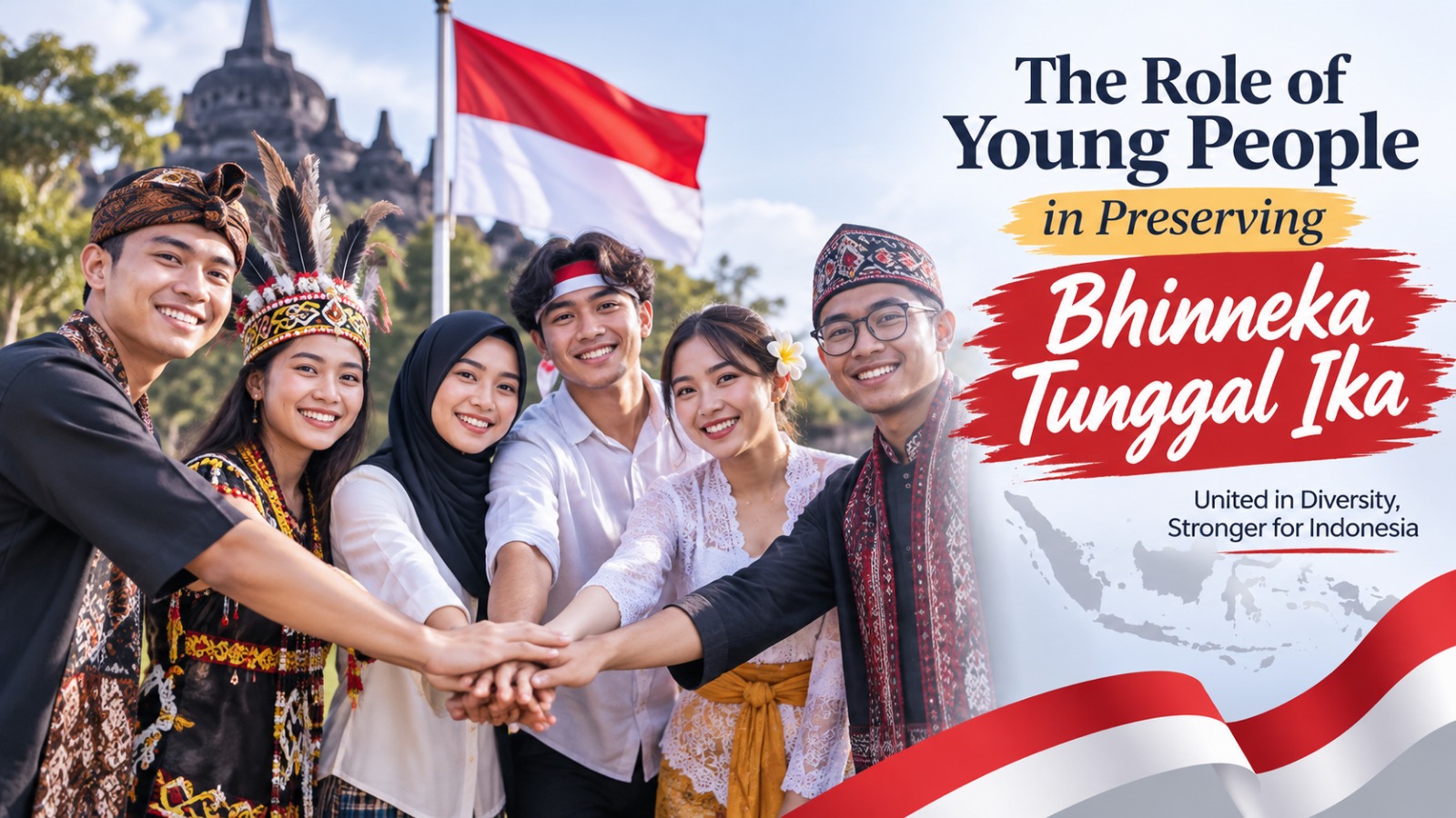
Indonesia is a nation rich in ethnic, religious, linguistic, and cultural diversity. This diversity is an important part of Indonesia’s national identity and should be protected across generations. Bhinneka Tunggal Ika, meaning “Unity in Diversity,” provides an important principle for maintaining unity while respecting differences.
Young people have a major role in preserving this principle because they will become future leaders, professionals, educators, and community members. Their attitudes and actions can influence how Indonesian society responds to diversity. By practicing tolerance, appreciating cultural differences, and using technology responsibly, young people can help ensure that Bhinneka Tunggal Ika remains relevant in modern Indonesia.
UNDERSTANDING THE MEANING OF BHINNEKA TUNGGAL IKA
Bhinneka Tunggal Ika is Indonesia’s national motto and expresses the idea that people with different identities can remain united as one nation. The phrase is commonly understood as “Unity in Diversity” and reflects the reality of Indonesian society. Its historical roots are associated with the Kakawin Sutasoma, a 14th-century Javanese literary work attributed to Mpu Tantular.
For young people, understanding this principle is important because diversity is part of their everyday lives. They meet people with different ethnicities, religions, cultures, languages, and perspectives at school, university, work, and online. Understanding Bhinneka Tunggal Ika helps them recognize that differences should be respected rather than used as reasons for division.
PRACTICING TOLERANCE IN EVERYDAY LIFE
One of the most important roles of young people is practicing tolerance in their daily interactions. They can show tolerance by respecting different beliefs, traditions, opinions, and cultural backgrounds. Simple actions such as listening to others and avoiding offensive stereotypes can help create a more inclusive environment.
Tolerance does not mean that young people must agree with every idea they encounter. Instead, it means recognizing the rights of others to have different perspectives while maintaining respectful communication. When young people make tolerance part of their daily behavior, they can help reduce prejudice and strengthen social harmony.
PRESERVING INDONESIAN CULTURAL DIVERSITY
Young people are important in preserving Indonesia’s cultural heritage. Traditional languages, arts, music, dances, clothing, crafts, foods, and customs need younger generations to learn, appreciate, and continue them. Without active participation from young people, some cultural traditions may become less familiar to future generations.
Technology provides new opportunities to introduce Indonesian culture to wider audiences. Young people can create educational videos, write articles, share cultural stories, or promote traditional arts through digital platforms. By combining cultural preservation with modern communication, they can make Indonesia’s heritage more accessible and interesting to younger audiences.
PROMOTING UNITY THROUGH SOCIAL MEDIA
Social media is one of the most powerful tools available to young people today. It allows them to communicate with people from different regions and backgrounds within seconds. However, social media can also spread misinformation, hate speech, and discriminatory content that may threaten social harmony.
Young people can help preserve Bhinneka Tunggal Ika by becoming responsible digital users. They can verify information before sharing it, avoid content that attacks certain groups, and communicate respectfully during online disagreements. They can also use social media to promote stories about cultural diversity, tolerance, and cooperation.
BUILDING INCLUSIVE FRIENDSHIPS AND COMMUNITIES
Friendship is another important space for practicing Bhinneka Tunggal Ika. Young people can build relationships without judging others based on ethnicity, religion, regional origin, social background, or cultural identity. Inclusive friendships can help people understand different experiences and reduce stereotypes.
Young people can also participate in community activities that bring different groups together. Volunteer programs, student organizations, cultural events, environmental projects, and social activities provide opportunities for cooperation. Through these experiences, young people can learn that shared goals can unite people despite their differences.
DEVELOPING OPEN MINDED AND RESPECTFUL CHARACTER
Preserving Bhinneka Tunggal Ika requires more than knowing the meaning of the national motto. Young people need to develop character traits such as empathy, fairness, openness, responsibility, and respect. These qualities help them respond to differences in a constructive way.
An open-minded person can listen to perspectives that are different from their own without immediately rejecting them. This does not mean accepting every idea without criticism, but rather considering differences thoughtfully and respectfully. Such character can help young people become responsible members of a diverse society.
PREVENTING DISCRIMINATION AND HATE SPEECH
Discrimination can weaken social unity by treating individuals or groups unfairly because of their identity. Young people can help prevent this problem by refusing to participate in jokes, comments, or actions that target people based on ethnicity, religion, culture, or other differences. They can also speak up in appropriate ways when they encounter discriminatory behavior.
Hate speech is another challenge, particularly in digital spaces. Young people should avoid creating or spreading content that deliberately attacks groups or encourages hostility. Promoting respectful communication can help create safer environments both online and offline.
PARTICIPATING IN EDUCATION AND SOCIAL ACTIVITIES
Education provides young people with opportunities to learn about diversity and practice cooperation. Students can participate in discussions, group projects, cultural activities, and community service programs that involve people from different backgrounds. These activities can turn the values of Bhinneka Tunggal Ika into practical experiences.
Schools and universities can also encourage young people to develop projects related to cultural preservation and social harmony. Such programs can help students understand that unity is not only a concept discussed in classrooms. It is a value that needs to be practiced through real actions and responsible participation.
BECOMING FUTURE LEADERS WHO VALUE DIVERSITY
Young people will eventually become leaders in government, business, education, technology, communities, and other fields. Their understanding of diversity will influence how they make decisions and work with others. Leaders who respect differences can help create organizations and communities that are more inclusive and fair.
Preparing for leadership therefore requires more than technical knowledge. Young people also need social awareness and the ability to cooperate with people from different backgrounds. By practicing Bhinneka Tunggal Ika today, they can develop the attitudes needed to build a stronger and more united Indonesia in the future.
CONCLUSION
Young people play an essential role in preserving Bhinneka Tunggal Ika through tolerance, cultural appreciation, responsible digital behavior, inclusive relationships, and active participation in society. Their everyday choices can influence how diversity is understood and treated by future generations. Preserving unity is not only the responsibility of the government or older generations but also an important responsibility of young Indonesians.
By respecting differences and working together toward common goals, young people can turn diversity into a source of strength. They can use education, community activities, and technology to promote a culture of mutual respect. Through these actions, Bhinneka Tunggal Ika can remain a living value that continues to strengthen Indonesia’s unity in the future.
About the Author
Gusti Ayu Tita P
Author — STEKOM University
An active author focused on academic issues, educational technology, and human resource development in the campus environment.