The Role of Young People in Preserving the Values of Pancasila
Gusti Ayu Tita P
4 Agustus 2026
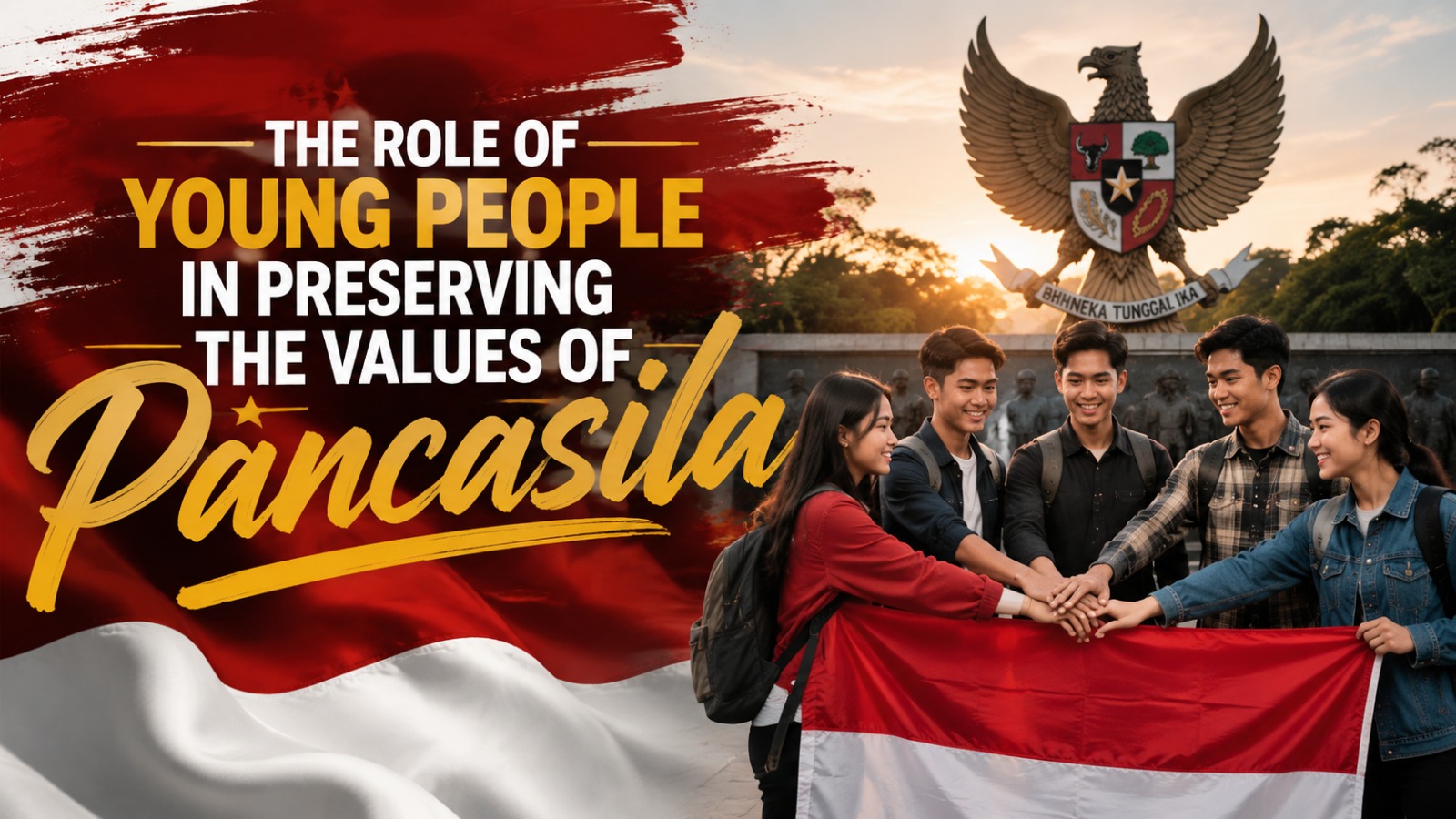
Pancasila is the foundation and national ideology of Indonesia that contains values guiding the life of society, nation, and state. These values include belief, humanity, unity, democracy, and social justice, which have an important role in maintaining Indonesia’s identity. As times continue to change, especially with the development of technology and globalization, preserving Pancasila values becomes a responsibility for all citizens, especially young people.
Young generations are the future leaders who will determine Indonesia’s direction in the coming years. Their understanding and practice of Pancasila values are essential to maintain national unity and character. By applying Pancasila in daily life, young people can become individuals who are responsible, tolerant, and able to face modern challenges without losing Indonesian identity.
THE IMPORTANCE OF YOUNG PEOPLE IN MAINTAINING PANCASILA VALUES
Young people have a strategic role in preserving Pancasila as Indonesia’s national ideology. They represent a generation that grows alongside technological developments and global changes. Because of their strong connection with modern trends, young people have the ability to introduce and spread Pancasila values through creative and innovative ways.
Maintaining Pancasila values among young generations is important because they will become future decision-makers in society. If young people understand the meaning of Pancasila, they can contribute to creating a peaceful and united nation. Therefore, youth involvement is not only expected but also necessary for the continuity of Indonesia’s national values.
APPLYING PANCASILA VALUES IN DAILY LIFE
Preserving Pancasila does not always require large actions. Young people can start by applying Pancasila principles in everyday activities. Simple behaviors such as respecting others, helping friends, following rules, and participating in social activities are examples of practicing Pancasila.
In schools and universities, students can demonstrate Pancasila values through cooperation, honesty, and respect for different opinions. In society, young people can participate in community programs and support activities that promote unity. These small actions have a significant impact on strengthening national character.
YOUNG PEOPLE AS AGENTS OF NATIONAL UNITY
Indonesia is a country with great diversity in ethnicity, religion, culture, and traditions. This diversity requires strong awareness of tolerance and unity. Young people have an important role in maintaining harmony by respecting differences and avoiding actions that create division.
Through social interaction and digital platforms, young generations can promote messages of unity and appreciation for diversity. They can become examples of how differences should be respected rather than viewed as obstacles. By strengthening unity, young people help maintain the stability and strength of Indonesia.
THE ROLE OF YOUTH IN THE DIGITAL ERA
The digital era provides young people with opportunities to spread positive messages about Pancasila values. Social media and digital platforms can be used to share educational content, promote Indonesian culture, and encourage social awareness. However, technology must be used responsibly to avoid negative impacts.
Young people should practice digital ethics by avoiding misinformation, cyberbullying, and online conflicts. Applying Pancasila in the digital world means communicating respectfully, verifying information, and creating content that benefits society. Through responsible digital behavior, youth can help build a positive online environment.
PRESERVING INDONESIAN CULTURE THROUGH PANCASILA VALUES
Culture is an important part of Indonesia’s national identity. Globalization has introduced many foreign influences that can affect how young people view their own culture. Therefore, preserving Indonesian traditions and cultural heritage is one way to maintain national identity based on Pancasila.
Young people can contribute by learning local cultures, supporting traditional arts, and promoting Indonesian heritage. By appreciating their own culture while accepting positive global influences, young generations can maintain a balance between modernization and cultural preservation.
DEVELOPING RESPONSIBLE AND MORAL CHARACTER
One of the main goals of preserving Pancasila values is developing young people with strong character. Pancasila teaches important attitudes such as honesty, responsibility, empathy, and fairness. These qualities are needed to create individuals who can contribute positively to society.
Young people with strong moral character are better prepared to face challenges in education, careers, and social life. They can make decisions based on ethical considerations and become responsible members of society. Therefore, practicing Pancasila helps shape a generation with integrity and awareness.
THE IMPORTANCE OF PANCASILA EDUCATION FOR YOUTH
Education plays an important role in helping young people understand the meaning of Pancasila ideology. Schools and universities provide opportunities for students to learn about national values and how to apply them in real situations. Pancasila education should not only focus on theory but also encourage practical actions.
Through effective education, young generations can develop a deeper understanding of their responsibilities as Indonesian citizens. They can learn how to respect differences, solve problems peacefully, and contribute to national development. This makes Pancasila education an essential part of youth character formation.
CONCLUSION
Young people have an important role in preserving the values of Pancasila because they are the generation that will continue Indonesia’s future. By understanding and applying Pancasila in daily life, youth can strengthen national unity, maintain cultural identity, and create a responsible society.
In the modern era, preserving Pancasila requires creativity and commitment from young generations. Through positive actions, responsible digital behavior, and respect for diversity, young people can ensure that Pancasila values remain alive and relevant for future generations.
About the Author
Gusti Ayu Tita P
Author — STEKOM University
An active author focused on academic issues, educational technology, and human resource development in the campus environment.