The Role Of Youth In Maintaining Indonesian Nationalism
Gusti Ayu Tita P
4 Agustus 2026
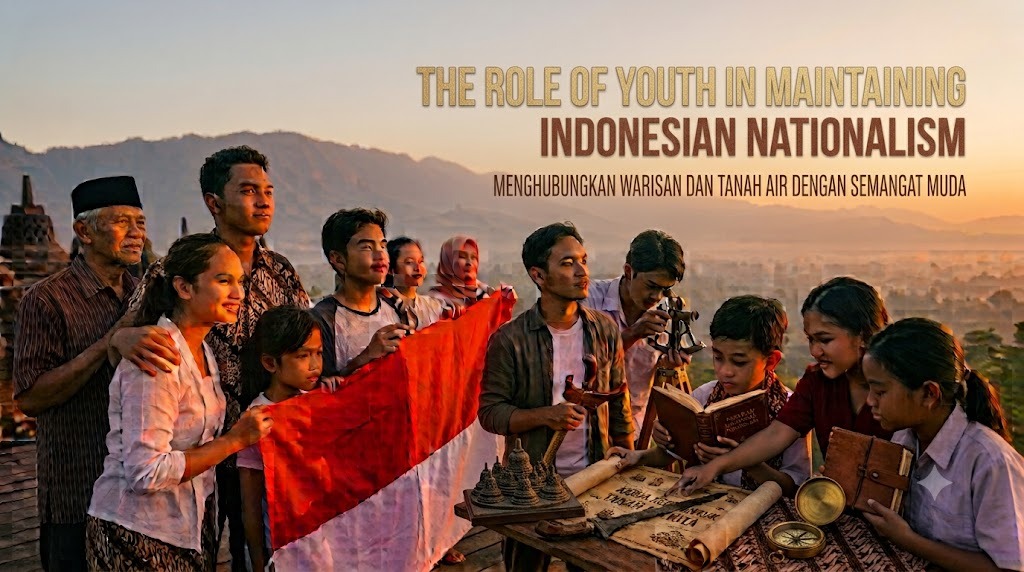
Youth have an important role in maintaining Indonesian nationalism because they represent the next generation of the country. Young people have energy, creativity, and access to technology that can be used to support positive national values. Their attitudes and actions can influence the development of society in the future. Therefore, strengthening nationalism among young people is important for maintaining national identity and unity.
Nationalism among youth does not only mean participating in ceremonies or showing national symbols. It can be demonstrated through respect for diversity, cultural preservation, social participation, responsible technology use, and support for local communities. When young people understand these values, they can contribute to Indonesia in meaningful ways. Their participation can help ensure that nationalism remains relevant in modern society.
UNDERSTANDING THE ROLE OF YOUTH IN NATIONALISM
The role of youth in nationalism involves developing a strong sense of belonging and responsibility toward Indonesia. Young people can contribute by learning about national history, respecting national values, and participating in activities that benefit society. Nationalism encourages young people to care about their country while respecting other cultures and nations. This creates a balanced understanding of national identity.
Young people also have the ability to influence their peers. Positive behavior can inspire others to become more active in their communities. Youth participation can turn nationalism from an idea into practical action. Through education, creativity, and social activities, young people can become important contributors to national development.
PRESERVING INDONESIAN CULTURE
Indonesia has a rich cultural heritage consisting of traditional arts, languages, clothing, food, music, dances, crafts, and local customs. Young people can help preserve this heritage by learning and participating in cultural activities. Cultural preservation is an important expression of national pride and identity. It also helps ensure that traditional knowledge continues to reach future generations.
Technology provides young people with new ways to introduce Indonesian culture. They can create videos, photographs, articles, podcasts, and other digital content about local traditions. Social media can make Indonesian culture more visible to both national and international audiences. By presenting cultural content accurately and respectfully, youth can help strengthen appreciation for Indonesia's diversity.
LEARNING FROM INDONESIAN HISTORY
Understanding history can help young people appreciate the development of Indonesia. Students can learn about the independence movement, national figures, important historical events, and the challenges faced by previous generations. Historical knowledge can develop appreciation for the sacrifices and efforts that shaped the country. It can also provide lessons about unity, courage, and cooperation.
Young people should not study history only by memorizing dates and names. They should understand the values behind historical events and connect them with current challenges. Learning from the past can encourage young people to become more responsible citizens in the present. This can strengthen their connection with Indonesian national identity.
DEVELOPING TOLERANCE AND RESPECT
Indonesia is a diverse country with many ethnic groups, religions, languages, cultures, and traditions. Young people need to understand that differences are part of the country's identity. Tolerance and mutual respect are essential for maintaining national unity. They help young people interact peacefully with people who have different backgrounds.
Tolerance can be practiced by listening to different opinions, avoiding discrimination, respecting religious practices, and communicating politely. Young people can also help reduce conflicts by encouraging constructive discussions. Respecting differences does not weaken nationalism but strengthens the foundation of unity. A tolerant generation can help create a more peaceful and inclusive Indonesia.
PRACTICING GOTONG ROYONG
Gotong royong, or mutual cooperation, is an important value in Indonesian society. Young people can practice it through community cleanups, social programs, environmental activities, fundraising, and volunteer work. These activities teach them to cooperate and care about the needs of others. Working together can strengthen social relationships and community solidarity.
Gotong royong also helps young people understand that national development requires collective effort. They can begin with small actions in their schools, neighborhoods, or communities. Simple acts of cooperation can create positive changes when practiced consistently. This spirit of mutual assistance is an important part of Indonesian social values.
USING SOCIAL MEDIA TO PROMOTE NATIONALISM
Young people are among the most active users of social media. They can use digital platforms to promote Indonesian culture, local products, national achievements, historical knowledge, and positive social activities. Creative digital content can encourage other young people to become more interested in Indonesia. It can also introduce Indonesian identity to global audiences.
However, social media can also spread misinformation, hate speech, and divisive content. Young people need to develop digital literacy and critical thinking before sharing information. They should check sources and communicate respectfully online. Responsible social media use is an important way for young people to practice modern nationalism.
SUPPORTING LOCAL PRODUCTS
Supporting local products is a practical way for young people to contribute to Indonesia's economy. Indonesia has many small businesses, farmers, craftsmen, and creative entrepreneurs who depend on local consumers. Young people can support these businesses by purchasing suitable products and promoting them through social media. This can help local businesses reach wider markets.
Young consumers can also develop an appreciation for the quality and creativity of Indonesian products. Supporting local products does not mean rejecting foreign products completely. Balanced consumer choices can support domestic businesses while allowing young people to remain open to global products. Strong local businesses can contribute to stronger communities and economic development.
PROTECTING THE ENVIRONMENT
Environmental protection is another important responsibility for young people. A healthy environment supports the quality of life of current and future generations. Youth can participate in waste reduction, recycling, tree planting, environmental campaigns, and community cleanups. These activities show responsibility toward the country and its natural resources.
Environmental awareness can also become part of everyday behavior. Young people can reduce unnecessary waste, save energy, use resources responsibly, and encourage others to care for nature. Protecting the environment is a form of responsibility toward Indonesia's future. Sustainable habits can create long-term benefits for society.
DEVELOPING EDUCATION AND SKILLS
Education gives young people the knowledge and skills needed to contribute to national development. Students can strengthen nationalism by studying seriously, developing critical thinking, and learning skills that are useful for society. Education can prepare young people to become capable and responsible citizens. It also helps them understand national challenges from different perspectives.
Young people should combine academic knowledge with practical experience. They can join student organizations, competitions, community projects, entrepreneurship programs, and volunteer activities. Developing skills while contributing to society can strengthen both personal growth and national development. An educated and skilled generation is an important asset for Indonesia.
FACING GLOBALIZATION WHILE MAINTAINING IDENTITY
Globalization provides young people with access to international knowledge, technology, culture, and opportunities. These influences can be positive when they encourage creativity and learning. However, excessive imitation of foreign lifestyles can sometimes reduce interest in local culture. Young people need to balance global awareness with a strong Indonesian identity.
Being open to global developments does not mean abandoning national values. Young people can learn foreign languages, use international technology, and appreciate global culture while continuing to preserve Indonesian traditions. Global competence and national identity can develop together. This balance allows youth to participate confidently in the global community.
THE IMPORTANCE OF YOUTH PARTICIPATION IN NATIONAL DEVELOPMENT
Youth participation is important because young people bring energy, creativity, innovation, and new perspectives. They can contribute through education, entrepreneurship, technology, social activities, environmental programs, and creative industries. Their ideas can help address problems faced by communities and the country. Active participation also develops leadership and responsibility.
Young people should not wait until they become adults or formal leaders to contribute. They can start by solving problems around them and helping their communities. Small contributions can become meaningful national achievements when many young people participate. Active youth involvement can help create a more innovative and resilient Indonesia.
CONCLUSION
The role of youth in maintaining Indonesian nationalism is essential for the country's future. Young people can preserve culture, learn from history, practice tolerance, participate in gotong royong, use social media responsibly, support local products, protect the environment, and develop valuable skills. These actions demonstrate that nationalism can be practiced in everyday life.
Nationalism among youth should be positive, inclusive, and relevant to modern challenges. Young people can embrace globalization without losing their Indonesian identity. By combining national pride with education, creativity, tolerance, and social responsibility, youth can become a strong force for maintaining Indonesian unity and building a better future.
About the Author
Gusti Ayu Tita P
Author — STEKOM University
An active author focused on academic issues, educational technology, and human resource development in the campus environment.