
The Untold Life of Female Migrant Workers in Hong Kong
Gusti Ayu Tita P
22 Agustus 2026
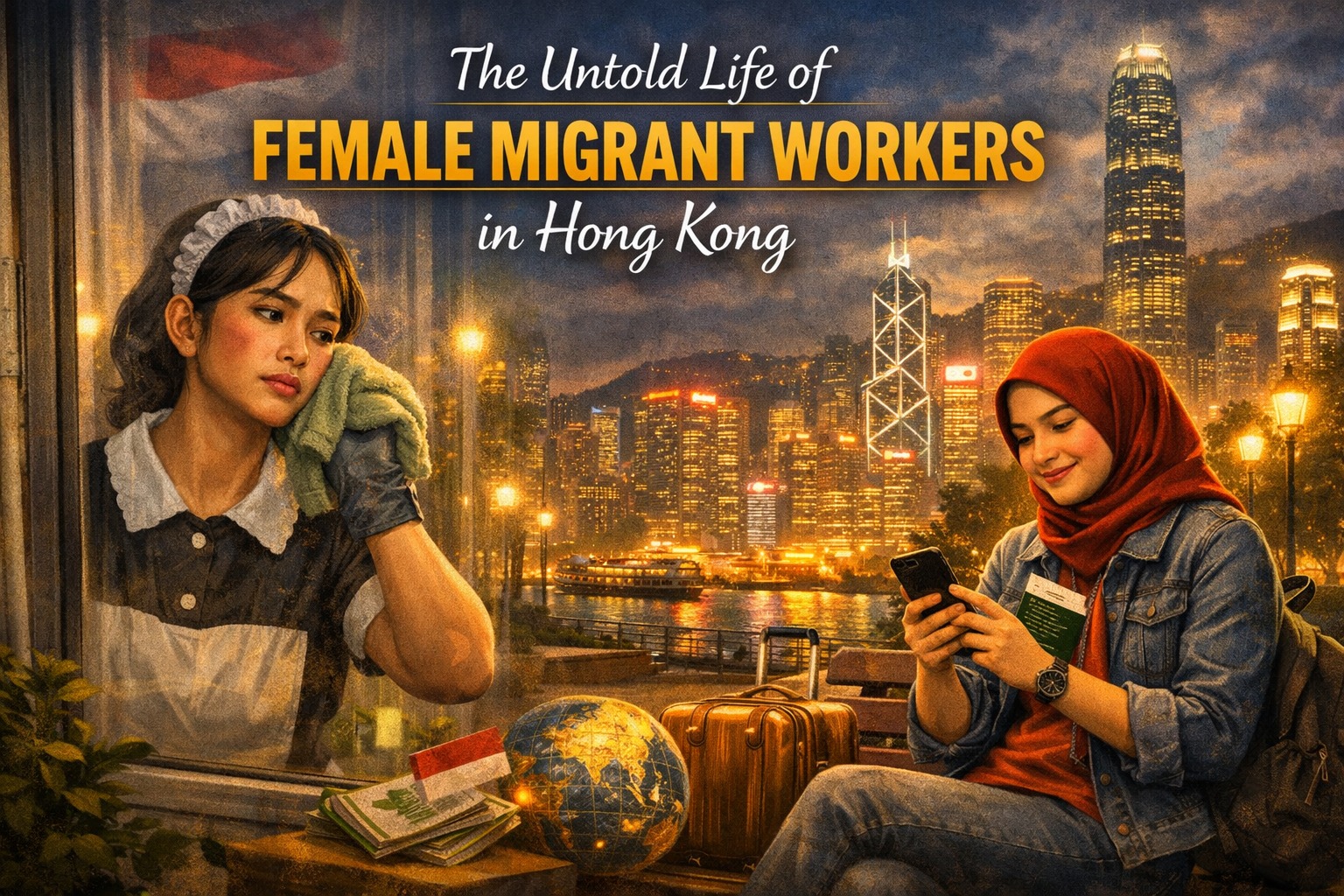
Female migrant workers have become an essential part of modern society in Hong Kong. Thousands of women leave their home countries every year with hopes of earning better income, supporting their families, and creating brighter futures for their children. Behind the busy streets, luxurious apartments, and fast-paced lifestyle of Hong Kong, there are countless untold stories of sacrifice, resilience, and determination from these hardworking women.
Although their contributions are significant, many female migrant workers still face difficult realities that are rarely discussed openly. Their daily struggles, emotional burdens, and social challenges deserve greater attention and appreciation.
WHY MANY WOMEN CHOOSE TO WORK IN HONG KONG
Hong Kong is one of the top destinations for female migrant workers, especially from countries such as Indonesia and the Philippines. The demand for domestic helpers remains high because many local families require assistance with childcare, elderly care, cooking, and household responsibilities.
For many women, working abroad is not simply a personal choice but an economic necessity. Limited job opportunities and low wages in their home countries encourage them to seek employment overseas. The salary earned in Hong Kong often allows them to provide education, healthcare, and financial stability for their families back home.
Many migrant workers become the backbone of their households. Their sacrifices help parents receive medical treatment, children continue their education, and younger siblings pursue their dreams.
THE DAILY REALITY OF FEMALE MIGRANT WORKERS
The daily routine of female migrant workers in Hong Kong is often physically and emotionally demanding. Most domestic workers wake up early in the morning and continue working until late at night. Their responsibilities may include cleaning, cooking, washing clothes, taking care of children, and assisting elderly family members.
Some workers experience supportive employers and healthy working environments. However, others face long working hours, lack of privacy, verbal abuse, or unfair treatment. Living inside the employer’s house can sometimes make it difficult for workers to separate personal time from professional responsibilities.
Despite these challenges, many women continue to work hard because they understand the importance of their income for their loved ones.
EMOTIONAL STRUGGLES FAR FROM HOME
One of the most difficult parts of being a female migrant worker is dealing with homesickness. Being separated from family for years can create emotional stress and loneliness. Many mothers miss important moments in their children’s lives, including birthdays, graduations, and family celebrations.
Communication technology has helped reduce the distance through video calls and social media, but emotional pain still remains. Some workers quietly struggle with mental exhaustion while trying to appear strong for their families.
The pressure to continuously send money home also creates financial and emotional burdens. In many cases, migrant workers prioritize their family’s needs over their own well-being.
BUILDING COMMUNITIES AND SUPPORT SYSTEMS
Despite the hardships, female migrant workers in Hong Kong have built strong communities that provide emotional support and friendship. On their days off, many workers gather in public spaces to socialize, share meals, exchange advice, and support each other.
These communities help workers feel less isolated. They also become places where women can express their feelings, discuss employment issues, and celebrate cultural traditions from their home countries.
Non-government organizations and advocacy groups in Hong Kong also play important roles in providing legal assistance, education programs, and mental health support for migrant workers.
THE CONTRIBUTION OF FEMALE MIGRANT WORKERS TO SOCIETY
Female migrant workers contribute greatly to both Hong Kong and their home countries. Their work supports countless households and allows many local professionals to focus on their careers. Without domestic workers, many families would struggle to balance work and family responsibilities.
At the same time, the money sent home by migrant workers contributes significantly to the economies of their countries through remittances. These earnings help improve living standards and create better opportunities for future generations.
Unfortunately, their contributions are often overlooked. Many workers continue to face stereotypes and discrimination despite the important services they provide every day.
THE NEED FOR GREATER RESPECT AND PROTECTION
The stories of female migrant workers highlight the importance of stronger labor protections, fair treatment, and social respect. Governments, employers, and communities all share responsibility in ensuring safe and healthy working environments.
Providing fair wages, reasonable working hours, proper living conditions, and emotional support can significantly improve the quality of life for migrant workers. Public awareness is also necessary to reduce discrimination and recognize their humanity and dignity.
Every female migrant worker carries a personal story filled with hope, sacrifice, and courage. Their experiences remind society that behind every hardworking domestic helper is a woman fighting for a better future for her family.
CONCLUSION
The untold life of female migrant workers in Hong Kong is a story of perseverance and sacrifice. While many leave their homes searching for economic opportunities, they often encounter emotional and physical challenges along the way. Despite these struggles, they continue to demonstrate strength, resilience, and dedication.
Their contributions should not remain invisible. Female migrant workers deserve appreciation, protection, and respect for the essential roles they play in society. By understanding their realities, society can build a more compassionate and fair environment for all workers.
About the Author
Gusti Ayu Tita P
Author — STEKOM University
An active author focused on academic issues, educational technology, and human resource development in the campus environment.















