The Value Of Love For The Homeland In Daily Life
Gusti Ayu Tita P
5 Agustus 2026
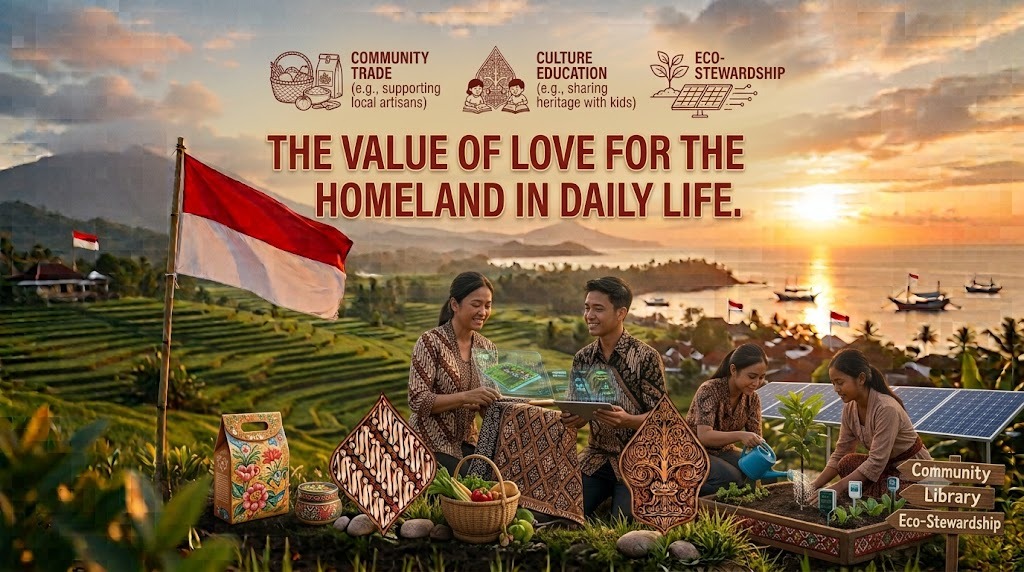
Love for the homeland is an important value that can be practiced in everyday life. It reflects pride, care, respect, and responsibility toward the country and its people. This value is not limited to national celebrations or formal ceremonies. Instead, it can be shown through simple actions that benefit families, communities, and the wider society.
For Indonesian citizens, love for the homeland is closely connected with respect for diversity, national unity, cultural preservation, and social responsibility. People can demonstrate this value through their behavior at home, school, work, and in the community. Even small positive actions can have a meaningful impact when practiced consistently. Therefore, national pride should become part of daily habits rather than only an idea.
UNDERSTANDING THE VALUE OF LOVE FOR THE HOMELAND
Love for the homeland means having a strong sense of belonging and concern for one's country. It encourages citizens to appreciate their national identity and contribute to the well-being of society. In Indonesia, this value can be connected to respect for Pancasila, national symbols, cultural diversity, and the country's history. It also encourages people to protect the interests of the community.
This value does not require extraordinary actions. Following rules, respecting other people, keeping the environment clean, helping others, and being responsible are practical examples. These behaviors can be practiced by children, students, workers, and adults. When positive habits become part of everyday life, love for the homeland becomes more meaningful.
WHY LOVE FOR THE HOMELAND MATTERS IN DAILY LIFE
Love for the homeland is important because it can encourage people to become responsible and caring members of society. A person who cares about the country is more likely to respect public spaces, follow laws, and consider the needs of others. This attitude can contribute to a safer and more harmonious community. It can also strengthen people's sense of belonging.
Daily actions have an important influence on social life. Respectful communication, cooperation, discipline, and mutual assistance can improve relationships between people. When these behaviors are practiced by many citizens, they can strengthen social trust. Therefore, love for the homeland can contribute to national development through ordinary daily behavior.
SHOWING NATIONAL PRIDE AT HOME
The family is an important place for developing national pride and responsibility. Parents and family members can introduce children to Indonesian culture, history, traditions, and national values. Simple activities such as preparing traditional food or discussing local traditions can help children appreciate their cultural identity. Families can also teach respect and responsibility through everyday examples.
Family members can demonstrate love for the homeland by respecting one another, following household rules, helping each other, and keeping their surroundings clean. Children often learn through observation, so positive examples are especially important. These habits can later influence how children behave in schools and communities. Strong values at home can become a foundation for responsible citizenship.
PRACTICING LOVE FOR THE HOMELAND AT SCHOOL
Schools play an important role in developing national values among students. Students can show love for their homeland by studying seriously and participating actively in school activities. They can also respect teachers, classmates, and school rules. These behaviors teach discipline and responsibility.
Students can participate in cultural events, community service, environmental programs, student organizations, and group projects. Such activities encourage teamwork and tolerance. They also provide opportunities for students to understand different perspectives and backgrounds. Through these experiences, national values become practical rather than theoretical.
RESPECTING INDONESIAN CULTURAL DIVERSITY
Indonesia has a rich cultural heritage that includes languages, traditional dances, music, clothing, food, crafts, and customs. Respecting this diversity is an important expression of love for the homeland. People should understand that every region contributes to Indonesia's national identity. Cultural differences should be appreciated rather than used as reasons for discrimination.
Daily cultural appreciation can be practiced in simple ways. Learning local traditions, respecting cultural celebrations, using traditional products, and sharing accurate cultural information are useful examples. Young people can also use digital platforms to introduce Indonesian culture to wider audiences. Cultural appreciation can help strengthen both national pride and social unity.
RESPECTING DIFFERENCES AND PRACTICING TOLERANCE
Indonesia is home to people with different religions, ethnicities, cultures, languages, and opinions. Because of this diversity, tolerance is essential for maintaining social harmony. People should respect differences and avoid discrimination. Mutual respect allows communities to live together peacefully.
Tolerance can be practiced through listening to others, communicating politely, treating people fairly, and cooperating across differences. Disagreements should be handled through discussion rather than hostility. These habits can be applied at home, school, work, and online. Strong tolerance can help protect national unity.
SUPPORTING LOCAL PRODUCTS
Supporting local products is another way to demonstrate love for Indonesia in daily life. Indonesian businesses produce food, clothing, handicrafts, services, and creative products. Buying quality local products can help entrepreneurs and small businesses grow. This support can contribute to economic activity within local communities.
People can also promote local businesses through social media, recommendations, reviews, and digital marketing. Young people can become entrepreneurs and create products using local resources. Innovation can help Indonesian businesses compete in wider markets. Supporting local products therefore combines national pride with economic participation.
PROTECTING THE ENVIRONMENT
Environmental care is a form of responsibility toward the homeland. Indonesia has valuable natural resources that need to be protected for future generations. Pollution, waste, and environmental damage can affect communities and the country's quality of life. Therefore, protecting nature should be part of everyday citizenship.
People can begin with simple habits such as reducing waste, saving water, conserving energy, planting trees, and keeping public spaces clean. Communities can organize clean-up activities and environmental campaigns. Schools can also teach students about sustainable habits. Consistent environmental care can create healthier communities and protect Indonesia's natural resources.
USING TECHNOLOGY RESPONSIBLY
Technology has become an important part of daily life. It can be used to learn, communicate, create, promote Indonesian culture, and support local businesses. Young people can use social media to share educational information and positive stories about Indonesia. Digital platforms can therefore become useful tools for expressing national pride.
However, technology must be used responsibly. Users should avoid false information, hate speech, cyberbullying, and content that can create unnecessary conflict. Information should be checked before being shared. Respectful digital communication can help create a safer online environment and support national unity.
DEVELOPING A STRONG WORK ETHIC
Working responsibly is another way to show care for the homeland. Discipline, honesty, creativity, and professionalism can help improve the quality of work and services in society. Students can develop a strong work ethic through their education and daily responsibilities. Workers can contribute by performing their duties honestly and professionally.
A strong work ethic can also support national development. Productive citizens help businesses, organizations, schools, and communities function more effectively. People should take pride in doing their responsibilities well, regardless of their profession. Every honest contribution can have value for society and the country.
PARTICIPATING IN COMMUNITY ACTIVITIES
Community participation allows people to practice cooperation, empathy, and social responsibility. Activities such as neighborhood clean-ups, volunteering, social programs, and community projects can strengthen relationships. They also provide opportunities to help people who need support. These activities show that caring for the homeland includes caring for fellow citizens.
Young people can participate through school organizations, volunteer activities, social campaigns, and community programs. They can contribute their time, skills, or ideas according to their abilities. Working together can teach important lessons about responsibility and teamwork. Strong community participation can create a more connected and supportive society.
THE ROLE OF YOUNG PEOPLE IN DAILY NATIONALISM
Young people have an important role in maintaining national pride in modern daily life. They can combine education, creativity, technology, and social awareness to create positive contributions. Their activities can include promoting Indonesian culture, supporting local businesses, protecting the environment, and creating useful digital content. These actions can influence their peers and communities.
Young people also need to develop discipline, tolerance, critical thinking, and responsibility. They should be open to global knowledge while remaining connected to Indonesian identity. By developing strong character and useful skills, they can prepare themselves to contribute to national development. Their daily choices can help shape Indonesia's future.
CONCLUSION
The value of love for the homeland can be seen through everyday actions. Respecting differences, preserving culture, supporting local products, protecting the environment, using technology responsibly, studying seriously, and participating in community activities are practical examples. These actions may seem simple, but they can create positive effects when practiced consistently. Nationalism therefore does not have to be limited to special occasions.
Ultimately, love for the homeland is a shared responsibility. Every citizen can contribute according to their abilities and circumstances. When people develop positive habits and care about their communities, they help strengthen social harmony and national unity. By practicing love for Indonesia in daily life, society can build a stronger, more responsible, and more prosperous future.
About the Author
Gusti Ayu Tita P
Author — STEKOM University
An active author focused on academic issues, educational technology, and human resource development in the campus environment.