Tips for Choosing Best-Selling Products for a Personal Shopper Business
Gusti Ayu Tita P
10 September 2026
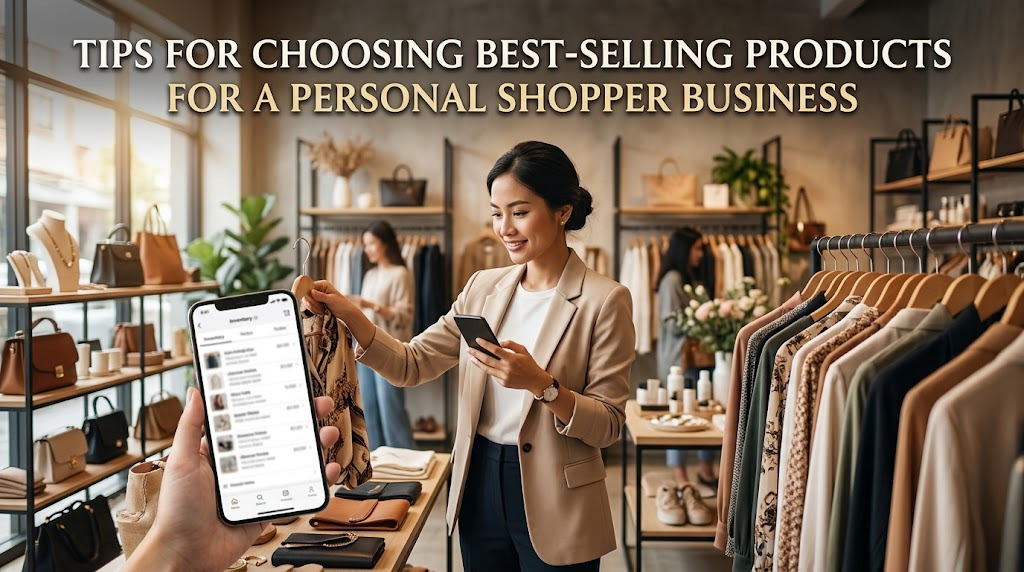
Choosing the right products is one of the most important steps in developing a personal shopper business. Best-selling products are items that have strong customer demand and a good possibility of being ordered repeatedly. However, a product that is popular in one location may not necessarily be popular in another. Therefore, shoppers need to understand customer demand, product availability, and market trends before deciding what to offer.
The selected products should also be practical to purchase, store, package, and deliver. Items that are difficult to transport or easily damaged may create additional costs and risks. Beginners should start with products that are relatively easy to handle and have a clear target market. This approach can make business operations more manageable.
RESEARCHING CUSTOMER DEMAND
Market research helps shoppers identify products that potential customers actually want. Information can be collected from social media trends, online marketplaces, customer requests, reviews, and discussions in online communities. A shopper can also ask existing customers which products they are interested in purchasing. This information provides a useful basis for selecting products with better sales potential.
Customer demand should be evaluated regularly because preferences can change quickly. Seasonal products may become popular during holidays, school periods, or special events. Meanwhile, certain everyday products can have more stable demand throughout the year. Combining trend-based products and consistently demanded products can create a more balanced product selection.
CHECKING PRODUCT POPULARITY AND COMPETITION
A product may have high demand but also face strong competition from many sellers and personal shoppers. Before offering an item, the shopper should compare prices, product quality, availability, and competitor service fees. This helps determine whether the product can generate a reasonable profit. Products with unique characteristics or limited availability may provide a stronger reason for customers to use a personal shopper.
It is also useful to observe which products receive high engagement online. Frequent questions, comments, shares, and customer requests can indicate potential interest. However, high online popularity does not always guarantee actual purchases. The shopper should combine online engagement with real order data before making larger purchasing decisions.
CONSIDERING PRODUCT PRICE AND PROFIT POTENTIAL
Product price is another important factor when selecting items for a profitable personal shopper business. Products that are too expensive may have a smaller customer base, while very cheap products may generate limited profit after service and delivery costs. The shopper should calculate the product price together with the personal shopper service fee, transportation, packaging, and shipping expenses.
Profit should be calculated before accepting an order or promoting a product. A product can appear attractive because it sells quickly, but the business may still earn little if the costs are too high. Therefore, shoppers should focus on profit margin and overall business value, not simply the number of products sold. Accurate calculations can help prevent unnecessary financial losses.
CHOOSING PRODUCTS THAT ARE EASY TO HANDLE
A good personal shopper product should be relatively easy to inspect, package, and transport. Lightweight, durable, and appropriately sized products are often easier to manage than items that are fragile or require special storage. The shopper should consider whether the product could be damaged during transportation. Packaging requirements should also be included when calculating the total business cost.
Some products may have additional handling or delivery restrictions. Perishable goods, fragile items, liquids, and products with special shipping requirements require extra attention. Beginners should understand these considerations before accepting customer orders. Selecting manageable products can help maintain service quality and customer satisfaction.
FOLLOWING TRENDS WITHOUT IGNORING STABILITY
Following trends can help a personal shopper service attract attention and gain new customers. Products that become popular through social media may generate significant interest within a short period. However, trends can also disappear quickly, leaving the shopper with limited demand. For this reason, shoppers should avoid depending entirely on temporary trends.
A balanced product strategy can include trending products, local specialties, and everyday items with more stable demand. Seasonal products can also be added when there is a clear opportunity. The shopper should monitor sales performance and remove products that consistently receive little interest. This allows the product selection to remain relevant without creating unnecessary inventory risks.
TESTING PRODUCTS BEFORE EXPANDING THE SELECTION
Beginners do not need to offer dozens of products immediately. A better approach is to test a small selection and observe customer responses. The shopper can promote several products, collect inquiries, and record which items receive actual orders. This method provides practical information without requiring a large investment.
After identifying products with strong demand, the shopper can gradually expand the selection. Sales records, customer feedback, repeat orders, and profit margins can be used to evaluate product performance. Products that consistently perform well can become the main focus of the business. This gradual approach can reduce financial risk and support more sustainable growth.
CONCLUSION
Choosing best-selling products is essential for building a successful personal shopper business. Shoppers should research customer demand, monitor market trends, compare competition, and calculate profit potential before selecting products. They should also consider whether products are easy to handle, package, and deliver. By testing products on a small scale and analyzing actual customer responses, a personal shopper can develop a profitable product selection while reducing unnecessary business risks.
About the Author
Gusti Ayu Tita P
Author — STEKOM University
An active author focused on academic issues, educational technology, and human resource development in the campus environment.