
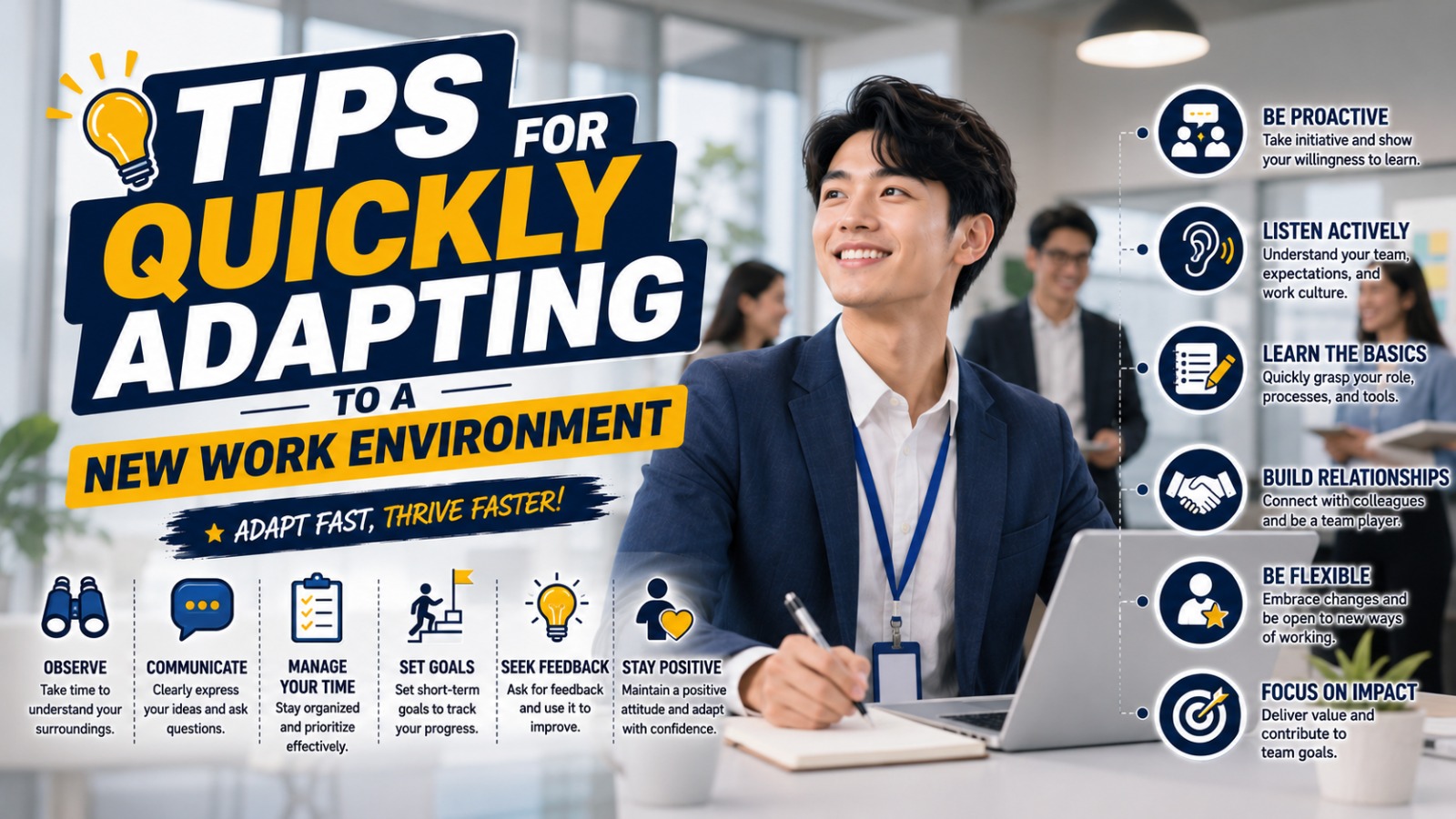
Starting a new job can be an exciting experience, but it can also feel challenging and stressful. Every workplace has a different culture, system, and communication style that employees must understand. The ability to adapt quickly to a new work environment is important for building confidence, improving performance, and creating positive relationships with coworkers. Employees who adjust effectively usually feel more comfortable and productive in their new roles.
LEARN ABOUT THE COMPANY CULTURE
Understanding company culture is one of the first steps to adapting successfully. Observe how coworkers communicate, collaborate, and handle responsibilities in daily activities. Pay attention to workplace values, professional ethics, and organizational expectations.
Every company has its own unique environment. Some workplaces are formal and structured, while others are more flexible and casual. Learning these differences can help new employees adjust their behavior appropriately.
BUILD GOOD COMMUNICATION WITH COWORKERS
Positive communication can make adaptation easier and faster. Introduce yourself confidently, be friendly, and show respect to colleagues. Building good relationships with coworkers creates a supportive and comfortable work atmosphere.
Do not hesitate to ask questions when you need clarification. Most coworkers appreciate employees who are willing to learn and communicate openly.
STAY OPEN TO LEARNING
New employees often face unfamiliar tasks, systems, and procedures. Being open to learning is essential for adapting successfully. Accept feedback positively and use it as an opportunity for improvement.
Employees who show enthusiasm for learning usually gain trust more quickly from supervisors and team members. Continuous learning also helps increase confidence and work performance.
OBSERVE AND ADAPT TO WORK HABITS
Each workplace has different routines and expectations. Observe how deadlines are managed, how meetings are conducted, and how tasks are prioritized. Understanding these habits can help new employees fit into the team more smoothly.
Adapting does not mean losing individuality, but it involves respecting workplace standards and maintaining professionalism.
DEVELOP TIME MANAGEMENT SKILLS
Managing time effectively is important when adjusting to a new role. New employees often receive many responsibilities and information at once, so organizing tasks carefully becomes necessary.
Creating schedules, setting priorities, and avoiding procrastination can help employees remain productive and reduce unnecessary stress.
MAINTAIN A POSITIVE ATTITUDE
A positive attitude can greatly influence the adaptation process. Staying optimistic, patient, and confident helps employees handle workplace challenges more effectively.
Mistakes are normal during the early stages of a new job. Instead of feeling discouraged, use those experiences as lessons to improve and grow professionally.
SHOW INITIATIVE AND RESPONSIBILITY
Employers appreciate employees who take initiative and demonstrate responsibility. Completing tasks on time, offering help to teammates, and showing dedication can create a positive impression in the workplace.
Taking initiative also shows that an employee is motivated and ready to contribute to the company’s success.
MANAGE STRESS EFFECTIVELY
Adapting to a new environment may sometimes feel overwhelming. Managing stress is important for maintaining focus and emotional balance. Taking short breaks, maintaining healthy habits, and getting enough rest can help employees stay productive.
Balancing work responsibilities with personal well-being can improve both performance and job satisfaction.
BUILD PROFESSIONAL RELATIONSHIPS
Creating strong professional relationships can make the workplace more comfortable and enjoyable. Networking within the company allows employees to learn from experienced coworkers and gain valuable career insights.
Positive professional relationships also help improve teamwork and create better opportunities for future career development.
CONCLUSION
Quickly adapting to a new work environment requires communication, flexibility, and a willingness to learn. By understanding company culture, building positive relationships, managing time effectively, and maintaining a professional attitude, employees can feel more confident and productive in their new workplace. Adaptation is a gradual process, but with patience and consistent effort, every employee can successfully become part of a new professional environment.
About the Author
Gusti Ayu Tita P
Author — STEKOM University
An active author focused on academic issues, educational technology, and human resource development in the campus environment.