
Tips for Starting a Career in Archaeology and Historic Site Preservation?
Gusti Ayu Tita P
4 September 2026
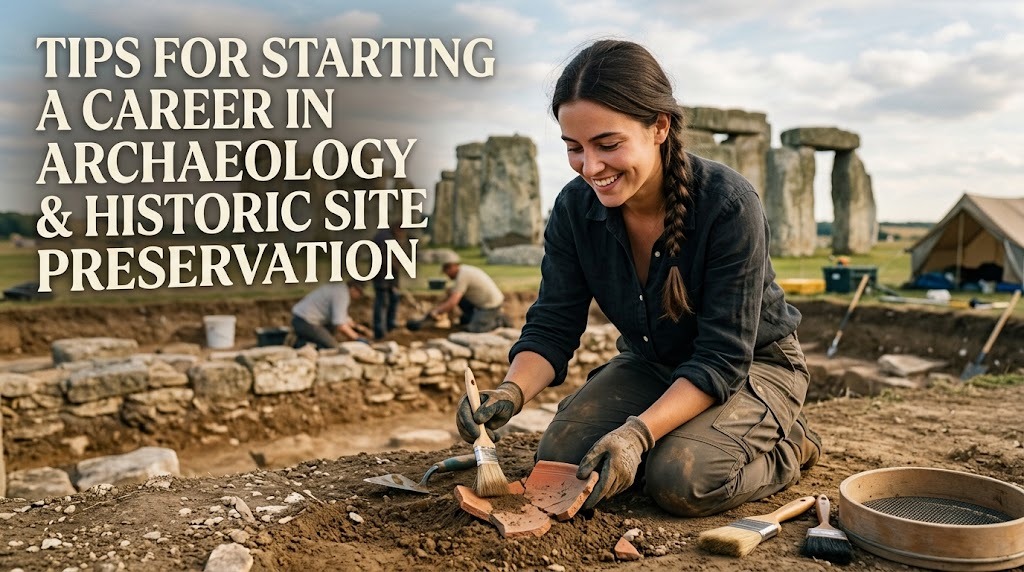
Archaeology and historic site preservation are fields that combine history, research, culture, and practical work. A career in these areas allows people to study the past while helping protect important places for future generations. Historic sites can provide valuable information about societies, traditions, architecture, and historical events. Because of this, professionals in heritage preservation have an important responsibility to maintain these resources carefully. Starting a career in this field requires education, practical experience, research skills, and strong cultural awareness.
UNDERSTANDING ARCHAEOLOGY AND HISTORIC SITE PRESERVATION
Archaeology focuses on studying past human societies through physical evidence such as artifacts, buildings, burial sites, tools, and other remains. Historic site preservation focuses on protecting places that have historical, cultural, architectural, or social value. Both fields are connected because archaeological findings often need proper protection after they are discovered. Professionals may work at excavation sites, museums, research institutions, universities, or heritage organizations. Understanding the difference and connection between these fields can help beginners choose a suitable career direction.
A career in archaeology may involve fieldwork, research, documentation, laboratory analysis, and academic study. Meanwhile, preservation work can include site maintenance, conservation planning, public education, and heritage management. Some professionals combine archaeological knowledge with preservation skills. This combination can provide a broader understanding of how historical resources should be studied and protected.
BUILDING THE RIGHT EDUCATIONAL FOUNDATION
Education is an important starting point for anyone interested in archaeology and historic site preservation. Students can consider programs related to archaeology, history, anthropology, architecture, conservation, or cultural heritage. These subjects provide basic knowledge about historical periods, research methods, cultural practices, and heritage management. Academic education can also introduce students to ethical standards when working with historical materials and communities. Choosing a field that matches personal interests can make long-term career development more enjoyable.
Students should also develop knowledge outside their main subject. Learning about geography, sociology, architecture, digital technology, and environmental studies can provide useful supporting skills. Reading academic publications and visiting museums or historic sites can strengthen practical understanding. Participation in seminars, workshops, and educational programs can also introduce students to current issues in heritage preservation. A strong educational foundation helps beginners become more prepared for professional opportunities.
DEVELOPING ESSENTIAL RESEARCH AND FIELDWORK SKILLS
Research skills are essential for archaeology and historic site preservation because professionals often need to examine information from different sources. Beginners should learn how to collect, organize, evaluate, and interpret historical evidence. Fieldwork skills are equally important because archaeological and preservation activities often take place directly at historic locations. Careful observation, accurate measurement, photography, mapping, and documentation can support reliable research. These skills also help reduce mistakes when recording important historical information.
Attention to detail is another valuable quality in this career. Small features such as inscriptions, building materials, architectural patterns, or changes in the condition of a site may provide useful information. Professionals must record findings accurately and avoid making unsupported conclusions. Learning how to work systematically can improve both research quality and field performance. Patience, accuracy, curiosity, and critical thinking are valuable characteristics for anyone entering this profession.
GAINING PRACTICAL EXPERIENCE
Practical experience can help students understand what working in archaeology and heritage preservation is actually like. Internships, volunteer programs, field schools, museum activities, and research projects can provide opportunities to develop real-world skills. Beginners may assist with documentation, site surveys, artifact organization, educational programs, or basic conservation activities. These experiences can also help students understand professional responsibilities and workplace expectations. Practical experience is especially useful when building a portfolio for future employment or further study.
Networking can also play an important role in career development. Students can meet researchers, archaeologists, museum professionals, architects, conservation specialists, and heritage managers through academic events and professional activities. Building positive professional relationships can provide information about internships, projects, training programs, and employment opportunities. Beginners should focus on learning from experienced professionals rather than simply collecting contacts. A combination of education, experience, and professional networking can create a stronger career foundation.
LEARNING DIGITAL TOOLS AND CONSERVATION METHODS
Technology has become increasingly useful in archaeological research and historic site preservation. Professionals may use digital photography, geographic information systems, three-dimensional scanning, digital mapping, databases, and other tools to document historical resources. These technologies can make information easier to analyze, store, and share. Beginners who develop basic digital skills can have an advantage when applying for modern heritage-related positions. Technology can also support the creation of virtual records when physical sites are difficult to access or vulnerable to damage.
However, technology should support professional knowledge rather than replace careful observation and ethical decision-making. Students should learn how digital information is collected, stored, interpreted, and protected. They should also understand that cultural materials and historical data may require responsible handling. Combining digital skills with traditional research and conservation methods can make professionals more adaptable. Continuous learning is important because heritage technology continues to develop.
BUILDING A PROFESSIONAL CAREER IN HERITAGE PRESERVATION
After developing education, skills, and experience, beginners can explore different career paths in archaeology and historic site preservation. Possible roles include archaeologist, heritage researcher, conservation assistant, museum professional, site manager, cultural heritage educator, documentation specialist, and heritage consultant. Some professionals continue into postgraduate education and academic research. Others work with museums, government institutions, cultural organizations, universities, or private conservation projects. The right career path depends on personal interests, educational background, and professional goals.
Career development should be treated as a long-term process. Professionals need to continue improving their research methods, technical abilities, communication skills, and understanding of cultural heritage. Ethical awareness is also essential because heritage work involves places and materials that may hold deep meaning for communities. Respect for local traditions and cooperation with communities can strengthen preservation efforts. With consistent learning and practical experience, a career in archaeology and historic site preservation can become both professionally rewarding and socially meaningful.
CONCLUSION
Starting a career in archaeology and historic site preservation requires more than an interest in history. Beginners need to build a strong educational foundation, develop research and fieldwork skills, gain practical experience, and understand modern technology. Professional networking and continuous learning can also open new opportunities. Most importantly, heritage professionals should work with accuracy, responsibility, respect, and cultural awareness. By developing these qualities, young professionals can contribute to protecting historic sites and keeping valuable knowledge about the past available for future generations.
About the Author
Gusti Ayu Tita P
Author — STEKOM University
An active author focused on academic issues, educational technology, and human resource development in the campus environment.