Toxic Positivity vs Positive Thinking What Is the Difference?
Gusti Ayu Tita P
29 Juli 2026
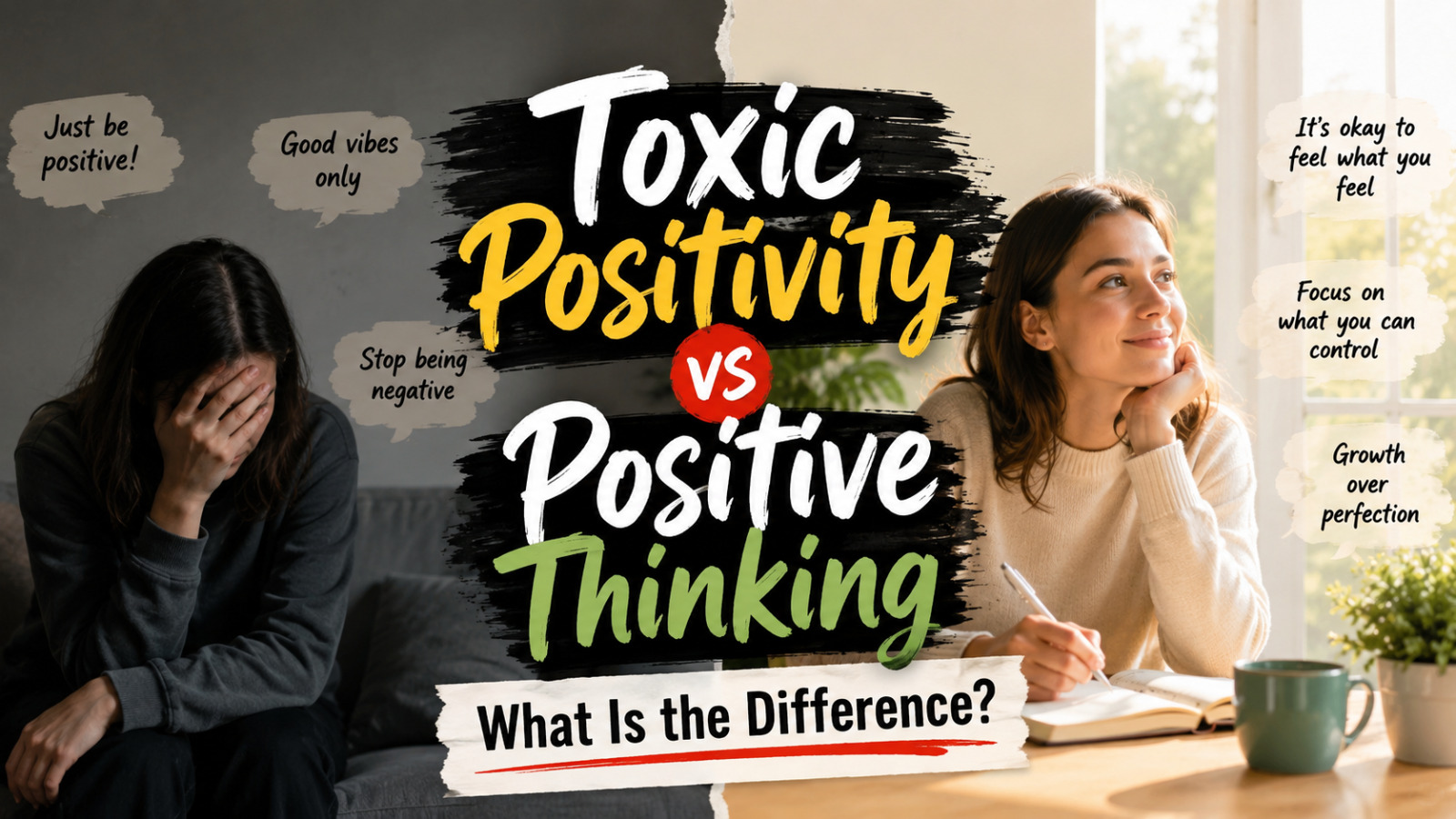
In today's fast-paced world, many people are encouraged to "stay positive" no matter what happens. While maintaining a positive mindset can improve emotional well-being, forcing positivity in every situation can have the opposite effect. This unhealthy attitude is known as toxic positivity, and it often causes people to ignore or suppress their real emotions.
Understanding the difference between toxic positivity and positive thinking is essential for developing better mental and emotional health. Healthy optimism accepts difficult emotions while encouraging hope and resilience. In contrast, toxic positivity dismisses pain and pressures people to appear happy even when they are struggling.
WHAT IS TOXIC POSITIVITY?
Toxic positivity is the belief that people should maintain a positive attitude regardless of how difficult or painful a situation may be. It often appears in phrases such as "Just stay positive," "Everything happens for a reason," or "Don't think negatively." Although these statements may sound encouraging, they can make someone feel misunderstood or emotionally isolated. Ignoring sadness, anger, or fear does not make those emotions disappear.
Instead, suppressed emotions often become more difficult to manage over time. People who experience toxic positivity may feel guilty for having normal emotional reactions. Accepting emotions is much healthier than pretending they do not exist. Emotional honesty is an important part of long-term mental well-being.
WHAT IS POSITIVE THINKING?
Positive thinking is a healthy mindset that recognizes challenges while believing that solutions and personal growth are possible. It does not deny pain or disappointment. Instead, it encourages people to acknowledge their feelings before focusing on constructive actions.
Healthy positive thinking promotes self-awareness, resilience, and problem-solving. A person can admit feeling anxious or sad while still believing things can improve. This balanced approach helps build emotional strength without ignoring reality. It also supports healthier relationships because people feel heard and understood.
KEY DIFFERENCES BETWEEN TOXIC POSITIVITY AND POSITIVE THINKING
The biggest difference lies in how emotions are treated. Toxic positivity rejects uncomfortable feelings and replaces them with forced optimism. Positive thinking, on the other hand, accepts emotions as a natural part of life before looking for hope and practical solutions.
Another important difference is the impact on mental health. Toxic positivity may increase stress, loneliness, and emotional exhaustion because people feel pressured to hide their struggles. Positive thinking encourages emotional balance by allowing both positive and negative emotions to exist together. This approach creates healthier coping strategies during difficult times.
WHY TOXIC POSITIVITY CAN BE HARMFUL
When people constantly hear that they should always be happy, they may stop expressing their true feelings. This can lead to emotional suppression, increased anxiety, and even burnout. Over time, avoiding difficult emotions may make recovery from stressful experiences more challenging.
Toxic positivity can also weaken relationships. Friends or family members may feel unsupported if their emotions are dismissed instead of acknowledged. Showing empathy and listening without judgment often provides much greater comfort than offering unrealistic positivity. Genuine support begins with understanding, not denial.
HOW TO PRACTICE HEALTHY POSITIVE THINKING
Start by allowing yourself to experience every emotion without shame. Feeling sad, disappointed, or frustrated is a normal part of being human. Accepting these feelings creates space for healing and personal growth. Self-compassion is often more powerful than forced happiness.
Next, focus on what you can control instead of denying reality. Set realistic goals, practice gratitude, and seek support when necessary. Healthy positive thinking combines optimism with honesty. This balanced mindset helps people face life's challenges with confidence while remaining emotionally authentic.
CONCLUSION
The difference between toxic positivity and positive thinking is not about being optimistic or pessimistic. It is about whether emotions are accepted or ignored. Healthy positive thinking encourages hope while respecting genuine feelings, whereas toxic positivity pressures people to hide emotional pain.
By recognizing this distinction, individuals can develop stronger emotional resilience, improve relationships, and maintain better mental health. The healthiest form of positivity is one that embraces reality, supports emotional honesty, and inspires meaningful personal growth.
About the Author
Gusti Ayu Tita P
Author — STEKOM University
An active author focused on academic issues, educational technology, and human resource development in the campus environment.