Traditional Ceremonies That Reflect the Spirit of Indonesian Palaces
Gusti Ayu Tita P
4 September 2026
Indonesian royal palaces are more than historic buildings. They are cultural spaces where traditions, values, arts, and community life continue to develop across generations. Among the most meaningful parts of palace culture are traditional ceremonies, which preserve stories and philosophies from the past. In Java, palace ceremonies often combine rituals, music, dance, clothing, offerings, and symbolic objects. These practices provide an important way to understand the cultural heritage of Indonesia.
THE MEANING OF PALACE CEREMONIES
Traditional palace ceremonies are usually connected to important moments in religious, cultural, or royal life. Some ceremonies are held annually, while others take place according to particular events or traditional calendars. Although each palace has its own customs, many ceremonies emphasize respect, harmony, gratitude, and spiritual reflection. The traditions are carefully maintained because they are considered part of the palace's cultural identity.
Ceremonies also function as a bridge between generations. Older members of palace communities can teach younger generations about traditional practices, etiquette, and symbolic meanings. Through this process, cultural knowledge is not simply recorded in books but practiced in real life.
SEKATEN AND THE SPREAD OF CULTURAL TRADITIONS
One well known Javanese palace tradition is Sekaten, which is strongly associated with the royal courts of Yogyakarta and Surakarta. The ceremony is traditionally connected with the commemoration of the birth of the Prophet Muhammad and has historical links to the development of Islam in Java. One of its distinctive features is the playing of traditional palace gamelan. The sound of the gamelan attracts visitors and creates a unique cultural atmosphere around the palace.
Sekaten demonstrates how Javanese traditions can combine Islamic values and local cultural practices. The tradition has changed in some aspects over time, but its cultural significance remains important. It also shows how palaces historically became spaces where religion, art, and community activities interacted.
GREBEG AS A SYMBOL OF GRATITUDE
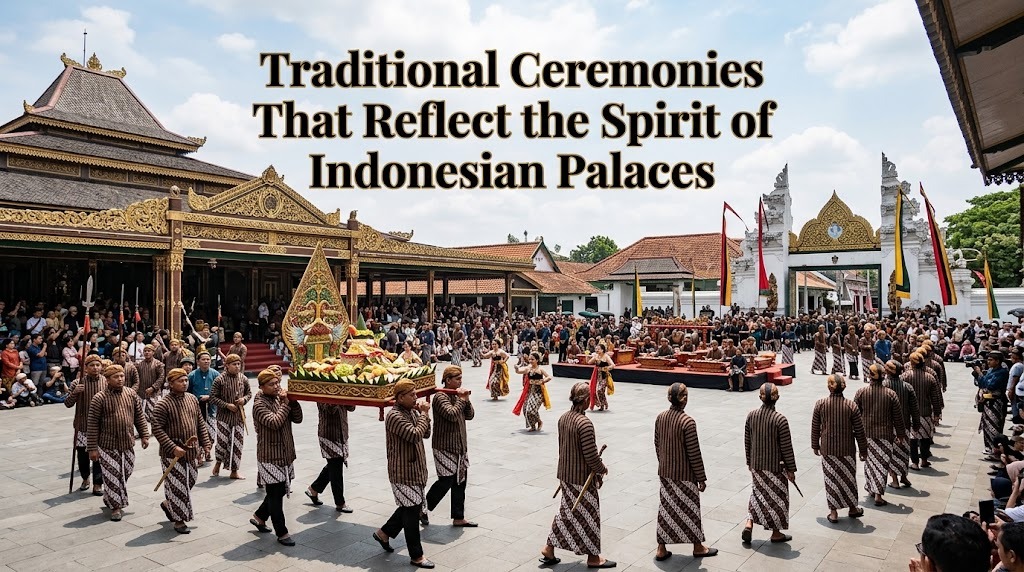
Another important palace tradition is Grebeg, a ceremony associated with the royal courts of Java, particularly Yogyakarta. During Grebeg, large ceremonial offerings known as gunungan are presented as part of the palace tradition. These offerings contain various agricultural products and foods arranged into distinctive forms. After the ceremony, the gunungan may become the focus of a communal tradition in which people seek symbolic blessings.
Grebeg reflects ideas of gratitude, prosperity, and community. The ceremony also demonstrates the importance of agriculture and food within traditional Javanese society. Beyond its ritual meaning, Grebeg has become an important cultural attraction that allows visitors to observe elements of royal tradition.
LABUHAN AND THE RELATIONSHIP WITH NATURE
Labuhan is another traditional ceremony associated with the Yogyakarta royal tradition. It involves offerings placed at locations that have important cultural and spiritual significance, including areas connected with the sea or mountains. The ceremony reflects the traditional Javanese understanding of maintaining harmony between people, nature, and the spiritual world. It is also connected with royal traditions and prayers for safety and well being.
The meaning of Labuhan goes beyond the physical offerings themselves. The ceremony represents respect for nature and cultural continuity. For many observers, it provides an example of how traditional beliefs and environmental awareness can exist within a broader cultural framework.
PALACE ARTS AND CEREMONIAL PERFORMANCE
Traditional ceremonies are often accompanied by forms of Javanese art, including gamelan music, dance, traditional clothing, and other ceremonial performances. These artistic elements are not merely decorations because they can carry specific meanings and follow established cultural rules. Palace ceremonies therefore provide opportunities for traditional artists and cultural practitioners to continue practicing their skills. This helps protect forms of artistic knowledge that might otherwise become less common.
Traditional clothing also plays an important role in creating the visual identity of a ceremony. Specific garments, accessories, and arrangements can communicate status, respect, and cultural values. Through ceremonies, visitors can see how music, movement, clothing, and ritual combine into a complete cultural expression.
PRESERVING THE SPIRIT OF INDONESIAN PALACES
Traditional ceremonies help Indonesian palaces remain meaningful cultural institutions rather than simply historical landmarks. They provide communities with opportunities to maintain living traditions and pass cultural knowledge from one generation to another. At the same time, ceremonies can support cultural tourism by introducing visitors to Indonesian history and local customs. Responsible tourism can help increase appreciation for these traditions while encouraging their preservation.
However, preserving palace ceremonies requires respect for their original meanings. Visitors should understand that these practices are cultural traditions rather than simply tourist performances. Education, community participation, and careful cultural preservation are important for ensuring that ceremonies remain meaningful in the future.
CONCLUSION
Traditional ceremonies reflect the spirit of Indonesian palaces through their combination of history, spirituality, art, community, and cultural values. Traditions such as Sekaten, Grebeg, and Labuhan demonstrate the diversity of Javanese palace culture and its ability to survive across generations. They also show how historic traditions can remain relevant in modern Indonesia. By understanding and respecting these ceremonies, society can help preserve the cultural identity represented by Indonesian royal palaces
About the Author
Gusti Ayu Tita P
Author — STEKOM University
An active author focused on academic issues, educational technology, and human resource development in the campus environment.