Transparency and Accountability in Government
Gusti Ayu Tita P
22 Juli 2026
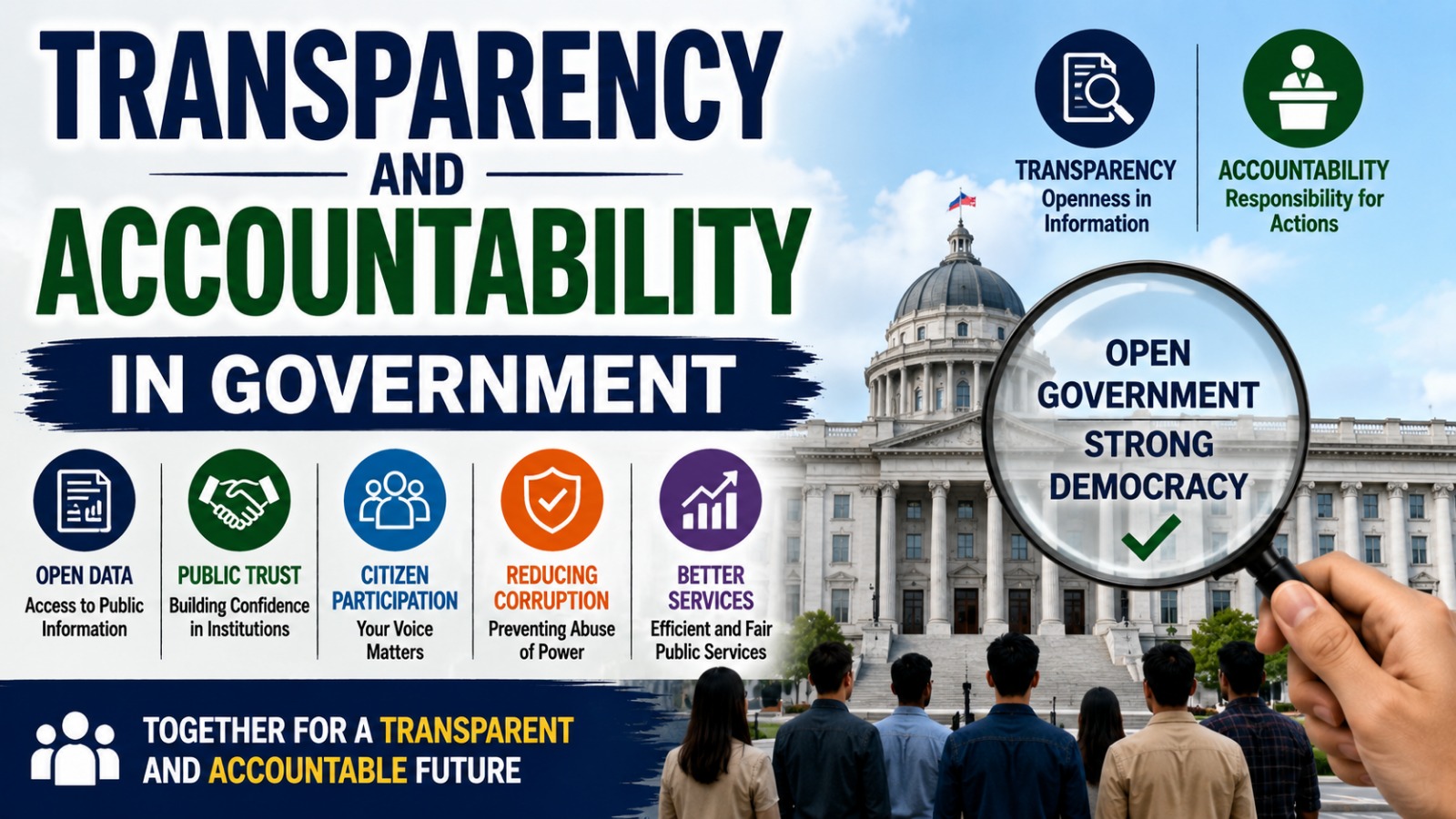
Transparency and accountability are essential foundations of good governance. In modern societies, citizens expect governments to act honestly, fairly, and responsibly in managing public resources and making important decisions. Without transparency and accountability, corruption can grow, public trust can decline, and social inequality may increase.
Governments that prioritize openness and responsibility are more likely to gain public confidence and create stable development. In the digital era, transparency and accountability have become even more important as citizens demand greater access to information and stronger oversight of public institutions.
UNDERSTANDING TRANSPARENCY IN GOVERNMENT
Transparency refers to the openness of government activities, decisions, and policies. It allows citizens to access information about how public institutions operate and how public funds are used.
Transparent governments provide clear information regarding budgets, regulations, development projects, and decision-making processes. This openness helps reduce secrecy and prevents abuse of power.
UNDERSTANDING ACCOUNTABILITY IN GOVERNMENT
Accountability means that government officials and institutions are responsible for their actions and decisions. Public leaders must explain their policies, follow legal standards, and accept consequences when mistakes or violations occur.
Accountability ensures that power is not misused for personal or political gain. It also encourages ethical behavior and professionalism within public institutions.
WHY TRANSPARENCY AND ACCOUNTABILITY ARE IMPORTANT?
Strong transparency and accountability systems provide many benefits for society and national development.
1.REDUCING CORRUPTION
Open systems make it more difficult for corrupt practices to remain hidden. Public access to information allows citizens and media organizations to monitor government activities more effectively.
2.BUILDING PUBLIC TRUST
Citizens are more likely to trust governments that operate honestly and communicate openly. Trust is important for maintaining social stability and public cooperation.
3.IMPROVING PUBLIC SERVICES
Transparent and accountable institutions tend to manage resources more efficiently, leading to better healthcare, education, transportation, and infrastructure services.
4.ENCOURAGING FAIR DECISION-MAKING
When policies and decisions are made openly, citizens can better understand the reasons behind government actions and participate more actively in democracy.
THE ROLE OF TECHNOLOGY IN PROMOTING TRANSPARENCY
Digital technology has become a powerful tool for increasing government transparency and accountability.
1.ONLINE PUBLIC INFORMATION
Government websites and digital platforms allow citizens to access budgets, policies, and public service information quickly and easily.
2.ELECTRONIC PROCUREMENT SYSTEMS
Digital procurement systems reduce opportunities for bribery and favoritism by creating transparent bidding processes.
3.DIGITAL REPORTING SYSTEMS
Citizens can use online platforms to report corruption, misconduct, or poor public services directly to authorities.
4.OPEN DATA INITIATIVES
Open data programs allow researchers, journalists, and the public to analyze government information independently.
CHALLENGES IN IMPLEMENTING TRANSPARENCY
Although transparency and accountability are important, several obstacles still exist.
1.RESISTANCE TO OPENNESS
Some individuals or institutions may resist transparency because they benefit from hidden or unfair systems.
2.LIMITED PUBLIC ACCESS
Not all communities have equal access to digital information and public services.
3.WEAK LAW ENFORCEMENT
Transparency alone is not enough if violations are not investigated or punished fairly.
4.MISINFORMATION
In the digital era, false information can spread quickly and reduce public trust if communication is not managed carefully.
HOW SOCIETY CAN SUPPORT ACCOUNTABLE GOVERNMENT?
Citizens play an important role in encouraging transparent governance.
People can participate in elections, monitor public policies, report corruption, and support ethical leadership. Media organizations, educational institutions, and civil society groups also help strengthen accountability through independent oversight and public education.
When governments and citizens work together, democratic systems become stronger and more effective.
CONCLUSION
Transparency and accountability are key elements of responsible government. They help reduce corruption, improve public services, strengthen democracy, and build trust between governments and citizens.
Although challenges still exist, technological innovation and active public participation can support more open and accountable governance. By promoting honesty, fairness, and responsibility, societies can create stronger institutions and a better future for everyone.
About the Author
Gusti Ayu Tita P
Author — STEKOM University
An active author focused on academic issues, educational technology, and human resource development in the campus environment.