
Turning Social Pressure Into Peace Through JOMO
Gusti Ayu Tita P
7 September 2026
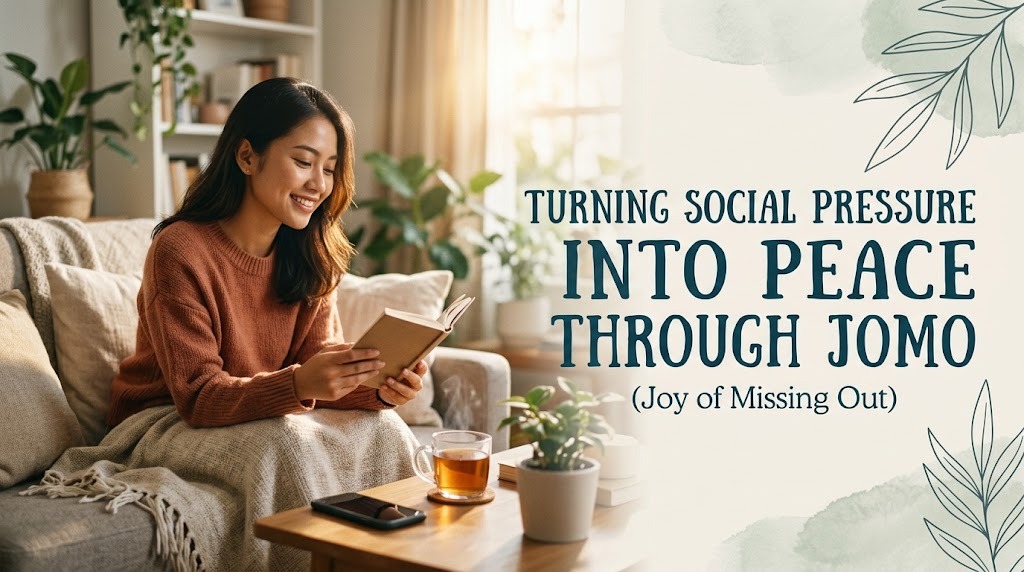
Social pressure is a common part of modern life. People may feel the need to follow trends, attend social events, respond quickly to messages, or maintain an active presence online. Constantly trying to meet social expectations can make everyday life feel stressful and exhausting. JOMO or Joy of Missing Out offers a different approach by encouraging people to choose what genuinely matters. Through JOMO, social pressure can gradually be replaced with greater calm and personal freedom.
UNDERSTANDING SOCIAL PRESSURE IN MODERN LIFE
Social pressure occurs when people feel influenced to behave in ways that match the expectations of others. It can come from friends, family, colleagues, communities, or social media. The desire to fit in can sometimes lead people to make choices that do not match their personal needs. For example, someone may attend an event simply because everyone else is going. They may also remain active online because they fear being forgotten.
Social pressure is not always negative. Positive encouragement from other people can motivate someone to learn, grow, or try something new. The problem begins when social expectations become more important than personal boundaries. Recognizing this difference can help people make healthier decisions. JOMO provides a useful perspective for managing these pressures.
WHAT JOMO MEANS IN EVERYDAY LIFE?
JOMO stands for Joy of Missing Out. It describes the satisfaction of choosing not to participate in everything and feeling comfortable with that decision. JOMO encourages people to focus on their own priorities instead of constantly comparing their lives with others. Missing an event, trend, or online conversation does not automatically mean losing something important. Sometimes, choosing not to participate creates valuable personal space.
JOMO does not mean avoiding people or becoming completely disconnected. People can still maintain friendships, communicate with family, and participate in meaningful activities. The main idea is to participate because you genuinely want to, not because you are afraid of being left out. This distinction can make social interactions more enjoyable. It can also reduce unnecessary pressure.
HOW SOCIAL MEDIA INCREASES SOCIAL PRESSURE
Social media provides constant access to other people's activities. Users can see celebrations, achievements, vacations, purchases, and social events throughout the day. Seeing these carefully selected moments can create the impression that everyone else is constantly having a better or more exciting life. This may encourage comparison and insecurity. People can then feel pressured to keep up.
However, online content rarely represents someone's complete reality. People generally share selected moments rather than every ordinary or difficult experience. Remembering this can help reduce unrealistic comparisons. JOMO encourages people to step back from the pressure to constantly monitor other people's lives. This can create more room for personal priorities.
RECOGNIZING THE FEAR OF MISSING OUT
Fear of missing out, often called FOMO, can strongly influence daily decisions. People may check their phones repeatedly because they worry about missing an important update or social opportunity. FOMO can turn ordinary digital activities into a constant search for something new. This can make it difficult to enjoy the present moment. JOMO offers an alternative perspective.
Instead of asking what might be missed, people can ask what they would gain by stepping away. A missed event may create time for rest, family, hobbies, or personal goals. This change in perspective can make disconnection feel positive. Over time, the fear of missing out can become easier to manage.
CHOOSING PERSONAL PRIORITIES
Personal priorities provide an important guide when dealing with social pressure. These priorities may include education, career, family, health, hobbies, relationships, or rest. Knowing what matters most makes it easier to decide which activities deserve attention. People do not need to follow every invitation or trend. They can choose based on their own circumstances.
Priorities can also change over time. A person may need more rest during a busy period or more social connection during another stage of life. JOMO allows people to make choices according to their current needs without constantly seeking approval. This creates greater flexibility. It also encourages a more personal definition of a meaningful life.
LEARNING TO SAY NO
Saying no is an important part of reducing social pressure. People may hesitate to decline invitations because they fear disappointing friends or appearing unfriendly. A respectful no can protect personal time without necessarily damaging a healthy relationship. People have different schedules, energy levels, and responsibilities. These differences should be respected.
A simple and honest response is often enough. There is no need to create complicated excuses when an activity does not fit personal priorities. Clear boundaries can prevent unnecessary commitments and reduce emotional exhaustion. With practice, saying no can become more comfortable. This is one of the practical ways JOMO can create peace.
STOPPING CONSTANT COMPARISON
Comparison can make social pressure feel stronger. People may compare their careers, appearance, relationships, finances, or achievements with what they see online. Constant comparison can make people overlook their own progress and circumstances. Everyone has different goals and timelines. A different path does not mean a less successful life.
JOMO encourages people to focus on their own journey. Instead of asking whether they are keeping up with others, they can consider whether they are moving toward their personal goals. Personal progress is a more meaningful measure than trying to match someone else's lifestyle. This shift can create greater confidence. It can also reduce unnecessary stress.
PROTECTING PERSONAL TIME
Personal time is often affected by social expectations. Invitations, group conversations, online activities, and constant communication can fill most of the day. Protecting personal time gives people space to rest and reconnect with themselves. This time can be used for hobbies, exercise, reading, reflection, or simply doing nothing. Personal time does not need to be justified as productive.
Creating boundaries can make personal time easier to protect. People may choose specific periods when they do not check social media or respond to nonurgent messages. These small boundaries can create a healthier balance between social connection and personal space. They also make daily routines feel less crowded. JOMO supports this balance by making disconnection feel acceptable.
FINDING PEACE IN SIMPLE MOMENTS
Peace does not always require a major lifestyle change. Simple activities such as drinking coffee quietly, walking outdoors, reading, or listening to music can provide meaningful moments. JOMO helps people appreciate experiences that do not need to be shared or compared online. These moments can become opportunities to slow down. They can also help people reconnect with their surroundings.
Simple moments become easier to enjoy when attention is not divided. Constant phone checking can interrupt even relaxing activities. Putting the device away for a while can make ordinary experiences feel more satisfying. This does not require permanent disconnection. Short periods of focused attention can already make a difference.
BUILDING HEALTHIER SOCIAL BOUNDARIES
Healthy relationships require boundaries. People need to communicate when they are available and when they need personal space. Setting boundaries does not mean caring less about other people. Instead, it creates clearer expectations within relationships. This can prevent misunderstandings and unnecessary pressure.
Boundaries should also be flexible and respectful. Different situations may require different levels of availability. The goal is to create a balance between social responsibility and personal well-being. JOMO encourages people to recognize when participation is meaningful and when stepping away is healthier. This approach can make relationships more sustainable.
REDUCING DIGITAL DISTRACTIONS
Digital distractions can make social pressure feel constant. Notifications, messages, and social media updates can encourage people to check their devices repeatedly. Reducing unnecessary notifications can help people regain control over their attention. Important communication can remain available while less important alerts are limited. This creates a quieter digital environment.
People can also establish specific times for checking social media. Instead of opening an application whenever they feel bored, they can choose when to engage. Intentional digital use reduces the feeling that people must always be available. It creates more time for offline activities. This is an important step toward practicing JOMO.
TURNING SOCIAL PRESSURE INTO PERSONAL FREEDOM
JOMO changes the way people understand social expectations. Instead of seeing every invitation or trend as something they must follow, they can treat participation as a choice. Having the freedom to choose can transform social pressure into a sense of control. People can decide what deserves their energy and what can be ignored. This creates a more intentional lifestyle.
Personal freedom does not mean ignoring everyone else. It means respecting others while also respecting personal needs. A balanced life allows people to participate in meaningful experiences without feeling obligated to join everything. This approach can create greater peace. It also makes social activities more enjoyable when people genuinely want to participate.
CONCLUSION
JOMO can help turn social pressure into peace by teaching people to choose intentionally rather than constantly trying to keep up. Reducing social media pressure, setting healthy boundaries, saying no, protecting personal time, and stopping unnecessary comparison can create greater emotional space. JOMO does not require people to disconnect completely from friends, family, or technology. Instead, it encourages meaningful participation while accepting that some experiences can be missed without regret. Ultimately, peace comes from understanding that you do not have to follow everything around you to enjoy a meaningful life.
About the Author
Gusti Ayu Tita P
Author — STEKOM University
An active author focused on academic issues, educational technology, and human resource development in the campus environment.















