
Turning The Destiny Of Life Into Lessons For The Future
Gusti Ayu Tita P
9 September 2026
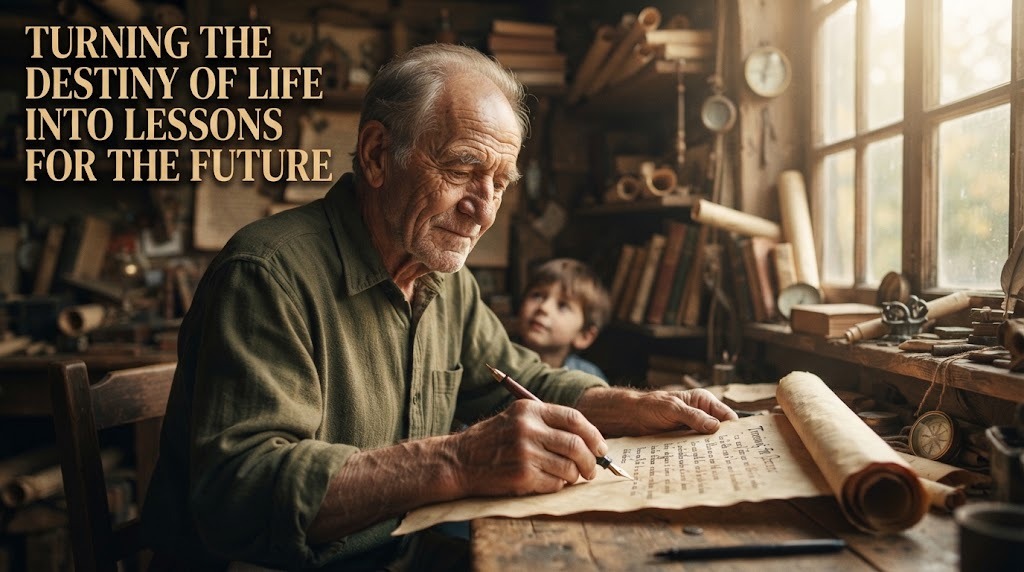
Life is filled with experiences that do not always happen according to our expectations. Some moments bring happiness and success, while others bring disappointment, failure, or unexpected changes. Every experience can become a valuable lesson when we are willing to understand what it teaches us. Instead of allowing difficult moments to remain painful memories, we can use them to prepare ourselves for the future.
Turning the destiny of life into lessons means looking at past experiences with a thoughtful mindset. We may not be able to change what has already happened, but we can decide how to respond to it. Learning from the past can help us make wiser choices, develop stronger character, and face future challenges with greater confidence.
UNDERSTANDING THE MEANING OF LIFE EXPERIENCES
Every person experiences different situations throughout life. Some experiences may be planned, while others happen without warning. These differences make each person's journey unique and provide opportunities to learn about ourselves and the world around us.
Life experiences can teach important values such as patience, responsibility, courage, and gratitude. Even ordinary situations can provide useful lessons when we pay attention to what happens and how we respond. By reflecting on our experiences, we can better understand our strengths, weaknesses, and priorities.
LEARNING FROM PAST MISTAKES
Mistakes are a natural part of human development. Nobody can make the right decision all the time, and expecting perfection can make it difficult to learn. Instead of continuously blaming ourselves, we can examine what caused the mistake and identify what should be improved.
Learning from mistakes helps prevent the same problems from happening again. For example, a poor decision can teach us to gather more information before making another important choice. In this way, mistakes can become useful experiences rather than permanent sources of regret.
TURNING FAILURE INTO MOTIVATION
Failure can make people feel disappointed and uncertain about their abilities. However, failure does not automatically mean that a person is incapable of achieving their goals. Sometimes, it simply shows that a particular strategy did not work.
Failure can become motivation when we use it as feedback. We can evaluate our actions, improve our skills, and try a different approach. People who learn from failure often develop greater resilience because they understand that setbacks are part of the learning process.
DEVELOPING PATIENCE THROUGH LIFE CHALLENGES
Some goals require considerable time and effort. During long processes, people may become frustrated because progress seems slow. Difficult situations can test our ability to remain consistent even when the results are not immediately visible.
Patience helps us continue working without expecting instant results. It teaches us that meaningful progress often happens gradually. By developing patience, we become better prepared to handle situations that require persistence and long-term commitment.
BUILDING RESPONSIBILITY FROM EXPERIENCE
Life teaches us that our actions often have consequences. The decisions we make can affect not only ourselves but also the people around us. Understanding these consequences can encourage us to become more responsible.
Responsibility means being willing to accept the results of our choices. When something goes wrong, blaming others may not solve the problem. Taking responsibility allows us to identify solutions, correct mistakes, and make better decisions in the future.
USING DIFFICULTIES TO BUILD RESILIENCE
Difficult experiences can challenge our emotional strength. Problems related to education, work, relationships, or personal goals may create stress and disappointment. Although these situations can be uncomfortable, they may also help us become more resilient.
Resilience allows us to recover and continue moving forward after difficult experiences. It does not mean ignoring emotions or pretending that everything is fine. Instead, resilience involves acknowledging difficulties while gradually finding healthy ways to manage them and continue with life.
APPRECIATING SUCCESS AND FAILURE
Success and failure both have important roles in personal development. Success can increase confidence and show us that our efforts can produce meaningful results. However, success can also teach us to remain humble and avoid becoming careless.
Failure, meanwhile, can show us where improvement is needed. Both success and failure can provide valuable information about our abilities and decisions. Understanding the lessons from both experiences helps us maintain a balanced attitude toward our achievements and setbacks.
MAKING WISER FUTURE DECISIONS
Past experiences can provide useful information when we face new decisions. By remembering what worked and what did not work before, we can make more informed choices. This does not mean that the past will always predict the future, but it can provide valuable guidance.
Wise decisions require reflection, information, and careful consideration. Instead of reacting only to emotions, we can consider possible consequences before choosing an action. This habit can help us reduce unnecessary mistakes and make decisions that are more consistent with our goals.
DEVELOPING SELF AWARENESS
Understanding ourselves is an important part of learning from life. Experiences can reveal how we behave under pressure, how we communicate with others, and what situations make us feel motivated or discouraged. This information can help us recognize areas that need improvement.
Self awareness allows us to understand our strengths and limitations more clearly. When we know ourselves better, we can set realistic goals and choose actions that match our abilities and values. It also becomes easier to recognize habits that may prevent us from growing.
LETTING GO OF UNNECESSARY REGRET
Regret can become a heavy emotional burden when we continuously think about things that cannot be changed. Reflecting on the past is useful when it helps us learn, but repeatedly blaming ourselves may prevent us from focusing on the present.
Letting go does not mean forgetting the past. It means accepting what happened and taking the useful lesson from it. Once we understand the lesson, we can direct our attention toward what we can do differently in the future.
USING LIFE LESSONS TO BUILD BETTER HABITS
Lessons become more valuable when they influence our behavior. Understanding that poor time management caused problems, for example, is only the first step. The next step is creating a habit that helps us manage time more effectively.
Real growth happens when knowledge becomes action. Small changes repeated consistently can create better habits over time. By applying lessons from previous experiences, we can gradually improve our daily decisions and overall quality of life.
ACCEPTING THAT THE FUTURE IS UNCERTAIN
No one can predict every event that will happen in the future. Plans may change because of circumstances that are outside our control. Accepting uncertainty can help us become more flexible when life takes an unexpected direction.
Uncertainty does not mean that the future has no possibilities. It simply reminds us that we need to remain adaptable and prepared. The lessons we gain from previous experiences can give us useful tools for handling situations that have not happened yet.
BUILDING A BETTER FUTURE FROM THE PAST
The past cannot be rewritten, but its meaning can influence how we move forward. Every challenge, decision, success, and mistake can contribute to our understanding of life. When we reflect carefully, experiences that once seemed meaningless may become important sources of wisdom.
A better future begins with learning from what we have already experienced. We can carry forward the lessons that strengthen us while leaving behind habits and attitudes that no longer help us. In this way, the destiny of life becomes more than a series of events because it becomes a continuous process of learning and growth.
CONCLUSION
Turning the destiny of life into lessons for the future requires reflection, acceptance, responsibility, and a willingness to grow. Not every experience will be comfortable, and not every outcome will match our expectations. However, even difficult moments can provide knowledge that helps us understand ourselves and make better decisions.
The most important thing is not simply what happens to us, but what we learn from what happens. By using past experiences as guidance, developing resilience, accepting uncertainty, and applying useful lessons to our actions, we can face the future with greater confidence. Life may not always follow the path we expect, but every step can help us become wiser and stronger.
About the Author
Gusti Ayu Tita P
Author — STEKOM University
An active author focused on academic issues, educational technology, and human resource development in the campus environment.















