Types and Functions of Bus Terminals in Indonesia
Gusti Ayu Tita P
10 Agustus 2026
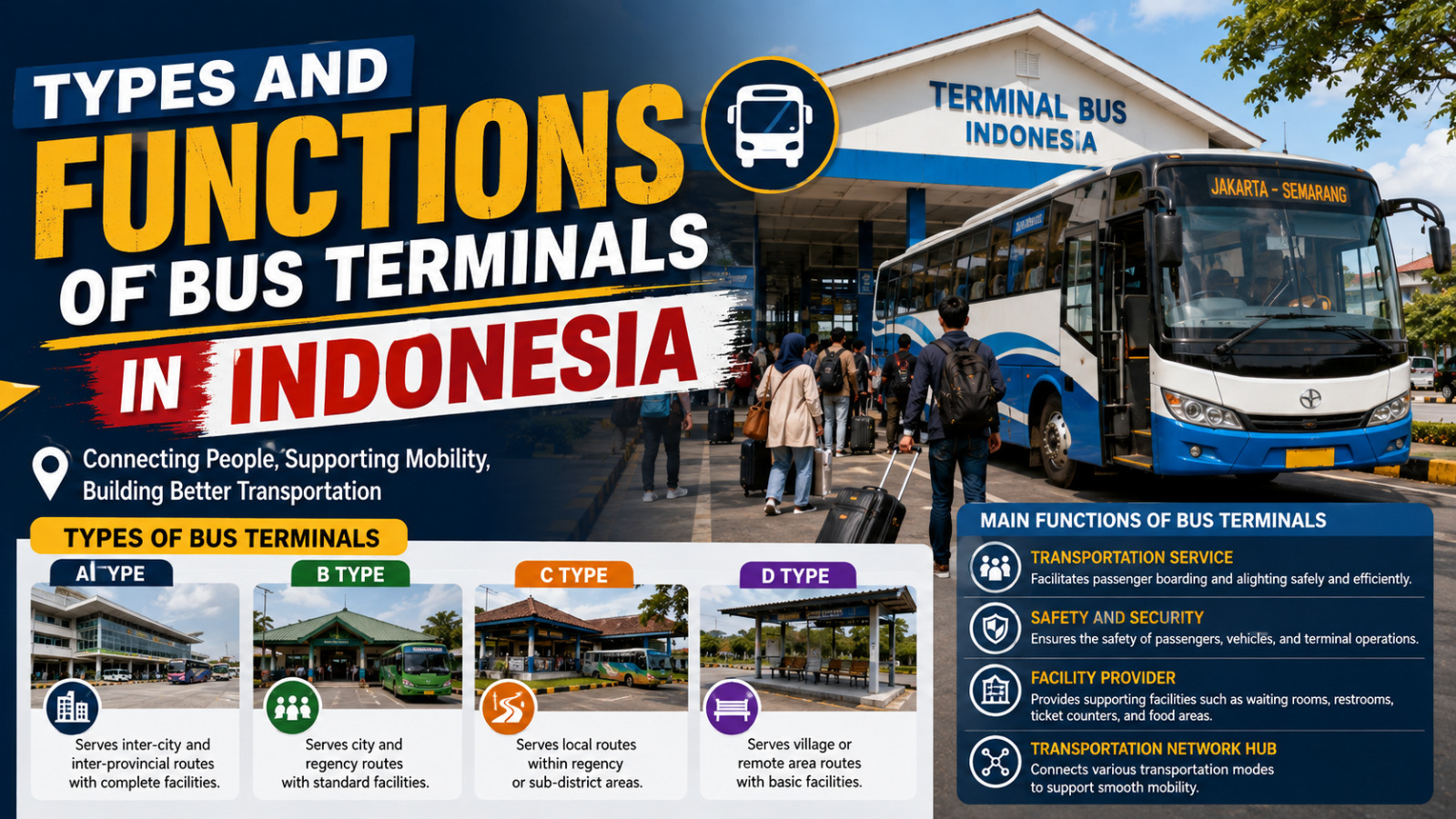
Bus terminals are an important part of Indonesia’s land transportation system. They serve as organized locations for bus arrivals, departures, passenger services, and transportation connections. Understanding the types of bus terminals in Indonesia can help passengers recognize their different service areas and functions.
UNDERSTANDING BUS TERMINAL TYPES
Bus terminals in Indonesia can be classified according to their service coverage and transportation functions. The classification helps determine the types of routes and public transportation services that can operate from a particular terminal. This makes transportation management more organized across different regions.
In general, passenger terminals are associated with different levels of transportation services, including interprovincial, intercity, urban, and rural transportation. Each terminal serves a particular area based on its designated function. Understanding these differences can help passengers choose the appropriate terminal for their journey.
TYPE A BUS TERMINALS
Type A terminals have the broadest service coverage within Indonesia’s passenger terminal classification. They serve interprovincial intercity transportation and may also accommodate other services according to applicable transportation regulations. Because of their wide coverage, Type A terminals can play an important role in connecting different provinces and major cities.
These terminals generally require comprehensive facilities and organized management because they may handle significant passenger and vehicle activity. Departure areas, waiting rooms, information services, vehicle lanes, and supporting facilities all contribute to efficient operations. Type A terminals therefore function as important points within the national transportation network.
TYPE B BUS TERMINALS
Type B terminals primarily serve intercity transportation within a province. They may also support urban or rural transportation services according to the designated transportation network and applicable regulations. Their role is particularly important for connecting cities and communities within the same province.
These terminals help passengers travel between different areas without always having to use a terminal with broader national coverage. Proper scheduling, vehicle management, and passenger services are necessary to maintain efficient operations. Type B terminals therefore support regional mobility and intercity connections within their service areas.
TYPE C BUS TERMINALS
Type C terminals generally have a more local service coverage than Type A and Type B terminals. Their services are primarily associated with urban and rural transportation according to the applicable transportation network and authority. They are important for supporting everyday mobility within cities and surrounding communities.
Type C terminals can connect residential areas with schools, markets, workplaces, public facilities, and other local destinations. Their routes are generally more focused on local travel needs. Although their coverage is smaller, these terminals remain important for communities that depend on public transportation for daily activities.
FUNCTIONS OF BUS TERMINALS
Regardless of their type, bus terminals perform several important functions within the public transportation system. They provide organized areas for bus arrivals and departures, passenger boarding, waiting, and transfers. Terminals also help control vehicle movements and provide information that passengers need before traveling.
Terminals can also serve as transportation network hubs that connect different routes and services. Their classification allows transportation services to be organized according to the needs and characteristics of each area. When properly managed, different terminal types can work together to create a more connected and efficient transportation system.
CONCLUSION
Bus terminals in Indonesia have different types and functions based on their service coverage and transportation roles. Type A terminals have the broadest coverage, Type B terminals primarily support intercity transportation within a province, while Type C terminals focus more on urban and rural services. Each type contributes to passenger mobility and transportation connectivity in its respective area. Understanding these differences can help passengers better understand the Indonesian bus transportation system and choose services according to their travel needs.
About the Author
Gusti Ayu Tita P
Author — STEKOM University
An active author focused on academic issues, educational technology, and human resource development in the campus environment.