
Uncovering Myths and Facts Behind Supernatural Stories
Gusti Ayu Tita P
9 September 2026
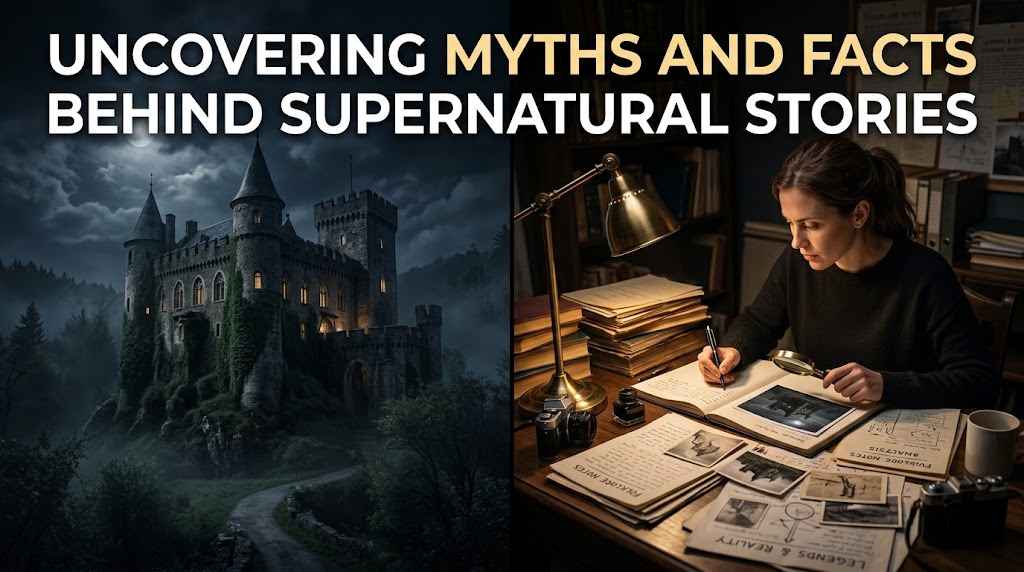
Supernatural stories have fascinated people for generations. Tales about ghosts, spirits, mysterious creatures, haunted places, and unexplained events can be found in almost every culture. In Indonesia, these stories are closely connected with folklore, local traditions, and supernatural beliefs that have been passed down through families and communities. Some people accept certain stories as part of their beliefs, while others consider them legends or entertainment. Understanding the difference between supernatural myths and facts can help people appreciate these stories without accepting every claim without examination.
WHY SUPERNATURAL STORIES ARE SO EASY TO BELIEVE
Stories about the supernatural world often become convincing because they involve strong emotions. Fear, surprise, curiosity, and personal experience can make an unusual event easier to remember. When a frightening story is repeated many times, details may gradually become more familiar and appear more believable. Family members, friends, and local communities can also influence how a person interprets an unexplained experience. As a result, a legend can become deeply connected with the identity of a particular community.
Another reason is that humans naturally look for explanations when something unexpected happens. If someone hears a strange sound at night, for example, they may immediately create a story around it. Cultural expectations and previous knowledge can influence the explanation they choose. This does not necessarily mean that people are deliberately creating false stories. Instead, it shows how memory, perception, culture, and emotion can influence the way mysterious experiences are understood.
COMMON MYTHS ABOUT GHOSTS AND SPIRITS
One of the most popular categories of supernatural myths involves ghosts and spirits. Traditional stories may describe spirits as beings that remain in particular locations or appear after unusual events. Some legends connect ghosts with abandoned houses, cemeteries, forests, old trees, or roads. Different cultures have developed their own explanations and descriptions of these beings. In Indonesia, such stories have become an important part of local folklore and popular horror culture.
However, a supernatural story should not automatically be treated as a confirmed fact. There is no general scientific evidence establishing the existence of ghosts as supernatural beings in the way they are commonly described in folklore. People can certainly experience fear, unusual sounds, vivid perceptions, or unexplained events, but the cause of those experiences may have multiple possibilities. Distinguishing a personal experience from a scientifically demonstrated explanation is therefore important.
MYSTERIOUS CREATURES AND LOCAL FOLKLORE
Many cultures have stories about supernatural creatures with unusual appearances or abilities. Indonesian folklore includes famous figures such as kuntilanak, pocong, genderuwo, wewe gombel, and other regional characters. These figures can serve different purposes within traditional narratives, including warning people about dangerous places, teaching social values, or explaining events that were difficult to understand. Their stories have survived through oral traditions, literature, entertainment, and modern media.
The existence of a folklore character does not necessarily mean that the creature exists physically. Folklore can function as a cultural and symbolic form of storytelling. A supernatural creature may represent fear, danger, morality, death, or social concerns. Examining the meaning behind these characters can therefore be more useful than simply asking whether every legend is literally true.
HAUNTED PLACES AND UNEXPLAINED EVENTS
Haunted places are another major part of supernatural storytelling. Old buildings, forests, caves, cemeteries, and other isolated locations are often associated with strange sounds, sightings, or unexplained experiences. When several stories are connected to the same location, its reputation can become stronger over time. Visitors may then arrive with expectations that something unusual will happen. Those expectations can influence how they interpret ordinary events.
There are many possible natural explanations for experiences in mysterious locations. Wind, animals, echoes, reflections, temperature changes, poor lighting, structural movement, and unfamiliar surroundings can produce surprising sensations or sounds. Fatigue and stress may also affect perception. Investigating these possibilities does not make the folklore meaningless. Instead, it allows people to understand why a place became mysterious while keeping the cultural story separate from claims that have not been verified.
THE ROLE OF MEDIA IN MIXING MYTH AND FACT
Modern media has made supernatural stories more popular than ever. Movies, television programs, podcasts, online videos, and social media can transform traditional legends into dramatic narratives. Creators often add fictional details to make stories more exciting for audiences. As a result, the original folklore may become mixed with invented characters, events, and supernatural abilities.
This can make it difficult for audiences to distinguish fiction, folklore, personal testimony, and factual information. A dramatic video or popular post may look convincing without providing reliable evidence. Viewers should consider who created the content, whether the claims can be independently verified, and whether alternative explanations have been considered. Critical evaluation is especially important when sensational stories are presented as real events.
HOW TO DISTINGUISH MYTH FROM FACT
Distinguishing myth from fact requires careful thinking rather than immediately accepting or rejecting a story. First, people can examine the original source and determine whether the story comes from folklore, personal testimony, journalism, entertainment, or scientific research. Second, they can look for independent evidence instead of relying on repeated claims. Third, alternative natural or psychological explanations should be considered before reaching a conclusion. This approach allows people to remain curious without abandoning reason.
It is also possible to respect cultural beliefs while maintaining critical thinking. A traditional story can be valuable because it reflects the history, fears, values, and imagination of a community. Its cultural importance does not depend on proving that every supernatural element is physically real. By studying folklore in its proper context, people can appreciate supernatural traditions while avoiding misinformation and unnecessary fear.
CONCLUSION
Uncovering myths and facts behind supernatural stories requires a balanced understanding of culture, psychology, personal experience, and evidence. Ghost stories, supernatural creatures, mysterious places, and unexplained events continue to attract attention because they address some of humanity's deepest curiosity about the unknown. In Indonesia, many of these stories have become part of cultural heritage and local folklore. Their continued existence demonstrates how powerful storytelling can be across generations.
At the same time, people should avoid treating every supernatural claim as established fact. Personal experiences can be meaningful without automatically proving a supernatural explanation, while traditional legends can remain culturally valuable even when their extraordinary elements cannot be scientifically verified. By combining cultural respect with critical thinking, readers can enjoy fascinating supernatural stories while making a clear distinction between myth, belief, fiction, personal experience, and evidence.
About the Author
Gusti Ayu Tita P
Author — STEKOM University
An active author focused on academic issues, educational technology, and human resource development in the campus environment.















