
Understanding Air Transportation Systems and Their Role in Modern Life
Gusti Ayu Tita P
11 Agustus 2026
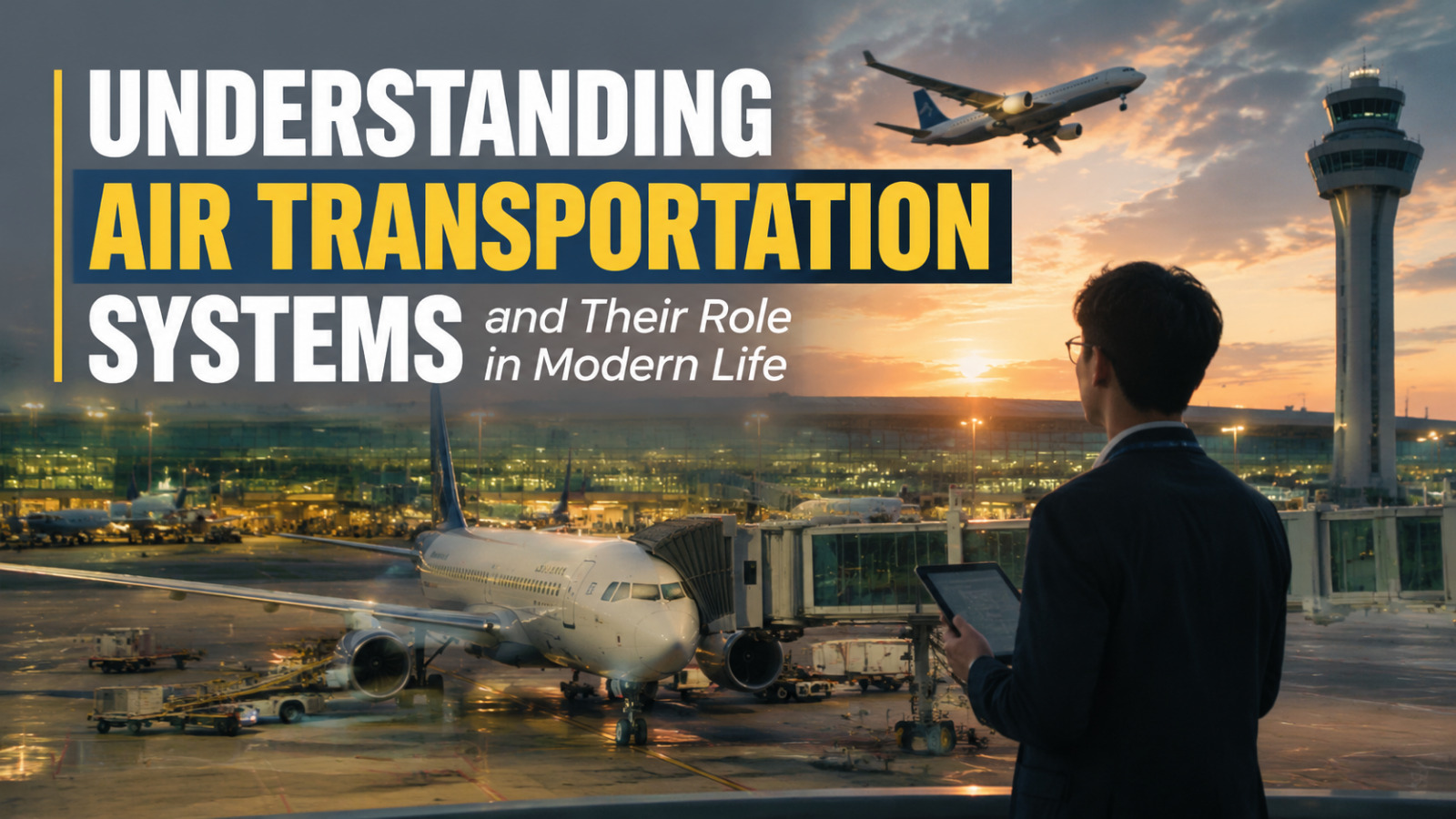
Air transportation is one of the most important transportation systems in modern society. It allows people and goods to travel between cities and countries in a relatively short time. Air Transportation supports tourism, business, education, international trade, and emergency services. Modern aviation also connects remote areas with major cities and international destinations. Understanding how this system works can help people become more informed and responsible passengers.
WHAT IS AIR TRANSPORTATION?
Air Transportation is a transportation system that moves passengers and cargo through the air using aircraft. Common aircraft include commercial airplanes, cargo planes, helicopters, and other specialized aircraft. Airlines operate scheduled and charter flights to connect different destinations. Airports serve as important locations where passengers, aircraft, cargo, and airport services meet. This system requires cooperation between airlines, airports, air traffic controllers, ground staff, security officers, and passengers.
Air transportation is designed to provide fast and efficient travel over long distances. Compared with many land transportation options, airplanes can significantly reduce travel time between distant locations. However, air travel also requires strict safety procedures because aviation involves complex operations. Every flight depends on careful planning, communication, maintenance, and monitoring. These factors help ensure that flights can operate safely and efficiently.
HOW THE AIR TRANSPORTATION SYSTEM WORKS?
The Air Transportation System involves several connected processes before, during, and after a flight. Before departure, passengers complete check-in, baggage procedures, and security screening. Meanwhile, airport staff prepare the aircraft, cargo, boarding areas, and other operational requirements. Air traffic controllers coordinate aircraft movements around airports and within controlled airspace. Pilots then operate the aircraft according to approved flight plans and aviation procedures.
After an aircraft arrives at its destination, another series of activities begins. Passengers leave the aircraft while baggage and cargo are handled by ground crews. The aircraft may then undergo cleaning, inspection, refueling, catering, or maintenance before its next flight. Ground Handling plays an important role in keeping airport operations organized. All of these activities must work together to prevent unnecessary delays and operational problems.
THE ROLE OF AIR TRANSPORTATION IN MODERN LIFE
Air transportation has an important role in supporting Modern Transportation. It enables people to travel across countries and continents within hours. Students can study abroad, businesses can meet international partners, and tourists can visit destinations that would otherwise take much longer to reach. Air transportation also supports international cooperation by making global communication and mobility easier.
The aviation industry also contributes to economic development. Airlines and airports create employment opportunities in areas such as customer service, engineering, security, logistics, tourism, and management. Air transportation also supports the movement of valuable and time-sensitive goods. During emergencies, aircraft can help transport medical supplies, rescue teams, and essential materials to affected areas.
IMPORTANCE OF AIRPORTS IN AVIATION
Airports are major components of the Aviation Industry. They provide facilities for aircraft departures, arrivals, passenger services, baggage handling, cargo operations, and security procedures. A large airport can contain terminals, runways, taxiways, aircraft parking areas, control towers, and maintenance facilities. Each area has a specific function that contributes to safe and efficient flight operations.
Airport operations require coordination among many professionals. Security personnel protect passengers and airport facilities, while air traffic controllers manage aircraft movements. Ground crews assist with baggage, aircraft preparation, and passenger boarding. Airport management also monitors operations to maintain service quality and safety standards. Because of this complex structure, airports must follow detailed regulations and operational procedures.
SAFETY IN AIR TRANSPORTATION
Flight Safety is one of the most important priorities in aviation. Airlines and airports follow strict procedures to reduce operational risks. Aircraft are regularly inspected and maintained by qualified professionals. Pilots and other aviation personnel receive specialized training before performing their responsibilities. Passengers are also expected to follow safety instructions and airport regulations.
Safety begins before an aircraft leaves the ground. Passengers must complete security screening and follow baggage restrictions. During boarding and flight, they should listen carefully to cabin crew instructions. In an emergency, passengers need to remain calm and follow the established procedures. Cooperation between aviation professionals and passengers is essential for maintaining a safe travel environment.
BENEFITS OF AIR TRANSPORTATION
One major benefit of air transportation is Travel Efficiency. Airplanes can cover long distances much faster than most traditional land transportation options. This makes air travel particularly useful for business trips, international tourism, urgent travel, and time-sensitive deliveries. It also allows people from different regions to interact more easily.
Another important benefit is connectivity. Air transportation links cities, islands, countries, and continents through extensive flight networks. For countries with geographically separated regions, aviation can provide an important connection between communities. It also supports tourism by making popular and remote destinations more accessible. As a result, air transportation can contribute to both social and economic development.
CHALLENGES OF AIR TRANSPORTATION
Despite its many advantages, air transportation faces several challenges. Flight Delays can occur because of weather conditions, technical problems, airport congestion, or operational issues. Rising fuel costs can also affect airline operating expenses and ticket prices. Airports and airlines must continuously improve their systems to handle increasing passenger demand.
Environmental impact is another important challenge. Aircraft operations produce greenhouse gas emissions, which has encouraged the aviation industry to explore more sustainable solutions. Airlines and manufacturers are developing more fuel-efficient aircraft and researching alternative aviation fuels. Digital technology and improved operational planning may also help reduce unnecessary fuel consumption. These efforts are important for creating a more sustainable aviation sector.
THE FUTURE OF AIR TRANSPORTATION
The future of Air Transportation will be strongly influenced by technology. Digital check-in, automated baggage systems, biometric identification, and artificial intelligence are already changing airport operations. These technologies can improve passenger convenience and help airport staff manage large numbers of travelers. New aircraft designs may also improve fuel efficiency and reduce environmental impact.
Future aviation may become more connected, efficient, and environmentally responsible. Innovations in electric aircraft, sustainable aviation fuel, air traffic management, and autonomous technologies could influence the industry. However, technological development must continue to prioritize safety and reliability. The success of future aviation will depend on how effectively innovation is combined with professional skills and strong safety standards.
CONCLUSION
Air Transportation is an essential part of modern life because it connects people, businesses, communities, and countries. Its operations depend on cooperation between airlines, airports, aviation professionals, technology, and passengers. Besides providing fast travel, aviation supports tourism, trade, employment, education, and emergency services. Although the industry faces challenges such as delays, operating costs, and environmental concerns, continuous innovation can help create better solutions. Understanding the Air Transportation System allows people to appreciate its importance and become safer and more responsible air travelers.
About the Author
Gusti Ayu Tita P
Author — STEKOM University
An active author focused on academic issues, educational technology, and human resource development in the campus environment.















