Understanding Different Types of Ports and Their Functions
Gusti Ayu Tita P
10 Agustus 2026
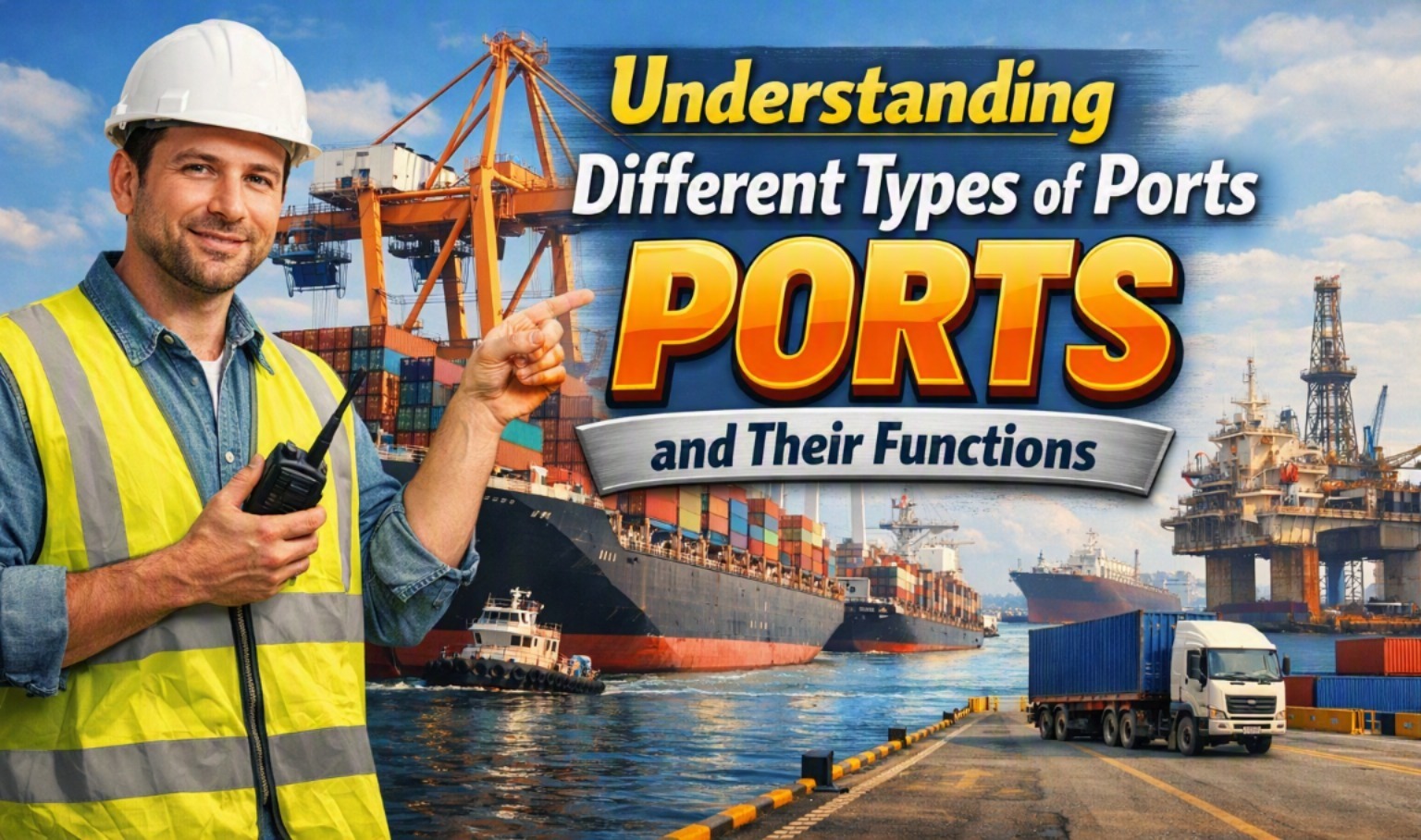
Ports are essential facilities that support the movement of people, goods, and transportation between different regions and countries. They connect land and sea transportation while helping businesses distribute products efficiently. However, not all ports have the same purpose or facilities. Different types of ports serve different functions, depending on the cargo, vessels, location, and activities they support.
Understanding the types of ports is important for anyone interested in maritime transportation, logistics, international trade, and economic development. Each port has a specific role in making the supply chain work smoothly, from handling containers to serving passengers and supporting industrial activities.
WHAT IS A PORT?
A port is a designated coastal or inland water facility where ships can dock to load and unload cargo, transport passengers, receive supplies, or perform other maritime activities. Ports generally include facilities such as terminals, docks, warehouses, cargo handling equipment, navigation systems, and access roads or railways. Their operations connect maritime transportation with transportation on land.
Ports also contribute to regional and national economies by supporting trade, employment, industry, and logistics services. A well-managed port can reduce transportation delays and improve the movement of goods from producers to consumers. Therefore, ports are not simply places where ships stop but important parts of the wider transportation and supply chain system.
MAIN TYPES OF PORTS
There are several types of ports, and their classification can depend on their function, cargo handled, location, and level of specialization. Seaports are designed primarily for vessels operating on oceans and seas, while inland ports are connected to waterways or inland transportation networks. Some ports are designed for general cargo, while others specialize in containers, passengers, energy products, or industrial materials.
Common types include container ports, bulk ports, passenger ports, fishing ports, naval ports, and industrial ports. Some facilities may combine several functions, allowing them to handle different types of vessels and cargo. This flexibility can help ports respond to changing transportation and trade requirements.
CONTAINER PORTS
Container ports are specialized facilities designed to handle standardized shipping containers. They play a major role in international trade because containers can be transferred efficiently between ships, trucks, and trains. Large container ports usually have container terminals, quay cranes, storage yards, automated handling systems, and intermodal connections.
The main function of a container port is to make cargo transfer fast, organized, and secure. Containers can carry manufactured products, electronics, clothing, food products, machinery, and many other goods. Efficient container handling helps reduce loading times and supports reliable global supply chains.
BULK CARGO PORTS
Bulk ports handle goods that are transported in large quantities without being packed into individual containers. These goods are generally divided into dry bulk and liquid bulk. Dry bulk can include coal, grain, iron ore, cement, and other raw materials, while liquid bulk can include crude oil, petroleum products, and certain chemicals.
Bulk ports require specialized equipment such as conveyors, pipelines, storage tanks, silos, and loading systems. Their facilities are designed to move large volumes of cargo efficiently while reducing handling risks. These ports are particularly important for energy supply, agriculture, construction, and heavy industries.
PASSENGER PORTS
Passenger ports are designed to serve people traveling by sea rather than primarily handling commercial cargo. They may accommodate ferries, cruise ships, passenger vessels, or other forms of maritime transportation. Their facilities can include passenger terminals, waiting areas, ticketing facilities, immigration services, security checkpoints, and baggage handling areas.
Passenger ports are important for tourism and regional connectivity. Ferry terminals can connect islands and coastal communities, while cruise ports support tourism-related businesses. Efficient passenger facilities can improve travel safety, comfort, and convenience.
FISHING PORTS
Fishing ports support the activities of commercial and local fishing fleets. They provide places for fishing vessels to dock, unload catches, obtain fuel, maintain equipment, and prepare for their next trip. Many fishing ports also have cold storage, fish markets, processing facilities, and repair services.
These ports support the wider fisheries industry and coastal economy. They help move seafood from fishing areas to processing centers, markets, restaurants, and consumers. Proper management is important because fishing ports must balance economic activity with marine environmental protection and sustainable fishing practices.
NAVAL PORTS
Naval ports are facilities used primarily by military and defense vessels. They provide berthing, maintenance, resupply, training, and logistical support for naval operations. Compared with commercial ports, naval ports often have restricted access and specialized security systems.
Their function is closely connected to national defense and maritime security. Naval ports can support patrol vessels and other military ships operating in national waters. They may also provide facilities for maintenance and preparation so vessels remain ready for assigned missions.
INDUSTRIAL PORTS
Industrial ports are developed to support manufacturing, processing, energy, and other industrial activities located near coastal or waterway areas. They often handle raw materials needed by factories and transport finished or processed products to other markets. Their facilities may include specialized terminals, storage areas, pipelines, conveyors, and heavy cargo equipment.
The location of an industrial port can reduce transportation distances between raw material suppliers, factories, and markets. This can improve logistics efficiency and support industrial development. Industrial ports are particularly useful for sectors such as steel, energy, petrochemicals, mining, and large-scale manufacturing.
THE IMPORTANCE OF PORTS IN GLOBAL TRADE
Ports are a major part of the global supply chain because a large share of international merchandise trade moves by sea. They connect producers and consumers across different countries while supporting the movement of raw materials and finished products. Efficient ports can help businesses control transportation time and logistics costs.
Ports also create economic opportunities through employment, investment, logistics services, manufacturing, and supporting businesses. Their development can strengthen connections between regions and encourage industrial growth. However, ports must continuously improve infrastructure, technology, safety, and environmental management to remain competitive.
HOW TECHNOLOGY IMPROVES PORT OPERATIONS?
Modern ports increasingly use digital systems and automation to improve efficiency and visibility. Technologies such as cargo tracking, electronic documentation, automated equipment, and port management platforms can help operators coordinate vessels, cargo, and transportation more effectively. Data systems can also help identify delays and improve decision-making.
Environmental technology is becoming increasingly important as well. Ports can adopt cleaner equipment, energy-efficient systems, shore power, and better waste management to reduce environmental impacts. Combining technology with skilled workers and effective management can make port operations safer, faster, and more sustainable.
WHY DIFFERENT PORT TYPES MATTER?
Different port types exist because ships, cargo, passengers, and industries have different operational requirements. A container terminal cannot perform exactly the same role as a fishing port or a naval facility. Specialization allows ports to use suitable infrastructure and equipment for particular activities.
At the same time, some ports combine multiple functions to serve broader economic needs. The right combination depends on geography, trade patterns, infrastructure, vessel requirements, and regional demand. Understanding these differences helps businesses, governments, and communities make better decisions about transportation and port development.
CONCLUSION
Understanding different types of ports makes it easier to recognize how maritime transportation supports modern economies. Container ports, bulk ports, passenger ports, fishing ports, naval ports, and industrial ports each perform different but interconnected functions. Together, they help move goods, people, resources, and services across regions and international markets.
As global trade continues to evolve, ports need to become more efficient, secure, technologically advanced, and environmentally responsible. Strong infrastructure and effective management can improve supply chains while supporting economic development. For this reason, ports will continue to play an important role in international trade and global connectivity.
About the Author
Gusti Ayu Tita P
Author — STEKOM University
An active author focused on academic issues, educational technology, and human resource development in the campus environment.