
Understanding Historic Tombs and Their Importance for Future Generations
Gusti Ayu Tita P
4 September 2026
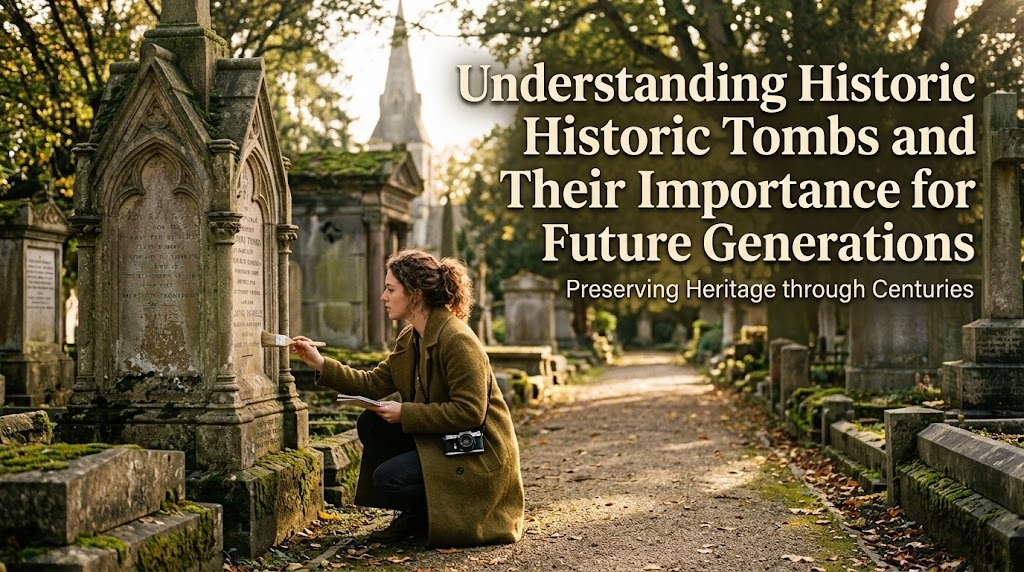
Historic tombs are important parts of the world’s cultural heritage. They can provide valuable information about people, traditions, beliefs, architecture, and communities from the past. Studying these sites allows younger generations to understand history through physical evidence rather than relying only on written records. Proper preservation is therefore essential to ensure that their historical value remains available in the future.
THE MEANING OF HISTORIC TOMBS
Historic tombs are burial places that have historical, cultural, archaeological, or architectural significance. They may be associated with rulers, religious figures, military leaders, community members, or other individuals connected to an important period. Some sites are recognized because of their age, while others are important because of the people or events associated with them.
The structure of a tomb can also provide useful historical information. Inscriptions, decorations, construction materials, and architectural designs may reveal details about the beliefs and skills of earlier communities. Researchers can examine these features to understand how people viewed death, remembered important individuals, and expressed their cultural values.
HISTORIC TOMBS AS SOURCES OF HISTORY
Historic tombs can function as valuable historical sources because they preserve physical evidence from earlier periods. Names, dates, symbols, inscriptions, and architectural features can help researchers identify individuals and understand the societies in which they lived. These findings can also be compared with manuscripts, official records, oral traditions, and other historical evidence.
Archaeological research must be conducted carefully because burial sites can contain sensitive cultural and human remains. Researchers generally prioritize non destructive methods whenever possible. Photography, mapping, surface observation, material analysis, and digital documentation can provide information without unnecessarily disturbing the site.
CULTURAL VALUES FOUND IN HISTORIC TOMBS
Historic tombs can demonstrate how communities expressed their cultural traditions and beliefs. Burial structures may reflect religious practices, artistic styles, social hierarchy, and ideas about death and remembrance. Different regions can have very different burial traditions, making historic tombs useful for understanding cultural diversity.
These sites can also strengthen cultural identity. Communities may regard particular tombs as important connections to their ancestors or historical experiences. Protecting such places can help maintain collective memories while encouraging younger generations to appreciate the traditions that shaped their communities.
THE IMPORTANCE OF PRESERVING HISTORIC TOMBS
Preservation protects historic tombs from threats such as weathering, pollution, uncontrolled development, vandalism, vegetation growth, and inappropriate restoration. Conservation should be based on careful assessment because unsuitable repairs can sometimes cause additional damage. Specialists may document the site's condition and select methods that are appropriate for its materials and historical characteristics.
Heritage preservation also requires public participation. Visitors, local communities, researchers, site managers, and government institutions can contribute to protecting important burial sites. Simple actions such as following visitor rules, avoiding physical contact with fragile structures, and keeping the surroundings clean can help reduce damage.
THE ROLE OF HISTORIC TOMBS IN EDUCATION
Historic tombs can make history education more engaging because students can observe real evidence connected to the past. A classroom discussion about historical figures becomes more meaningful when students can examine photographs, inscriptions, architectural features, or digital models of the places associated with them. Educational visits can also encourage students to ask questions and think critically about historical evidence.
Modern technology provides additional opportunities for learning. Digital archives, virtual tours, 3D models, and online exhibitions can introduce historic tombs to people who cannot visit them directly. These resources can make historical information more accessible while reducing unnecessary physical pressure on fragile heritage sites.
THE VALUE OF HISTORIC TOMBS FOR FUTURE GENERATIONS
Historic tombs can provide lessons that remain relevant long after the original societies have disappeared. They help future generations understand how communities developed their traditions, honored their dead, built structures, and responded to social changes. This knowledge can encourage greater appreciation for cultural heritage conservation.
Preserving these sites is also a responsibility shared across generations. What survives today may become an important source of knowledge for researchers, teachers, students, and communities in the future. By combining responsible tourism, ethical research, proper conservation, and digital documentation, society can help ensure that historic tombs remain meaningful and accessible for many years.
CONCLUSION
Historic tombs are more than burial places because they can preserve evidence about history, culture, architecture, beliefs, and social life. Their value comes from both their physical characteristics and their connections to people and communities from earlier periods. Careful research and responsible preservation are necessary to protect these sites from damage and loss. By introducing historic tombs through education and technology, future generations can continue learning from these important cultural resources.
About the Author
Gusti Ayu Tita P
Author — STEKOM University
An active author focused on academic issues, educational technology, and human resource development in the campus environment.















