
Understanding Rank and Position Systems in the ASN Career Path
Gusti Ayu Tita P
28 Juli 2026
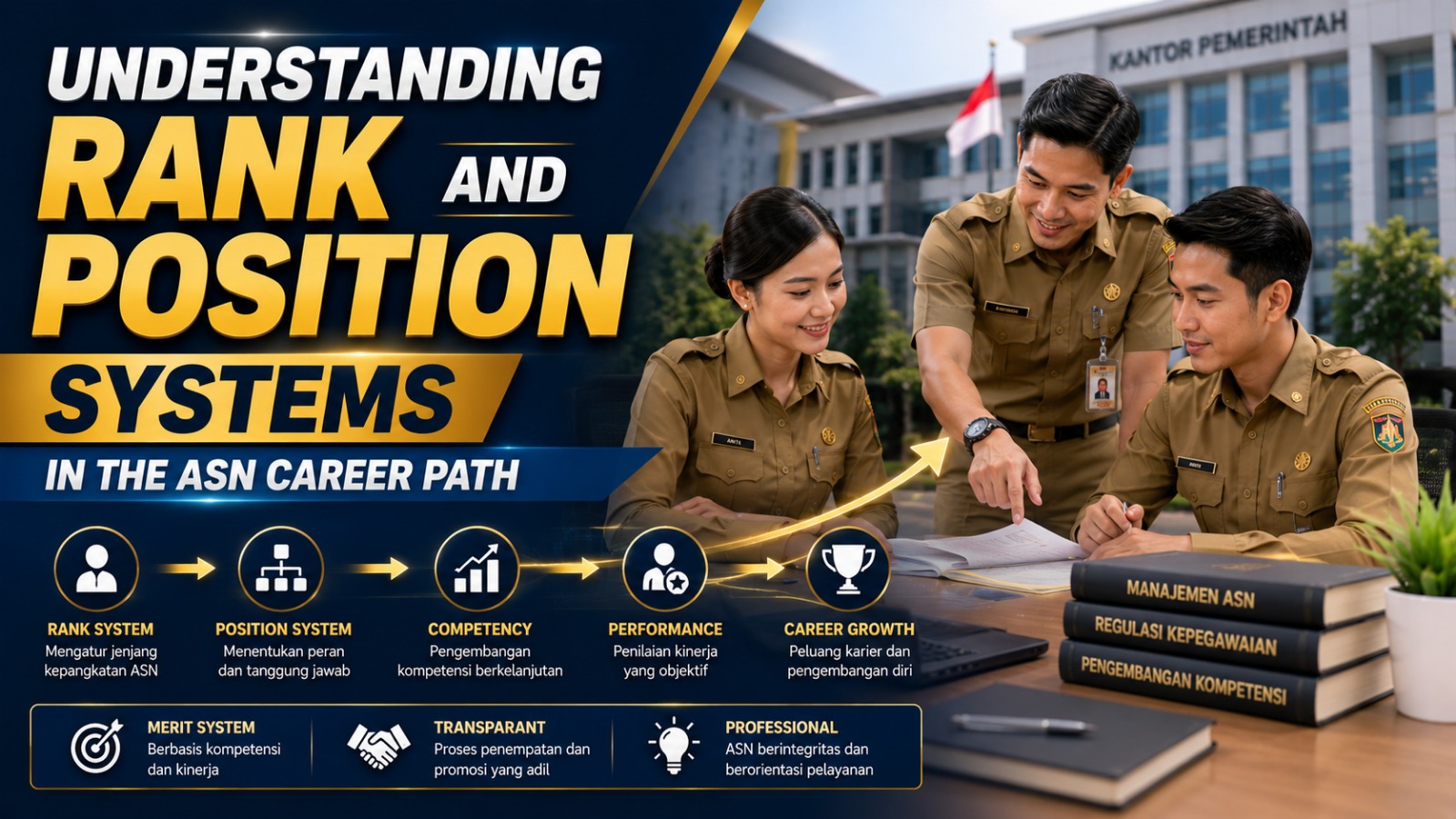
Understanding the ASN career path is essential for anyone interested in building a successful career in Indonesia's public sector. Every Aparatur Sipil Negara (ASN) employee follows a structured system that combines rank, position, competency, and performance to support professional development. As government institutions continue to modernize, career advancement increasingly depends on measurable achievements, leadership abilities, and continuous learning rather than seniority alone. This structured system helps create a professional, transparent, and accountable civil service.
By learning how the rank and position systems work, ASN employees can better prepare for career progression and identify the competencies required for future opportunities. A clear understanding of these mechanisms also supports long-term career planning and professional growth.
UNDERSTANDING THE ASN RANK SYSTEM
The rank system serves as one of the primary foundations of career progression within the ASN structure. Ranks generally reflect an employee's qualifications, years of service, competencies, and professional achievements according to applicable government regulations. Each rank represents a higher level of responsibility and demonstrates the employee's readiness to handle more complex duties. Progressing through the ranks requires consistent performance and continuous competency development.
Although rank remains an important component of career development, it is no longer the only factor considered for advancement. Modern human resource management encourages employees to strengthen their skills, improve productivity, and contribute to organizational goals. This approach promotes a more balanced and merit-based career system.
UNDERSTANDING POSITION SYSTEMS IN ASN
The position system defines the specific roles and responsibilities assigned to each ASN employee within a government institution. Positions may involve administrative, managerial, supervisory, technical, or functional responsibilities depending on organizational needs. Every position requires a unique combination of competencies, leadership qualities, and professional expertise. Employees are expected to perform effectively while supporting institutional objectives.
Modern government organizations increasingly emphasize competency-based placement to ensure the right employee occupies the right position. This approach improves organizational efficiency and strengthens public service quality. It also creates more transparent opportunities for career advancement based on capability and performance.
THE ROLE OF COMPETENCY AND PERFORMANCE
Competency has become one of the most important elements in determining career progression within the ASN system. Employees are encouraged to participate in education programs, leadership training, technical workshops, certifications, and digital learning opportunities. Continuous professional development enables ASN employees to adapt to technological innovation, policy changes, and evolving public expectations. Strong competencies also improve confidence in handling increasingly complex responsibilities.
Performance evaluation is equally important in the promotion process. Government institutions assess employees based on work quality, productivity, discipline, teamwork, innovation, and measurable achievements. Maintaining consistent performance demonstrates professional commitment and readiness for higher responsibilities within the organization.
STRATEGIES FOR BUILDING A SUCCESSFUL ASN CAREER
Developing a successful ASN career requires long-term planning and continuous improvement. Employees should actively seek opportunities to strengthen their technical expertise, leadership skills, communication abilities, and digital literacy. Participating in competency development programs and accepting challenging assignments provide valuable practical experience. These efforts help prepare employees for greater responsibilities and future leadership positions.
Equally important is maintaining integrity, professionalism, and accountability in every aspect of public service. Building positive relationships with colleagues and contributing innovative ideas can further strengthen career prospects. Employees who consistently combine competence with ethical behavior are more likely to achieve sustainable career growth within government institutions.
CONCLUSION
The rank and position systems provide a structured framework that supports career development within the ASN environment. While rank reflects professional progression, positions define responsibilities and leadership opportunities across government institutions. Together with competency development and performance evaluation, these systems create a fair and transparent pathway for career advancement.
Understanding how these components work enables ASN employees to prepare strategically for future opportunities. By investing in lifelong learning, maintaining excellent performance, and demonstrating strong integrity, civil servants can build rewarding careers while contributing to effective, modern, and citizen-focused governance.
About the Author
Gusti Ayu Tita P
Author — STEKOM University
An active author focused on academic issues, educational technology, and human resource development in the campus environment.















