
Understanding Safety Procedures You Should Know Before Flying
Gusti Ayu Tita P
11 Agustus 2026
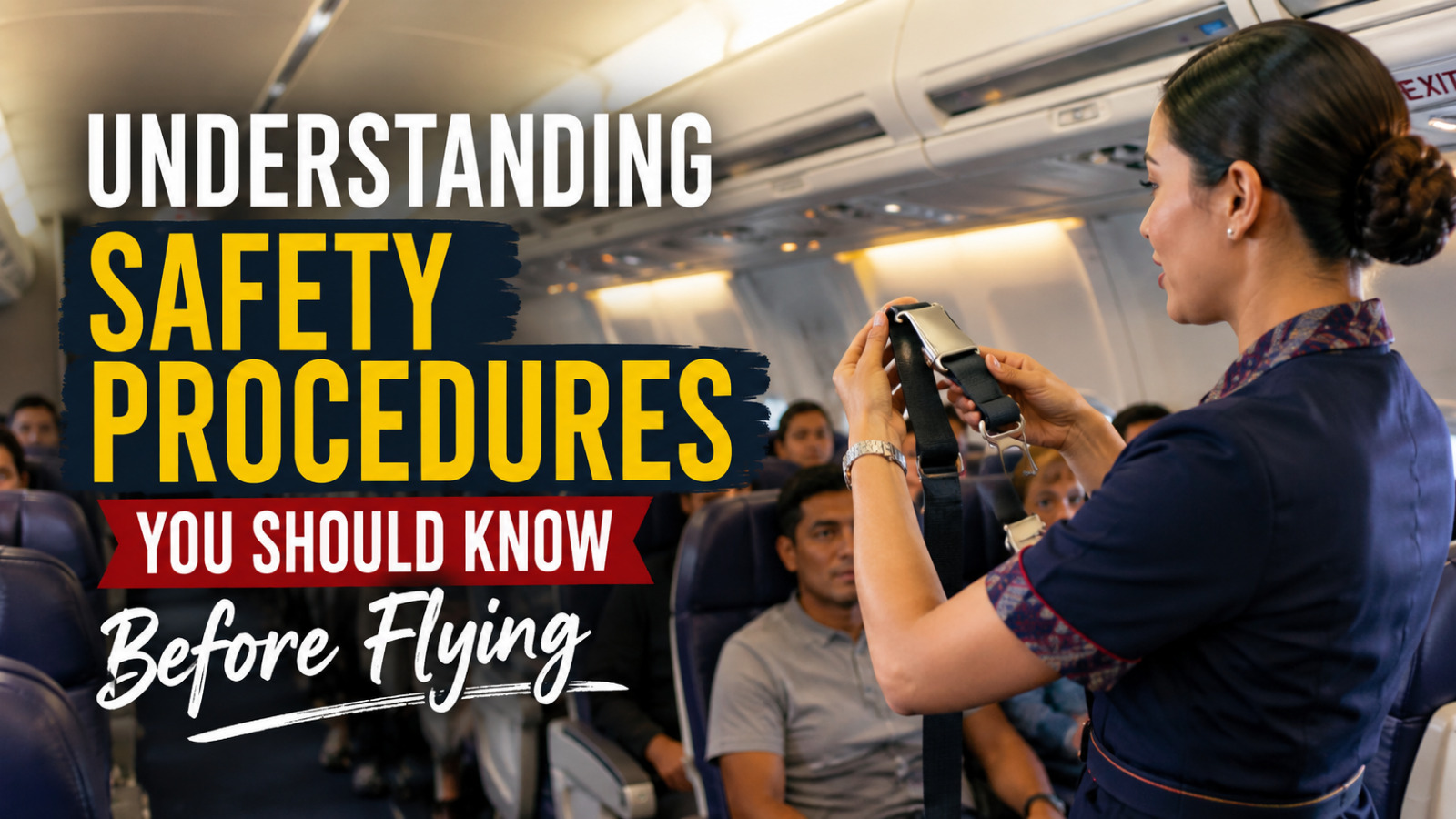
Flying is one of the safest ways to travel when passengers and aviation professionals follow established safety procedures. Before every flight, passengers receive important information designed to help them respond correctly during normal and emergency situations. Understanding these procedures can make travelers feel more prepared and confident. Flight Safety is a shared responsibility between passengers, cabin crew, pilots, airport staff, and other aviation professionals. Knowing what to do before and during a flight can help create a safer travel experience.
PAY ATTENTION TO THE SAFETY BRIEFING
Before takeoff, cabin crew provide a Safety Briefing explaining important information for passengers. This normally includes how to fasten seat belts, where emergency exits are located, and how to use relevant safety equipment. Passengers should pay attention even if they have flown many times before. Different aircraft can have different layouts and safety equipment.
The briefing is designed to prepare passengers for situations that may require specific action. Listening carefully can help travelers understand where to go and what to do if an emergency occurs. Do not rely only on previous flight experiences. Every passenger should understand the safety information provided on their specific flight.
FASTEN YOUR SEAT BELT PROPERLY
A Seat Belt is one of the most important safety devices on an aircraft. Passengers should fasten it securely and follow crew instructions regarding when it must remain fastened. Turbulence can occur unexpectedly, even when the weather appears calm. Keeping the seat belt fastened when seated can reduce the risk of injury.
Make sure the belt is positioned correctly and adjusted so it fits securely. Passengers should also check that children are properly secured according to applicable airline procedures. When the seat belt sign is illuminated, follow the crew's instructions promptly. A properly fastened seat belt provides important protection during unexpected aircraft movement.
KNOW THE EMERGENCY EXIT LOCATIONS
Passengers should identify the nearest Emergency Exit after taking their seats. The nearest exit may be behind them rather than in front of them. Counting the rows between your seat and the nearest exits can help you locate them in low-visibility conditions.
Emergency exits should never be blocked by personal belongings. Passengers must follow cabin crew instructions when an evacuation is required. Do not attempt to open an emergency exit unless instructed and the conditions are appropriate. Knowing the location of exits before an emergency can save valuable time.
UNDERSTAND OXYGEN MASK PROCEDURES
Aircraft are equipped with emergency oxygen systems designed for situations involving a loss of cabin pressure. If oxygen masks are deployed, passengers should follow the instructions provided by the cabin crew and safety briefing. The mask should be secured properly over the nose and mouth.
Adults who are assisting children or other passengers should generally secure their own oxygen mask first so they can remain able to provide assistance. Stay calm and follow crew instructions during the situation. Understanding oxygen mask procedures before takeoff can make an emergency easier to manage.
KEEP CABIN BAGGAGE SECURE
Passengers should store Cabin Baggage in the approved locations. Larger cabin bags generally need to be placed in overhead compartments, while smaller permitted items may be stored under the seat when allowed. Bags should never block aisles, emergency exits, or other safety equipment.
Before takeoff and landing, ensure that personal belongings are properly secured according to crew instructions. Loose objects can become hazards during sudden aircraft movement. Keeping the cabin organized also allows passengers and crew to move more easily when necessary. Proper baggage storage is an important part of cabin safety.
FOLLOW ELECTRONIC DEVICE RULES
Electronic devices such as smartphones, tablets, laptops, and other equipment must be used according to the airline's instructions. Rules can vary depending on the aircraft, airline, and stage of flight. Passengers should listen to cabin crew instructions regarding when devices may be used and how they should be stored.
Some devices may need to be placed in an approved location during takeoff and landing. Travelers should not ignore crew instructions simply because a device appears harmless. Following the applicable Electronic Device Rules helps maintain an orderly cabin environment.
FOLLOW CABIN CREW INSTRUCTIONS
Cabin crew members are trained to manage passenger safety and respond to various situations. Their instructions should be followed promptly and respectfully. During an emergency, passengers should not argue with crew members or attempt to make independent decisions that conflict with safety procedures.
Cabin crew are also responsible for communicating important information during delays, turbulence, or other operational situations. Staying calm and listening carefully can help passengers respond appropriately. Cabin Crew Instructions should always be treated as an important source of safety information.
STAY CALM DURING TURBULENCE
Flight Turbulence is a common phenomenon that can occur during air travel. It may cause the aircraft to move unexpectedly, but passengers can reduce injury risks by following safety instructions. Keep the seat belt fastened when seated and avoid standing when the seat belt sign is illuminated.
Passengers should remain calm and follow instructions from the cabin crew. Do not move around the cabin unnecessarily during periods of turbulence. If you are already seated, remain in your seat until it is safe to move. Staying seated and secured is one of the best ways to reduce turbulence-related injuries.
KNOW WHAT TO DO DURING AN EVACUATION?
An aircraft evacuation requires passengers to follow instructions quickly and calmly. If an evacuation is ordered, leave personal belongings behind unless crew members specifically instruct otherwise. Carrying luggage can slow down the evacuation and create obstacles for other passengers.
Move toward the assigned or nearest usable exit as directed by the crew. Follow illuminated signs and crew instructions, and do not push other passengers. Once outside the aircraft, move to a safe location as instructed. Speed, cooperation, and following instructions are essential during an evacuation.
KEEP SAFETY INFORMATION ACCESSIBLE
Passengers should take a moment to review the Safety Card available at their seat. It contains important information about emergency procedures specific to the aircraft. Reading the card can reinforce information provided during the safety briefing.
Travelers should not hesitate to ask cabin crew questions if they do not understand a safety instruction. Cabin crew are available to assist passengers with safety-related concerns. Being informed is much better than trying to understand procedures during an emergency. A few minutes of preparation can improve passenger awareness and confidence.
CONCLUSION
Understanding Flight Safety Procedures is an important part of responsible air travel. Passengers should pay attention to the safety briefing, fasten their seat belts properly, identify emergency exits, and secure cabin baggage. They should also follow electronic device rules, remain calm during turbulence, and listen carefully to cabin crew instructions. In an emergency, passengers should cooperate and avoid actions that could create additional risks. By understanding and following basic Safety Procedures, travelers can contribute to a safer and more organized flight experience.
About the Author
Gusti Ayu Tita P
Author — STEKOM University
An active author focused on academic issues, educational technology, and human resource development in the campus environment.















