
Understanding Ships and Their Role in Modern Transportation
Gusti Ayu Tita P
11 Agustus 2026
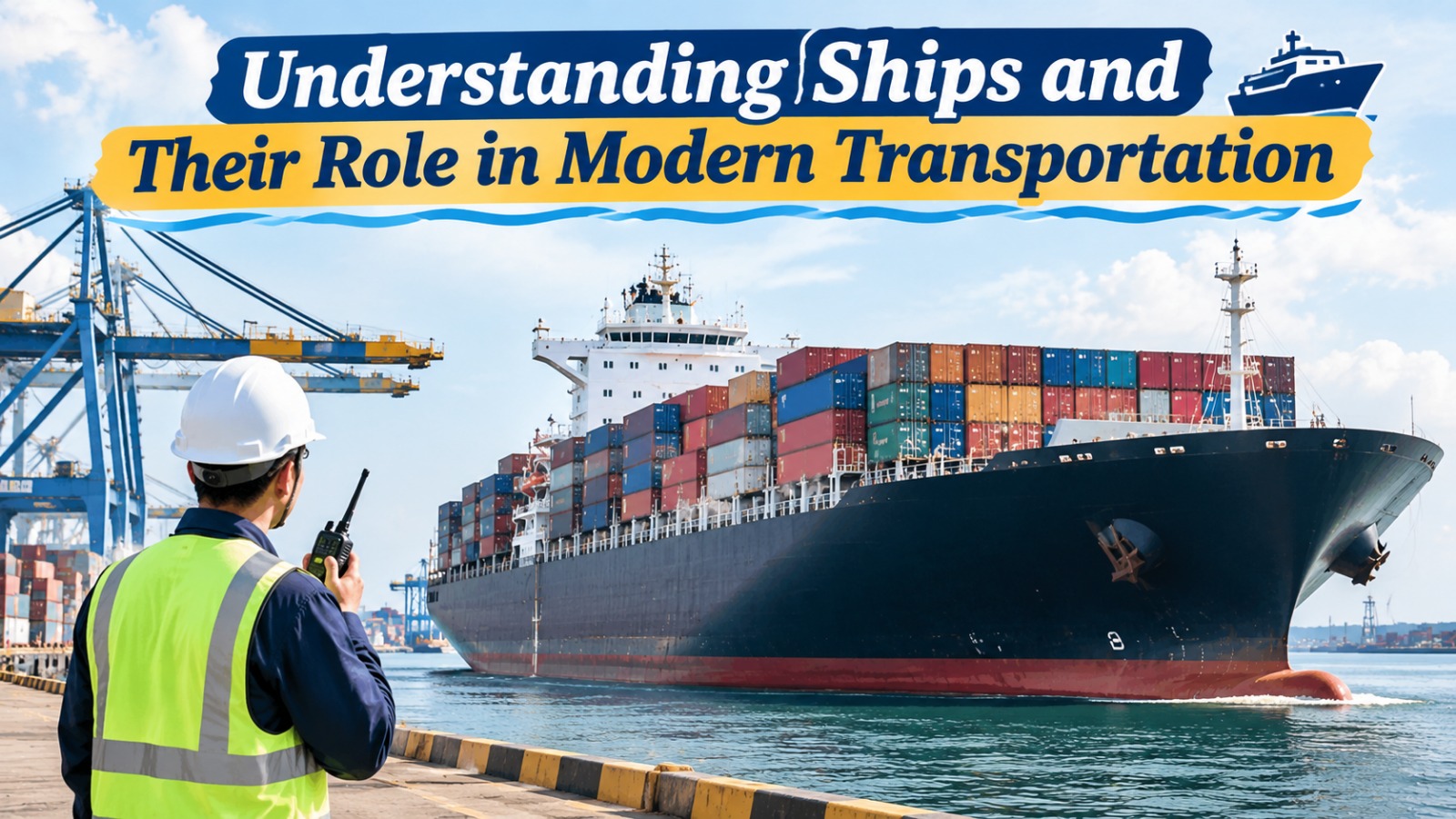
Ships are one of the most important forms of transportation in the world. They help move people, goods, fuel, food, and industrial materials between different regions and countries. Because oceans cover a large part of the Earth, ships provide an efficient way to connect areas that cannot be reached directly by land. Modern ships are also designed with advanced technology to improve safety, speed, efficiency, and environmental performance.
Understanding ships is useful not only for passengers but also for anyone interested in maritime transportation and global trade. From passenger ferries to massive container vessels, each ship has a specific purpose and design. This article explains what ships are, how they work, their types, and why they remain essential in modern transportation.
WHAT IS A SHIP?
A ship is a large watercraft designed to travel on water and perform specific transportation or operational activities. Ships can operate on oceans, seas, rivers, and other navigable waterways depending on their design. Unlike small boats, many ships are built for longer journeys and can carry large numbers of passengers or substantial amounts of cargo. Their structures are carefully engineered to remain stable even when traveling through waves and changing weather conditions.
A typical ship consists of several important parts, including the hull, engine, deck, navigation system, propulsion system, and steering equipment. The hull provides buoyancy and protects the interior, while the engine or propulsion system produces the force needed to move the vessel. Modern navigation equipment helps the crew determine the ship's position and plan a safe route.
THE ROLE OF SHIPS IN MODERN TRANSPORTATION
Ships play a major role in modern transportation because they can carry enormous quantities of goods over long distances. International trade depends heavily on maritime transportation to move products such as electronics, machinery, clothing, food, fuel, and raw materials. Large cargo ships can transport thousands of containers during a single voyage, making sea transportation highly important for the global supply chain.
Ships are also important for passenger transportation, particularly in regions separated by water. Ferries, passenger vessels, and cruise ships connect islands, coastal cities, and tourist destinations. In some areas, ships are an essential part of everyday transportation because roads and bridges cannot provide practical connections across large bodies of water.
HOW DO SHIPS SUPPORT GLOBAL TRADE?
Global trade would be significantly more difficult without ships. Many products used by consumers and industries are transported across international waters before reaching their final destinations. Container ships are especially important because standardized containers make it easier to transfer cargo between ships, trucks, and trains.
Sea transportation can also be economical when large quantities of cargo need to travel long distances. A single large vessel can carry much more cargo than most land transportation vehicles. This ability makes cargo shipping an important part of international logistics and supply chain management.
MAIN TYPES OF SHIPS
There are many types of ships, and each one is designed for a particular purpose. Passenger ships are built to transport people and usually include seating areas, cabins, dining facilities, and safety equipment. Cargo ships are designed primarily to carry goods, while specialized vessels may transport oil, gas, vehicles, or other specific materials.
Some common examples include container ships, bulk carriers, tankers, ferries, cruise ships, and vehicle carriers. There are also ships used for fishing, research, rescue operations, military activities, and offshore construction. The differences between these vessels can be seen in their size, structure, propulsion systems, cargo capacity, and onboard equipment.
HOW DO SHIPS FLOAT ON WATER?
One of the most interesting features of a ship is its ability to float despite its enormous weight. This happens because of the relationship between the ship's weight and the water it displaces. When a ship enters the water, its hull pushes water aside and creates an upward buoyant force.
The shape and volume of the hull are important for maintaining this balance. A properly designed ship displaces enough water to generate a buoyant force that supports its weight. This principle allows even very large vessels to remain afloat while carrying passengers, fuel, equipment, and cargo.
THE IMPORTANCE OF SHIP SAFETY
Safety is a fundamental part of maritime transportation. Ships operate in environments where strong winds, high waves, storms, fog, and other conditions can create risks. For this reason, modern vessels are equipped with navigation systems, communication equipment, emergency alarms, life-saving appliances, and other safety systems.
Crew members also receive training for different emergency situations. Passengers are normally required to follow safety instructions, including information about emergency exits, life jackets, and designated assembly areas. Following onboard safety procedures can reduce risks and help passengers respond properly during an emergency.
TECHNOLOGY IN MODERN SHIPS
Technology has changed the way modern ships operate. Many vessels now use advanced navigation systems, radar, satellite communication, GPS, automated monitoring systems, and digital engine controls. These technologies help crews monitor the ship's position, weather conditions, machinery, and surrounding traffic.
Modern ship technology also focuses on improving efficiency and reducing environmental impacts. Newer vessels may use more efficient engines, improved hull designs, energy-saving systems, and alternative fuels. These developments support efforts to create safer and more efficient maritime transportation.
SHIPS AND ENVIRONMENTAL RESPONSIBILITY
Although ships are highly useful, maritime transportation can have environmental impacts. Ship engines can produce greenhouse gas emissions and other pollutants, while accidents involving certain types of cargo may create additional environmental risks. The maritime industry therefore continues to develop methods for reducing emissions and improving operational efficiency.
Modern environmental initiatives include fuel efficiency improvements, cleaner fuels, waste management systems, and emission-reduction technologies. Ship operators also need to follow international and national regulations concerning pollution prevention. These efforts are important for maintaining healthy marine environments while continuing to support global transportation.
WHY ARE SHIPS STILL IMPORTANT TODAY?
Despite the growth of airplanes, trucks, and railways, ships remain essential because of their large transportation capacity. Air transportation is faster for many journeys, but it is generally less practical for moving enormous quantities of heavy cargo. Ships can transport large volumes of goods at once, making them especially valuable for international commerce.
Ships also provide transportation options for people living on islands and coastal regions. Tourism, fishing, offshore industries, and emergency services also depend on different types of vessels. As a result, ships continue to have an important position in the global transportation system.
THE FUTURE OF MARITIME TRANSPORTATION
The future of maritime transportation is expected to focus increasingly on automation, efficiency, safety, and sustainability. Researchers and shipbuilders are developing technologies that can help reduce fuel consumption and emissions. Digital systems may also improve route planning, maintenance, cargo management, and communication between vessels and ports.
Autonomous and remotely assisted ship technologies are also being developed in different parts of the maritime industry. However, these systems still require careful testing, regulation, and safety evaluation. The future of shipping will likely combine advanced technology with skilled human supervision to create a more reliable transportation system.
CONCLUSION
Ships have a fundamental role in modern transportation because they connect countries, transport passengers, and support international trade. Their ability to carry large amounts of cargo over long distances makes them particularly important to the global economy. Different ship designs allow vessels to perform specialized functions, from carrying passengers and containers to transporting fuel and supporting offshore activities.
As technology continues to develop, ships are becoming safer, more efficient, and increasingly environmentally responsible. Understanding how ships work and why they are important provides a better perspective on the maritime industry and its contribution to everyday life. Even as other forms of transportation continue to evolve, ships are expected to remain a vital part of global transportation for many years to come.
About the Author
Gusti Ayu Tita P
Author — STEKOM University
An active author focused on academic issues, educational technology, and human resource development in the campus environment.















