
Understanding Strategic Functional Positions
Gusti Ayu Tita P
12 Agustus 2026
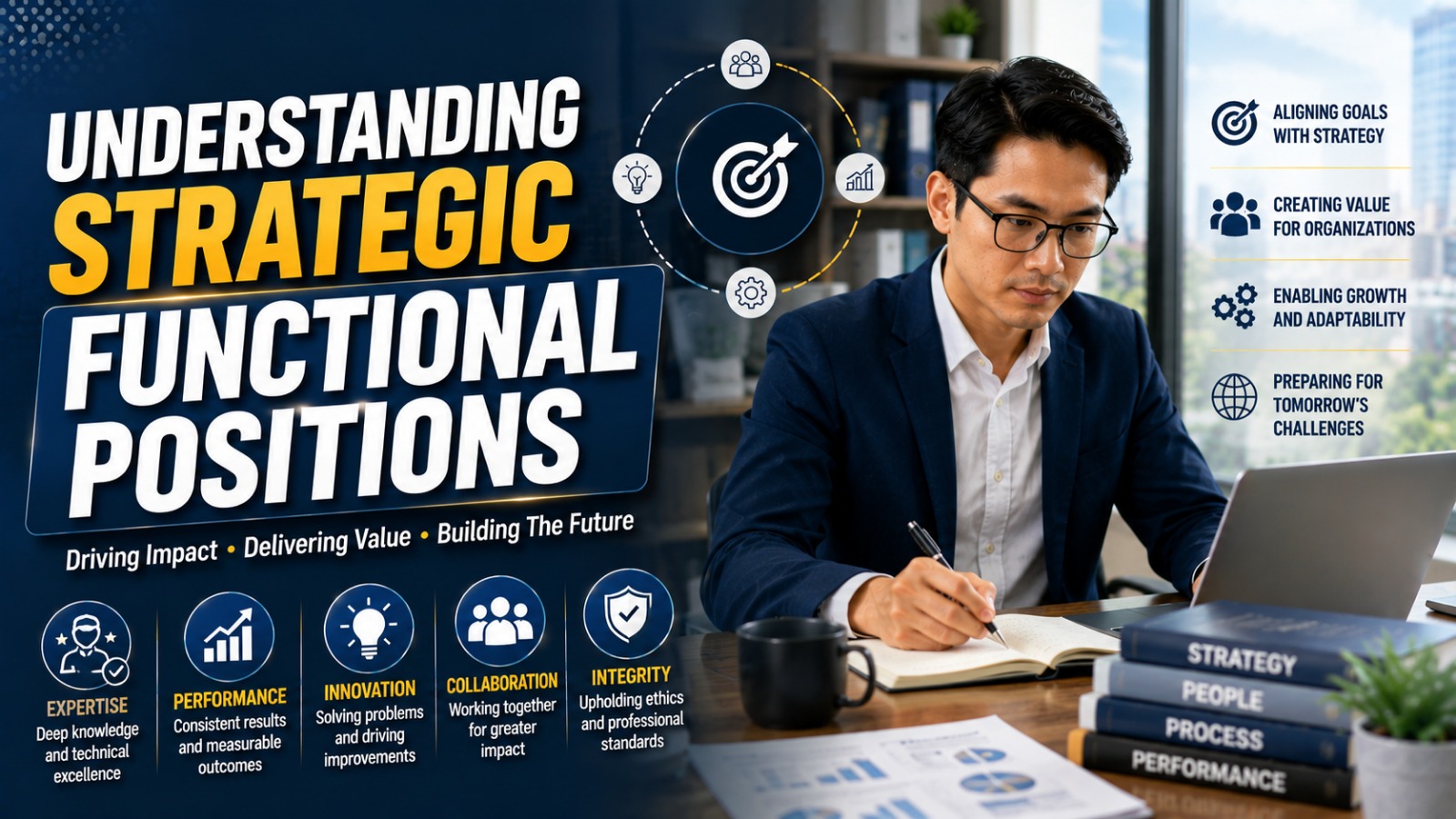
In today’s changing workplace, organizations need professionals who can contribute through specialized skills and expertise. Functional positions are designed around specific areas of knowledge, allowing employees to focus on technical responsibilities while supporting organizational goals. These positions can play an important role in improving efficiency, service quality, and professional performance. Understanding how functional positions work can help professionals make better decisions about their career development.
A functional position is not simply about completing assigned tasks. It also involves developing expertise, maintaining professional standards, and producing measurable results. As technology and workplace demands continue to change, professionals in functional positions need to keep improving their abilities. This makes competence, adaptability, and continuous learning essential elements of a successful functional career.
UNDERSTANDING FUNCTIONAL POSITIONS
A functional position is a role that focuses on a specific area of expertise or professional skill. Unlike positions that primarily emphasize managerial responsibilities, functional roles allow professionals to develop deeper knowledge within their field. Examples may include positions related to education, research, information technology, finance, health services, or technical analysis. The exact responsibilities depend on the organization and professional framework involved.
Functional positions are important because organizations often require people with specialized knowledge to handle complex tasks. A professional who understands a particular field can provide accurate analysis, technical solutions, and high-quality services. For this reason, functional positions can become an important part of an organization's human resource strategy.
THE STRATEGIC ROLE OF FUNCTIONAL POSITIONS
Functional positions can have a strategic impact because specialized professionals contribute directly to organizational performance. Their expertise can help organizations solve problems, improve processes, and make better decisions. When functional responsibilities are clearly defined, employees can focus on tasks that match their professional capabilities. This can support greater efficiency and work quality.
The strategic value of a functional position also depends on how effectively expertise is connected to organizational objectives. Professionals should understand not only what they are expected to do but also why their work matters. When individual contributions support broader organizational goals, functional positions can create long-term professional and organizational value.
COMPETENCIES NEEDED FOR FUNCTIONAL POSITIONS
Strong competence is one of the most important requirements for success in a functional position. Professionals need technical knowledge and practical skills that match their responsibilities. However, technical expertise alone may not be sufficient in a modern workplace. Communication, critical thinking, problem solving, collaboration, and digital skills are also increasingly valuable.
Competencies should be developed continuously because professional requirements can change over time. Training, formal education, practical experience, and self-directed learning can help professionals maintain relevant skills. By combining technical and supporting competencies, employees can become more flexible and prepared for new challenges.
PERFORMANCE AND PROFESSIONAL DEVELOPMENT
Performance is an important part of a functional career because it shows how effectively a professional carries out assigned responsibilities. Good performance should reflect quality, accuracy, efficiency, and accountability, rather than simply the amount of work completed. Clear performance expectations can help employees understand what they need to achieve. Regular evaluation can also identify strengths and areas that require improvement.
Professional development should be connected to performance results. When an evaluation shows a competency gap, the employee can identify appropriate learning or training opportunities. This approach creates a continuous cycle of performance improvement and career development, helping professionals build stronger expertise over time.
ADAPTING TO DIGITAL TRANSFORMATION
Digital transformation is changing how many functional positions are performed. Professionals increasingly use digital systems for data management, communication, documentation, analysis, and service delivery. As a result, digital literacy has become an important supporting competency in many fields. Professionals who understand relevant technologies can often complete tasks more efficiently and respond to workplace changes more effectively.
However, digital adaptation is not simply about learning new software. Professionals also need to understand data security, information accuracy, responsible technology use, and the limitations of digital tools. Combining professional expertise with digital capabilities can help functional employees remain relevant in a rapidly changing workplace.
BUILDING A LONG TERM FUNCTIONAL CAREER
A successful functional career requires more than short-term performance. Professionals should develop a clear understanding of their career goals and identify the competencies needed to achieve them. Setting realistic short-term and long-term objectives can make career planning more focused. Regularly reviewing these goals also allows professionals to adjust their plans when workplace conditions change.
Building a long-term career also requires professional integrity and a willingness to learn. Employees who consistently demonstrate responsibility, maintain quality standards, and respond positively to feedback can strengthen their professional reputation. Over time, expertise, performance, and adaptability can become valuable foundations for sustainable career growth.
CONCLUSION
Understanding strategic functional positions is important for professionals who want to build careers based on specialized expertise. Functional positions allow individuals to contribute through technical knowledge, professional skills, and measurable performance. Their future value will increasingly depend on continuous competency development, digital adaptability, and alignment with organizational goals. By developing relevant skills and maintaining professional standards, individuals can build a strong and sustainable functional career.
About the Author
Gusti Ayu Tita P
Author — STEKOM University
An active author focused on academic issues, educational technology, and human resource development in the campus environment.















