
Understanding the Different Types of Ministers in Indonesia
Gusti Ayu Tita P
12 Agustus 2026
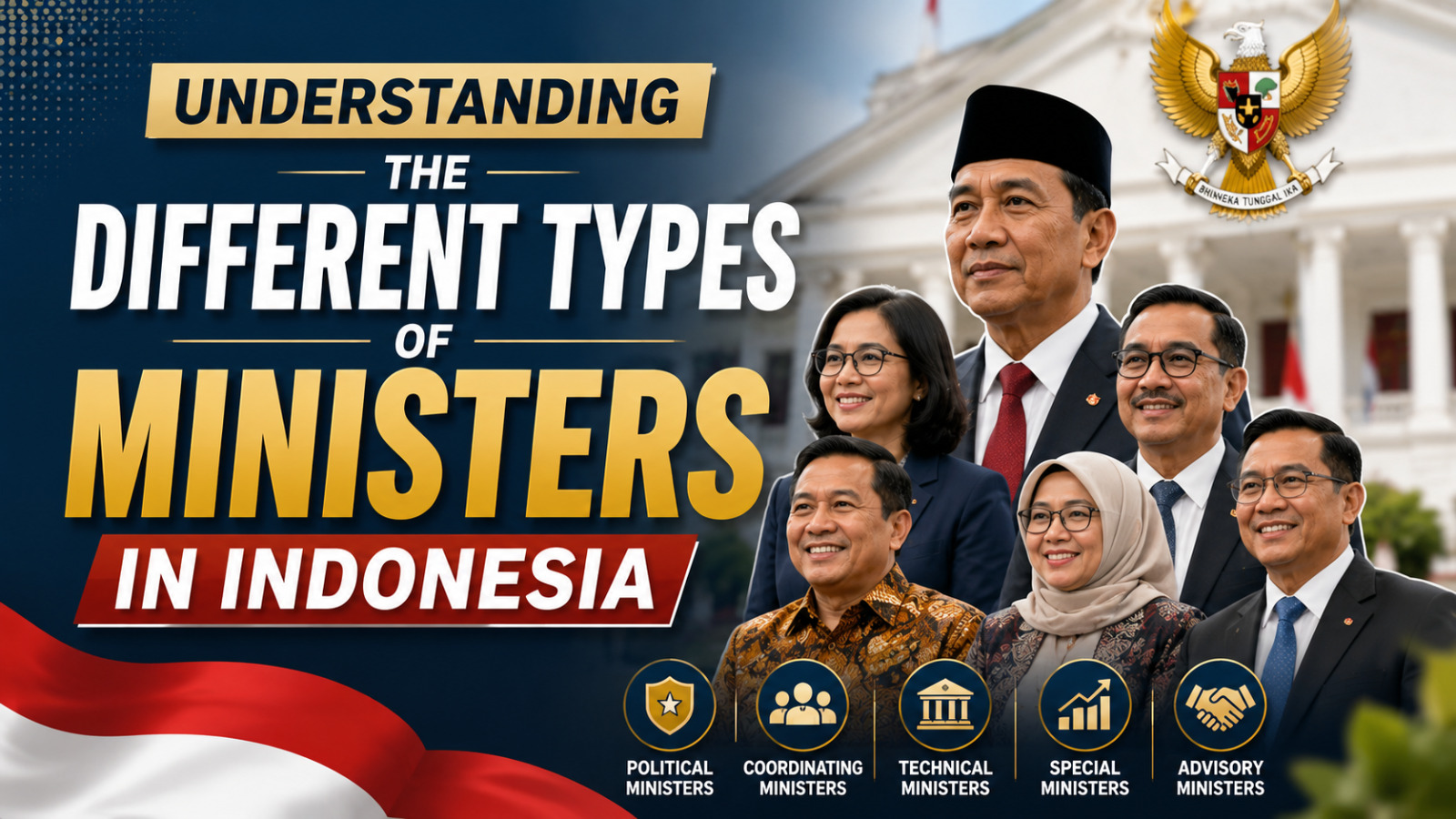
Indonesia has various types of ministers who help the President manage different areas of government. Each minister is responsible for a particular field based on the duties and functions of the ministry they lead. The classification of ministers is closely related to the organization of government affairs and the responsibilities assigned to each ministry. Some ministers manage broad areas of national administration, while others focus on specific sectors. Understanding these types helps explain how government responsibilities are divided in Indonesia.
MINISTERS OF COORDINATING AFFAIRS
Coordinating ministers have an important role in coordinating several ministries within related areas of government. Their responsibilities involve ensuring that policies and programs across different ministries can work together effectively. Coordination is important because many government issues involve more than one sector. For example, economic, social, political, legal, or security issues may require cooperation between several ministries.
A coordinating minister does not simply replace the ministers of the ministries under their coordination. Instead, the coordinating role helps align policies and resolve issues that require cooperation between government institutions. This structure can make cross-sector government programs more organized. Effective coordination also helps prevent overlapping policies and responsibilities.
MINISTERS WHO LEAD MINISTRIES
Ministers who directly lead ministries are responsible for managing specific government affairs. Their fields can include finance, education, health, trade, transportation, agriculture, or other areas established by law. These ministers are responsible for formulating and implementing policies within their respective areas of authority.
Each ministry has its own organizational structure and responsibilities. The minister provides direction to officials and units within the ministry to ensure that programs are implemented according to government policies. The minister also oversees the performance of the ministry and coordinates with other institutions when necessary. This specialized structure allows government affairs to be managed according to their respective fields.
MINISTERS WITH SPECIFIC GOVERNMENT FUNCTIONS
Some ministers handle government functions that have a particular focus within national administration. Their responsibilities depend on the ministry and government affairs assigned to them by law. Specific functions allow the government to address important national needs through specialized institutions. These areas can include sectors such as foreign affairs, defense, law, social affairs, or other government responsibilities.
Although their fields differ, these ministers share the responsibility of helping the President administer the government. They formulate policies, manage programs, and supervise implementation within their respective areas. Their work may also require cooperation with other ministries because national issues are often interconnected. Coordination therefore remains an important part of their duties.
MINISTERS BASED ON GOVERNMENT ORGANIZATION
The organization of ministries in Indonesia can change according to laws, government needs, and presidential policies within the constitutional framework. The President determines the structure of the cabinet and appoints ministers to lead ministries. The number, names, and organization of ministries can therefore change from one administration to another. This flexibility allows the government structure to respond to changing national priorities.
Despite possible changes in structure, every ministry has clearly defined responsibilities. Ministers must carry out their duties according to applicable laws and regulations. Government organization also needs to maintain coordination so that changes do not disrupt essential public services. Understanding this structure helps people see how different ministers contribute to national administration.
CONCLUSION
The different types of ministers in Indonesia can be understood from their coordination roles, ministry leadership responsibilities, specific government functions, and position within the government organization. Coordinating ministers help align policies among several related ministries, while other ministers lead ministries responsible for specific government affairs. Each minister has distinct responsibilities but shares the broader goal of supporting the President in administering the government. The structure of ministries can change according to laws and government needs. Through clear responsibilities and effective coordination, ministers can help the government carry out its functions more effectively.
About the Author
Gusti Ayu Tita P
Author — STEKOM University
An active author focused on academic issues, educational technology, and human resource development in the campus environment.















