
Understanding the Government Cabinet and Its Role in a Country
Gusti Ayu Tita P
12 Agustus 2026
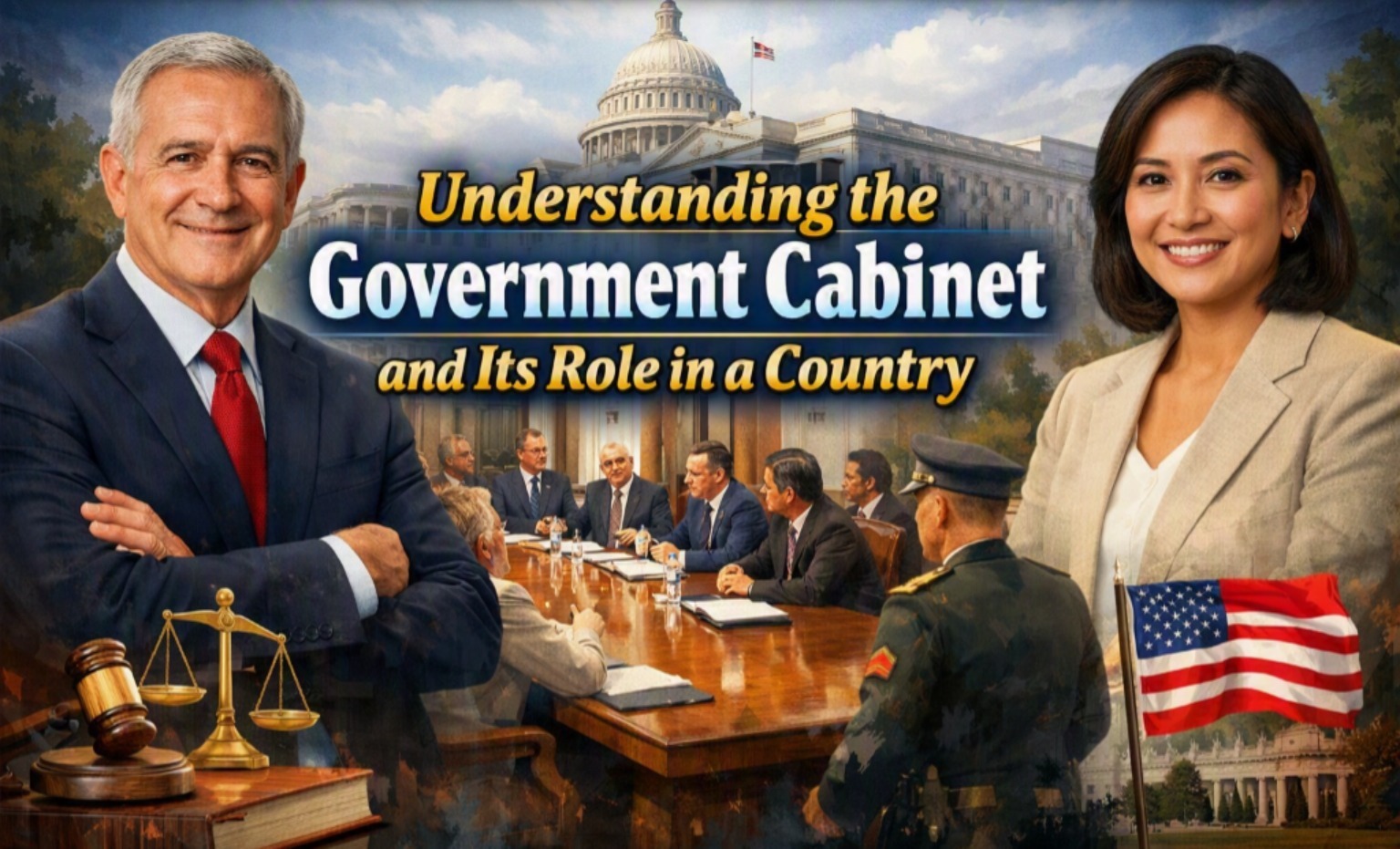
A government cabinet is a group of senior government officials who help the head of government manage national affairs and implement public policies. In many countries, cabinet members are ministers who lead important areas such as finance, education, health, defense, transportation, and foreign affairs. The cabinet serves as an important part of the executive branch because it helps turn government priorities into practical programs and decisions. Although the structure and authority of a cabinet differ between countries, its main purpose is generally to support effective and coordinated governance. Understanding how a cabinet works can help citizens better understand how important government decisions are made.
WHAT IS A GOVERNMENT CABINET?
A government cabinet is a group of high-ranking officials appointed to assist the head of government in directing the country. Depending on the political system, the head of government may be a president or prime minister, while cabinet members are commonly responsible for specific ministries or departments. Each minister manages a particular policy area and is expected to ensure that government programs are properly planned and implemented. The cabinet therefore connects national leadership with the daily administration of government.
The cabinet is also a place where major national issues can be discussed collectively. Ministers may present information, propose policies, and coordinate their responsibilities with other government institutions. This process helps prevent different ministries from working against one another. Coordination and collective decision making are therefore important features of an effective cabinet.
HOW DOES THE GOVERNMENT CABINET WORK?
The way a cabinet operates depends on the country's constitutional system, political traditions, and laws. In a parliamentary system, cabinet ministers are often members of parliament and the government generally depends on parliamentary support. In a presidential system, ministers are usually appointed by the president and may not necessarily be members of the legislature. These differences affect how cabinet members are selected, supervised, and held accountable.
Cabinet meetings provide an opportunity for ministers to discuss policies and address problems that affect more than one ministry. For example, economic development may involve cooperation between finance, industry, education, transportation, and labor authorities. The head of government normally provides overall direction while ministers contribute expertise from their respective fields. Effective cabinet coordination can make government policies more consistent and responsive to national needs.
MAIN ROLES OF THE GOVERNMENT CABINET
One of the cabinet's most important roles is helping develop and implement public policy. Ministers study national problems, evaluate possible solutions, and recommend actions within their areas of responsibility. They may also oversee government programs designed to improve public services and economic or social conditions. Cabinet decisions can therefore have a direct effect on people's everyday lives.
Another important responsibility is policy coordination. National problems are often interconnected, meaning that one ministry cannot solve them alone. A cabinet can bring different ministers together to create more integrated solutions and establish common priorities. Cabinet members may also advise the head of government on important political, economic, security, and social matters. Through these responsibilities, the cabinet supports more organized and effective administration.
WHO ARE THE MEMBERS OF A CABINET?
Cabinet membership varies from one country to another, but it usually includes ministers responsible for major government sectors. Common positions may include the finance minister, foreign affairs minister, defense minister, education minister, and health minister. Some countries also have ministers responsible for transportation, energy, agriculture, digital affairs, or other specific areas. The number and names of ministries depend on the country's needs and government structure.
Cabinet members are generally selected by the head of government according to constitutional rules and political practices. In some systems, appointments require approval from another institution, such as a legislature. Ministers are expected to have knowledge, leadership ability, and responsibility in managing their assigned portfolios. Strong ministerial leadership is important because poor management in one sector can affect other parts of government.
WHY IS THE CABINET IMPORTANT FOR A COUNTRY?
A cabinet is important because modern governments manage many complex responsibilities at the same time. Issues such as economic growth, education, public health, infrastructure, national security, and international relations require specialized leadership. By dividing responsibilities among different ministries, governments can manage these areas more systematically. The cabinet then helps connect these separate responsibilities through coordinated decision making.
A well-functioning cabinet can also improve the quality and consistency of government decisions. Ministers can share information, consider different perspectives, and identify possible consequences before major policies are implemented. Cabinet coordination may also reduce duplication between government agencies and help public resources be used more effectively. For citizens, this can contribute to better public services and clearer government priorities.
CABINET AND ACCOUNTABILITY
Although cabinet members have significant responsibilities, they are not above the law. Their actions must generally follow the constitution, legislation, administrative rules, and ethical standards applicable in their country. Depending on the political system, ministers may be accountable to the president, prime minister, parliament, courts, oversight bodies, or ultimately the public. Accountability helps ensure that government authority is exercised responsibly.
Transparency is also important in maintaining public trust. Citizens need reliable information about major policies, government programs, and the use of public resources. Legislative oversight, audits, elections, judicial review, and public scrutiny can provide mechanisms for checking government performance. Accountability and transparency therefore help prevent misuse of power and encourage responsible administration.
DIFFERENCES BETWEEN CABINETS IN DIFFERENT COUNTRIES
There is no single cabinet model that applies to every country. In parliamentary governments, the cabinet usually plays a central role in running the government, and the prime minister typically leads it. In presidential governments, the president generally has stronger executive authority, while cabinet ministers serve as advisers and administrators within the executive branch. Some countries combine elements of both systems, creating different arrangements for cabinet authority and responsibility.
The relationship between the cabinet and other branches of government also differs. Some systems emphasize strong cooperation between the executive and legislature, while others establish a clearer institutional separation. The method of appointing ministers, approving policies, and removing cabinet members can also vary. These differences show why the role of a cabinet should always be understood within the political and constitutional context of each country.
THE CABINET AND EFFECTIVE GOVERNANCE
An effective cabinet needs clear responsibilities, reliable information, strong communication, and cooperation among ministers. Cabinet members must understand both their individual responsibilities and the broader goals of the government. They also need to respond to changing national conditions and consider the long-term effects of their decisions. Strategic leadership is essential when governments face crises, economic challenges, or major social changes.
Technology and modern public administration have also changed the way governments work. Cabinet members increasingly rely on data, expert analysis, digital systems, and public feedback when developing policies. However, technology alone cannot guarantee good governance. Effective government still depends on responsible leadership, coordination, accountability, and decisions that serve the public interest.
CONCLUSION
The government cabinet is an essential part of executive administration in many countries. It brings senior officials together to develop policies, manage ministries, coordinate government programs, and advise national leaders. Its exact structure and authority depend on the country's constitution and political system. Despite these differences, an effective cabinet generally aims to create coordinated decisions and deliver government services efficiently.
Understanding the cabinet also helps citizens recognize how national policies move from government priorities into practical programs. Strong coordination, transparency, accountability, and responsible leadership are important for ensuring that cabinet decisions benefit society. When these principles are applied effectively, the cabinet can contribute to stable administration and better governance.
About the Author
Gusti Ayu Tita P
Author — STEKOM University
An active author focused on academic issues, educational technology, and human resource development in the campus environment.















