
Understanding the Role of Ministers in Supporting Indonesias Development
Gusti Ayu Tita P
12 Agustus 2026
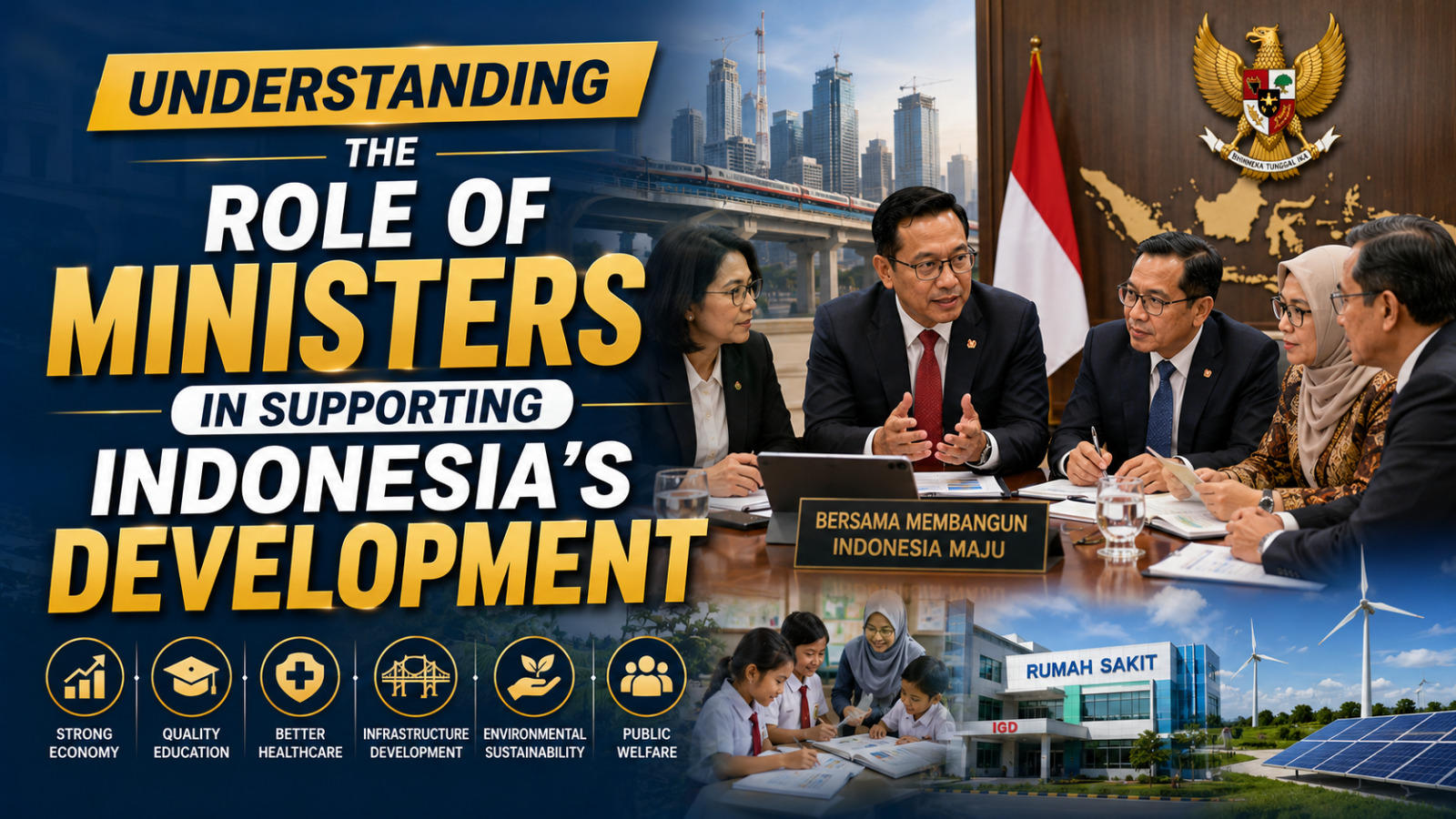
Ministers have an important role in supporting Indonesia's development by helping the President manage different areas of government. Each minister leads a ministry with specific responsibilities that contribute to national priorities. Development requires coordinated policies, effective programs, and responsible management across many sectors. Ministers help translate government priorities into policies and programs that can be implemented within their respective fields. Their work can influence economic development, public services, human resources, and other aspects of national progress.
DEVELOPING GOVERNMENT POLICIES
Ministers help formulate and implement government policies within their respective areas of responsibility. These policies provide direction for programs related to development and public services. Effective policies should respond to national needs, available data, legal requirements, and changing conditions. Ministers work with officials and relevant institutions to ensure that policies are properly prepared.
Development involves many interconnected sectors, so policies often require cooperation between ministries. Economic development, for example, can involve finance, trade, industry, infrastructure, and employment. Coordination helps ensure that policies from different sectors support common national objectives. Through effective policy development, ministers can contribute to a more organized approach to national development.
SUPPORTING ECONOMIC DEVELOPMENT
Economic development is an important part of Indonesia's progress. Ministers responsible for finance, trade, industry, investment, agriculture, and other sectors help develop policies that support economic activity. Strong economic policies can encourage productive activities, investment, trade, and employment opportunities.
Each ministry contributes according to its specific responsibilities. Financial policies can support government programs, while trade policies can help businesses access markets. Industry and investment policies can also contribute to productivity and economic competitiveness. Cooperation between these sectors is important to create a supportive environment for sustainable economic development.
IMPROVING HUMAN RESOURCES
Indonesia's development also depends on the quality of its human resources. Ministers in education, health, employment, and other related sectors help develop policies that support people's capabilities and well-being. Quality education and healthcare can provide an important foundation for a productive and resilient population.
Human resource development requires long-term planning and cooperation between government institutions. Education can help people develop knowledge and skills, while healthcare supports their ability to participate in social and economic activities. Employment policies can also help connect people with opportunities in the labor market. Together, these efforts contribute to the country's development potential.
STRENGTHENING PUBLIC SERVICES AND WELFARE
Development should also improve the quality of public services and people's welfare. Ministers oversee policies and programs in areas such as healthcare, education, social affairs, infrastructure, and other public services. Effective public services can help communities access essential needs and participate more fully in development.
Ministries need to monitor and evaluate their programs to determine whether they are achieving their intended results. Public needs can differ across regions, so policies may require coordination with local governments and other institutions. Continuous evaluation can help identify areas that need improvement. By strengthening public services, ministers can contribute to development that benefits society more broadly.
CONCLUSION
Ministers support Indonesia's development through government policy, economic development, human resource improvement, and stronger public services and welfare. Each minister contributes according to the responsibilities of their ministry, while coordination ensures that different sectors work toward shared national objectives. Development requires long-term planning, effective implementation, and continuous evaluation. Ministers therefore play an important role in turning government priorities into practical programs. Through responsible leadership and cooperation, they can contribute to Indonesia's continued development.
About the Author
Gusti Ayu Tita P
Author — STEKOM University
An active author focused on academic issues, educational technology, and human resource development in the campus environment.















