
Understanding The Roles And Responsibilities Of A Mayor In Developing A City
Gusti Ayu Tita P
12 Agustus 2026
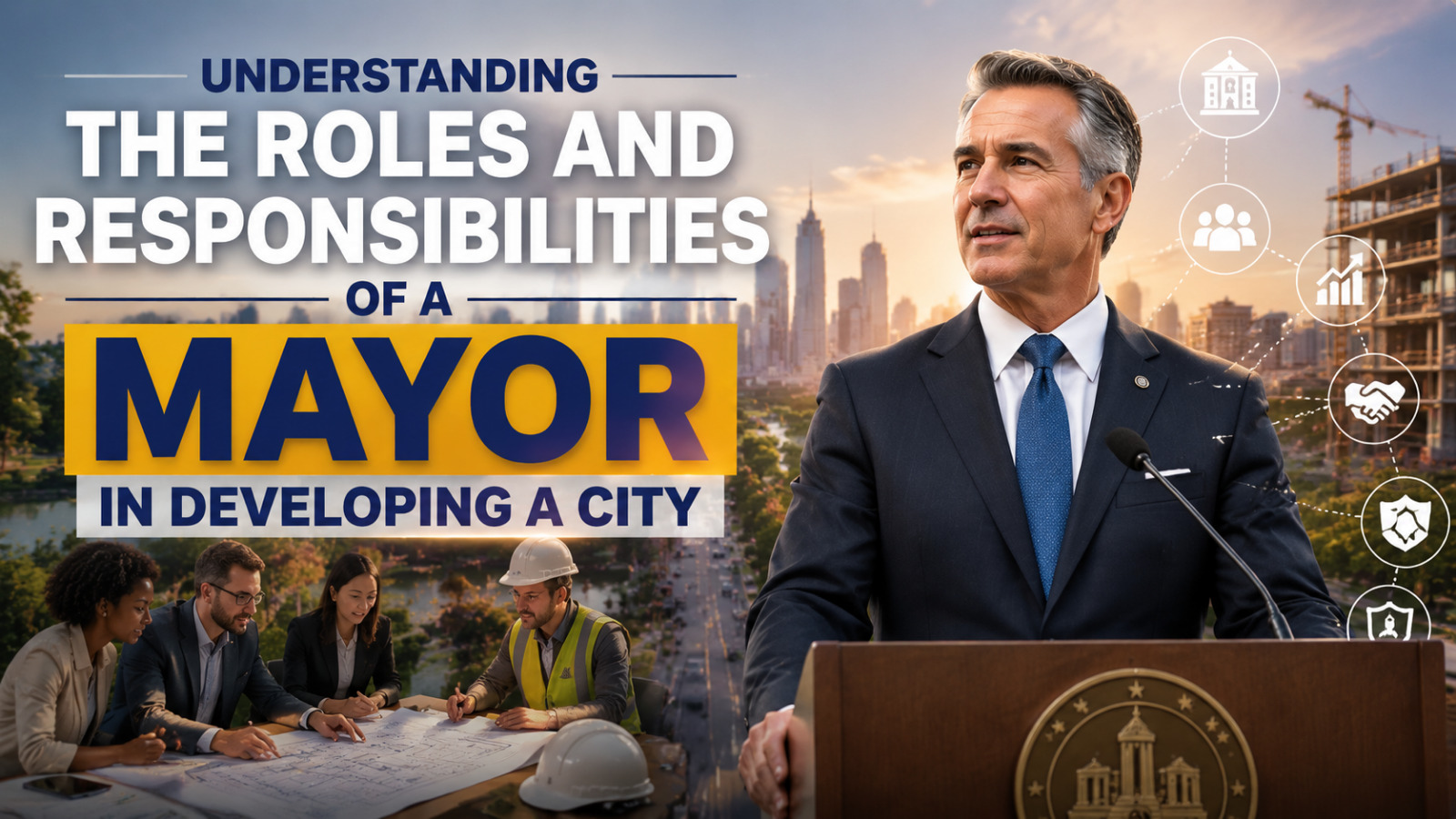
A mayor has an important position in ensuring that a city develops in an organized, inclusive, and sustainable way. The mayor works with the local government, communities, businesses, and other institutions to determine development priorities. Understanding Mayor Responsibilities helps citizens recognize how local policies can affect their daily lives. A good mayor should combine leadership, public service, transparency, and long-term planning. The success of City Development depends not only on government programs but also on cooperation with the community.
THE MAIN ROLE OF A MAYOR
One of the main roles of a mayor is to lead the local government and ensure that public programs are implemented properly. A mayor generally coordinates government departments and helps establish development priorities based on local needs. The mayor also has to make decisions concerning infrastructure, education support, public facilities, environmental management, and economic development within the authority provided by law. Effective leadership requires careful consideration of public interests rather than personal interests. Therefore, a mayor needs to understand local conditions before establishing major policies.
RESPONSIBILITIES IN CITY DEVELOPMENT
City Development requires careful planning because every area has different social, economic, and environmental conditions. A mayor is responsible for supporting development programs that improve roads, transportation, public spaces, sanitation, and other essential facilities. Development should also consider vulnerable communities so that economic progress does not create greater inequality. Good planning involves setting measurable goals, managing budgets responsibly, and evaluating results regularly. Cooperation with regional and national institutions can also strengthen development programs.
IMPROVING PUBLIC SERVICES
Providing reliable Public Services is another important responsibility of a mayor. Citizens need accessible administrative services, healthcare support, education facilities, transportation, sanitation, and public safety. A mayor should encourage government offices to provide services that are efficient, transparent, and responsive to complaints. Digital systems can also make administrative processes easier and reduce unnecessary procedures. Regular evaluation is necessary to determine whether public services are actually meeting community needs.
SUPPORTING COMMUNITY WELFARE
Improving Community Welfare should remain one of the main goals of local leadership. A mayor can support employment programs, small businesses, affordable public facilities, social assistance, and skills development. Policies should be based on reliable information so that assistance reaches people who need it most. Community participation is also important because residents understand local problems from direct experience. By listening to citizens, a mayor can create programs that are more relevant and effective.
BUILDING RESPONSIBLE LOCAL GOVERNMENT
Strong Local Government requires transparency, accountability, and professional administration. A mayor should ensure that public budgets are managed carefully and that government programs can be monitored by citizens. Ethical leadership is important because public authority must always be used for public benefit. Collaboration between government agencies can prevent overlapping programs and improve efficiency. In the long term, responsible leadership can strengthen public confidence and support sustainable city development.
CONCLUSION
A mayor has a broad responsibility to lead government, improve Public Services, support Community Welfare, and encourage sustainable City Development. Successful leadership requires integrity, strategic planning, communication, and cooperation. When Mayor Responsibilities are carried out professionally, local government can respond more effectively to community needs. Citizens also have an important role by participating, giving feedback, and monitoring public programs.
About the Author
Gusti Ayu Tita P
Author — STEKOM University
An active author focused on academic issues, educational technology, and human resource development in the campus environment.















