
Understanding the Structure of a Cabinet in Government Systems
Gusti Ayu Tita P
12 Agustus 2026
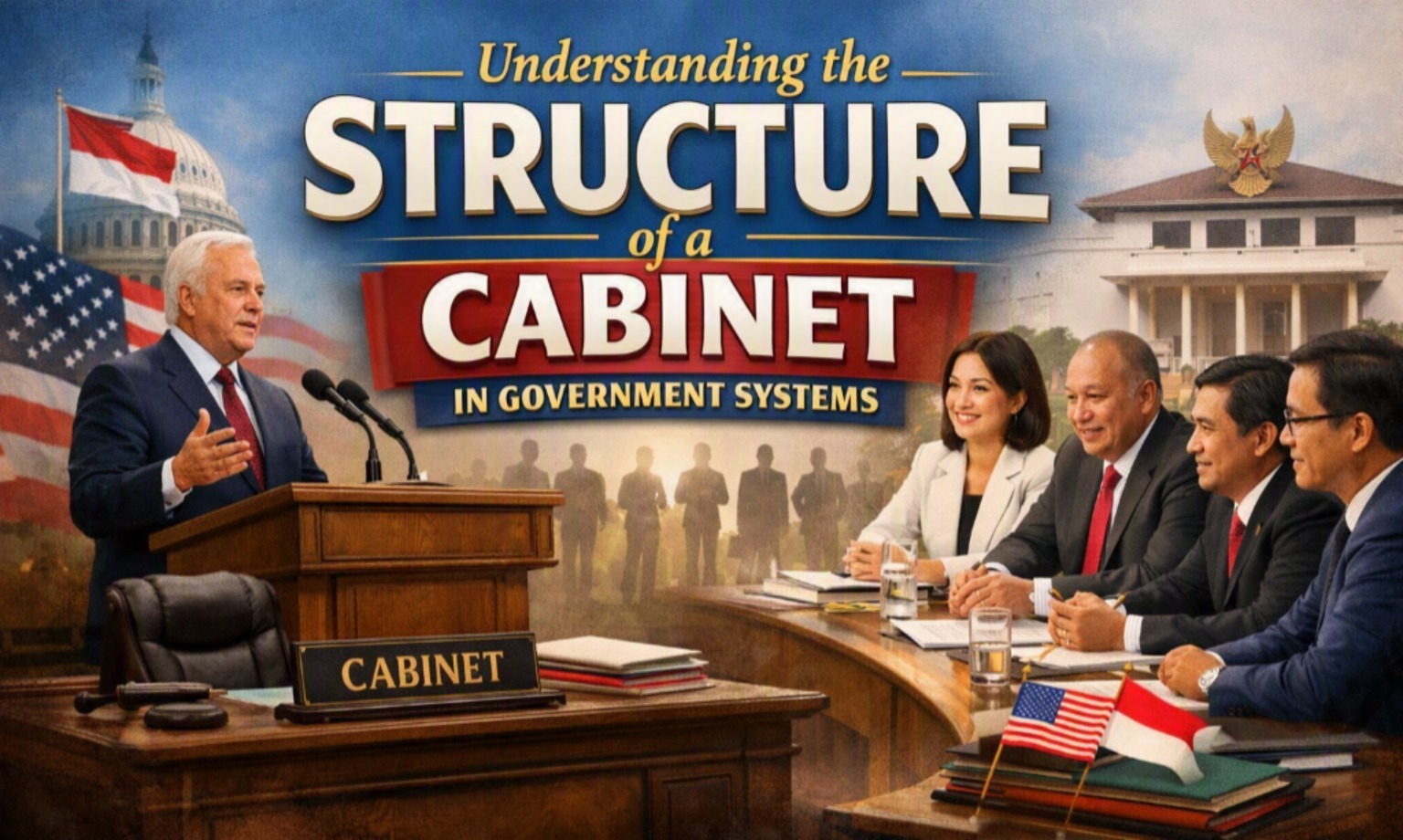
A cabinet is a central part of many government systems because it brings together senior officials who help the head of government manage national affairs. Understanding the structure of a cabinet is important for seeing how government decisions are prepared, coordinated, and implemented. Although cabinet systems differ between countries, they generally involve ministers with specific responsibilities. Each minister oversees a particular area of public administration and works with other members to achieve national priorities. A well-organized cabinet can support effective governance, clear decision-making, and better public services.
WHAT IS A CABINET IN GOVERNMENT?
A cabinet is a group of senior government officials, usually ministers, who advise the head of government and participate in major policy decisions. In a parliamentary system, the cabinet is commonly led by a prime minister, while in some presidential systems, senior ministers or secretaries form a similar executive team. Cabinet members are generally responsible for specific government departments or policy areas. Their responsibilities may include education, health, finance, defense, transportation, foreign affairs, and other important sectors. The exact role and authority of a cabinet depend on the constitution, laws, and political system of each country.
The cabinet also serves as a forum for discussing important national issues. Ministers can present proposals, review policies, and coordinate actions that affect several departments. This coordination helps prevent government agencies from working toward conflicting objectives. Cabinet discussions may also help the government respond to economic, social, security, or administrative challenges. Therefore, the cabinet is not simply a collection of ministers but an important mechanism for executive coordination.
THE MAIN STRUCTURE OF A CABINET
The structure of a cabinet usually begins with the head of government, who provides overall political direction and coordinates the work of ministers. In a parliamentary system, this role is commonly held by the prime minister, while a president may lead the executive branch in a presidential system. Below the head of government are ministers responsible for particular departments or policy fields. Some governments also appoint deputy ministers, junior ministers, or other officials to support ministerial responsibilities. The number and arrangement of these positions vary according to each country's governmental needs.
Cabinets may also include ministers without responsibility for a specific department, depending on the country's system. Some governments create coordinating ministries or committees to manage issues that involve several sectors. For example, economic policy may require cooperation between finance, industry, labor, and trade officials. This structure allows the government to distribute responsibilities while maintaining coordination at the national level. The goal is to create a clear chain of responsibility while allowing different parts of government to work together.
ROLE OF THE HEAD OF GOVERNMENT
The head of government plays a key role in directing the cabinet and establishing broad policy priorities. This official usually decides the general direction of government programs and ensures that ministers work toward shared objectives. The head of government may also assign responsibilities to ministers and organize cabinet meetings. In some systems, the head of government has significant authority to appoint or dismiss ministers, while other systems place additional constitutional limits on these powers. The precise authority depends on the country's legal and political framework.
Another important responsibility is maintaining cabinet unity. Government policies often involve difficult choices and different political perspectives, so ministers must coordinate their positions before major decisions are announced. The head of government can help resolve disagreements and establish a common direction. Effective leadership can therefore improve communication and make government action more consistent. Strong coordination is especially important when policies involve multiple ministries.
ROLE OF MINISTERS AND GOVERNMENT DEPARTMENTS
Each minister normally leads a government department or manages a specific policy area. Ministers are responsible for developing policies, overseeing administrative activities, and communicating government priorities in their respective fields. They work with civil servants and other public officials who handle the technical and administrative implementation of government programs. Ministers may also represent their departments in legislative discussions, public communications, and international meetings. Their work connects political decisions with practical government administration.
Government departments often have different responsibilities, but their work can overlap. For example, a national employment policy may involve labor, education, industry, and social welfare authorities. Ministers therefore need to exchange information and coordinate their programs. Interministerial cooperation can improve policy consistency and reduce unnecessary duplication. It also helps the government address complex problems that cannot be solved by one department alone.
HOW CABINET DECISIONS ARE MADE?
Cabinet decision-making generally involves discussion, coordination, and collective consideration of major government policies. A proposal may first be developed by a ministry and then reviewed by other departments when it affects their responsibilities. Important proposals can be discussed during cabinet meetings or through specialized committees. Ministers may raise concerns, suggest changes, or provide information based on their areas of expertise. After sufficient discussion, the government can determine its position according to the procedures established by law and political practice.
The process is designed to encourage coordinated government action rather than isolated decisions. Some systems operate under a principle similar to collective responsibility, where ministers are expected to publicly support agreed government policies. This does not mean every minister will have identical views during internal discussions. Instead, it encourages cabinet members to present a unified government position after a decision has been reached. The specific rules surrounding cabinet confidentiality and collective responsibility differ among countries.
DIFFERENCES BETWEEN CABINET SYSTEMS
Cabinet structures are not identical because countries use different forms of government. In a parliamentary system, the cabinet is generally closely connected to the legislature, and the government usually needs the support or confidence of the parliamentary majority. The prime minister normally leads the cabinet and coordinates its activities. Ministers may also be members of the legislature, although this depends on the country's constitutional arrangements. These features create a close relationship between executive leadership and parliamentary politics.
In a presidential system, the president normally leads the executive branch and appoints senior officials to manage government departments. Cabinet members may serve primarily as advisers and administrators rather than as members of the legislature. The separation between the executive and legislative branches is generally more pronounced. Some countries also use hybrid arrangements that combine elements of parliamentary and presidential systems. These differences show why the structure and authority of a cabinet must always be understood within its constitutional context.
WHY A WELL ORGANIZED CABINET MATTERS?
A well-organized cabinet can improve the government's ability to develop and implement public policy. Clear responsibilities make it easier to identify which ministry is responsible for a particular issue. Effective coordination can also reduce policy conflicts and help government agencies use public resources more efficiently. When ministers communicate regularly, important information can move more effectively across departments. This can contribute to more consistent and responsive public services.
Cabinet organization can also strengthen government accountability. When responsibilities are clearly assigned, the public and legislative institutions can better understand who is responsible for particular policies and programs. Transparent procedures can support public confidence in government institutions. At the same time, effective cabinet structures must remain flexible enough to respond to changing national conditions. A cabinet that combines clear responsibilities, cooperation, and accountable leadership can contribute significantly to effective government.
CONCLUSION
Understanding the structure of a cabinet helps explain how governments organize executive responsibilities and coordinate national policies. A cabinet typically includes a head of government and ministers who manage different departments or policy areas. Its members work together to discuss major issues, develop policies, and oversee government programs. However, the exact structure varies according to each country's constitution, laws, and political traditions. Ultimately, an effective cabinet depends on clear leadership, cooperation, coordination, and accountability.
About the Author
Gusti Ayu Tita P
Author — STEKOM University
An active author focused on academic issues, educational technology, and human resource development in the campus environment.















