
Understanding the Symbols Found in Traditional Javanese Palaces
Gusti Ayu Tita P
4 September 2026
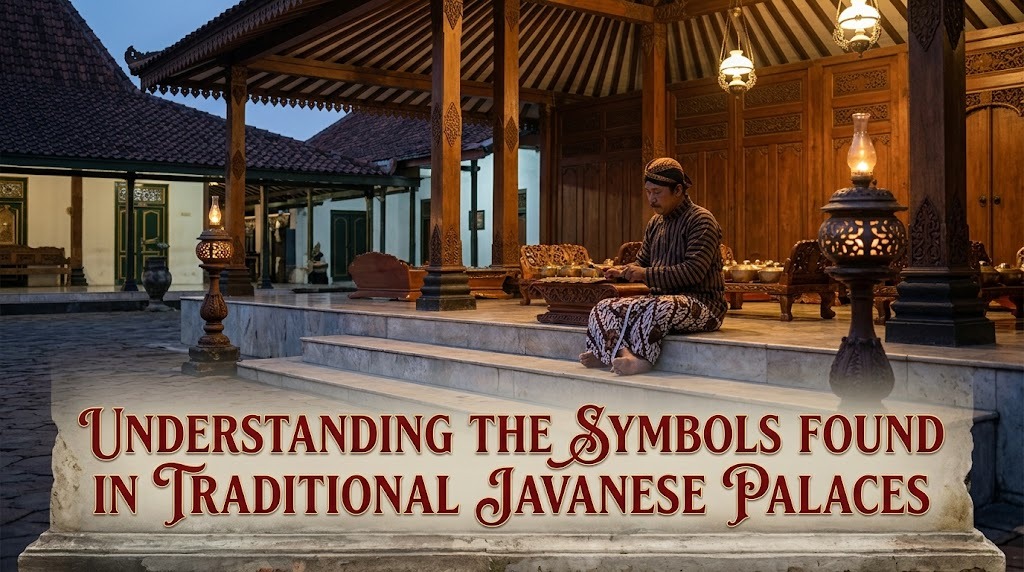
Traditional Javanese palaces are more than historic buildings with beautiful architecture. They are cultural spaces filled with symbols, philosophical meanings, and traditional values that have been passed down through generations. From the arrangement of buildings to decorative elements, many parts of a palace reflect how Javanese society understands life, nature, leadership, and spirituality.
Understanding these symbols can make a visit to a Javanese palace more meaningful. Instead of seeing ornaments and buildings as simple decorations, visitors can recognize the cultural messages and philosophies behind them.
THE PHILOSOPHY OF JAVANESE PALACE DESIGN
The design of a traditional Javanese palace is generally connected to the concept of harmony between humans, nature, and the spiritual world. The arrangement of spaces is not always created only for practical purposes, but also reflects social relationships and cultural beliefs. Important buildings and courtyards can have different functions depending on their position within the palace complex. This arrangement demonstrates the importance of order and balance in traditional Javanese life. The palace therefore becomes a physical representation of cultural philosophy.
One important principle is the idea that humans should understand their position in relation to their surroundings. Space, direction, movement, and hierarchy can carry symbolic meanings. Visitors may notice that some areas are more public while others are more restricted. These differences reflect traditional concepts of respect, responsibility, and social position.
SYMBOLS IN PALACE ARCHITECTURE
One of the most recognizable features of Javanese palace architecture is the traditional roof design. Buildings such as the pendopo often have large open spaces supported by wooden columns and are designed to accommodate communal activities. The joglo roof, commonly associated with Javanese architecture, has a distinctive central structure that gives the building both visual character and cultural significance. Its design can represent order, balance, and connection between the human world and the wider universe.
The arrangement of columns and architectural elements can also communicate meaning. In traditional Javanese architecture, certain structural components have particular names and functions that are connected with local cultural concepts. The open character of a pendopo also supports ideas of hospitality and communal interaction. Rather than being merely decorative, architectural forms help express the identity of Javanese culture.
MEANING OF PALACE ORNAMENTS
Palaces contain many decorative elements that carry cultural messages. Floral patterns, plants, animals, and geometric forms may appear on walls, gates, furniture, textiles, and other objects. Some motifs are associated with values such as prosperity, strength, fertility, protection, or harmony. Their meanings can vary depending on the palace, historical period, and cultural context, so they should not always be interpreted as having one universal meaning.
Traditional motifs also demonstrate the close relationship between art and philosophy in Javanese culture. Decorative patterns can turn an ordinary architectural surface into a cultural expression. Visitors who pay attention to these details can discover stories and values that may not be immediately visible. This makes palace architecture an important source for understanding traditional Javanese artistic traditions.
SYMBOLIC MEANING OF PALACE SPACES
The location of a building or courtyard within a palace complex can also have symbolic importance. Public and private spaces are often separated according to their functions and levels of access. Areas closer to important central buildings may have greater ceremonial or administrative significance. This spatial hierarchy reflects traditional ideas about authority, etiquette, and social relationships.
The movement from one area to another can therefore be viewed as more than simply walking through a building complex. Gates, courtyards, pathways, and transitional spaces can mark changes in status or function. In historic palaces, these arrangements helped organize ceremonies and daily activities. They also demonstrate how architecture could reinforce cultural values and palace traditions.
SYMBOLS IN TRADITIONAL CEREMONIES
Symbols are not limited to buildings and decorations. They also appear in traditional palace ceremonies, clothing, music, dances, offerings, and other cultural practices. Ceremonial objects may have specific roles and meanings that are understood through generations of cultural knowledge. Certain colors, patterns, movements, and objects can communicate respect, devotion, social identity, or historical continuity. These practices help keep palace traditions connected to contemporary communities.
Traditional ceremonies also show that palace culture is a living heritage, rather than something preserved only in museums. Events associated with royal palaces can bring together members of palace communities, artists, visitors, and wider society. Through continued practice, younger generations can learn about cultural values in ways that go beyond reading historical information. This process contributes to the preservation of Javanese cultural identity.
WHY THESE SYMBOLS MATTER TODAY
Understanding palace symbols is important because they provide insight into Indonesia's cultural diversity and historical identity. Javanese palaces preserve knowledge about architecture, art, ceremonies, social organization, and traditional philosophy. Studying these elements can help younger generations appreciate the cultural heritage that surrounds them. It can also encourage responsible cultural tourism that respects the meaning of historic places.
For visitors, learning about palace symbols can transform a simple sightseeing experience into a deeper cultural journey. Every architectural detail can tell part of a larger story about the people and traditions connected to the palace. However, interpretations should be approached carefully because meanings can differ between regions and royal institutions. Respect for local explanations and historical context is essential when exploring Javanese palace heritage.
CONCLUSION
Traditional Javanese palaces contain a rich collection of architectural, artistic, spatial, and ceremonial symbols. These symbols reflect important ideas about harmony, hierarchy, respect, spirituality, and community. Understanding them allows visitors to see palaces not simply as historic structures but as places where cultural knowledge continues to develop and survive. Their preservation is therefore important for maintaining Indonesia's diverse cultural heritage. By learning about these symbols, people can better appreciate the philosophy and identity of Javanese culture.
About the Author
Gusti Ayu Tita P
Author — STEKOM University
An active author focused on academic issues, educational technology, and human resource development in the campus environment.















