
Unique Temple Architecture in Indonesia You Should Explore
Gusti Ayu Tita P
4 September 2026
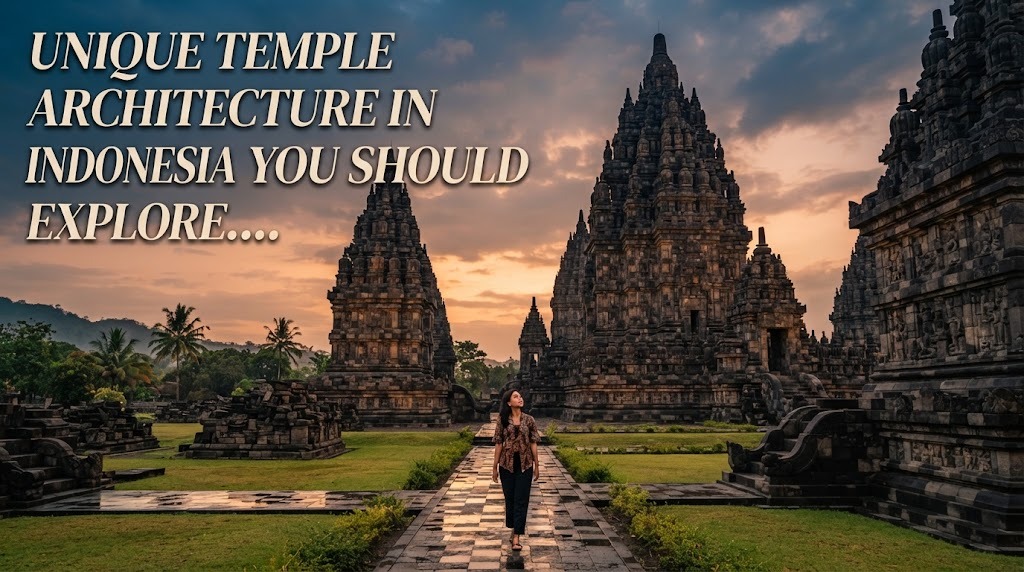
Indonesia has a rich collection of historical temples with distinctive architectural styles. Each temple reflects the culture, religious beliefs, artistic traditions, and construction skills of the society that built it. From towering Hindu temples to elaborate Buddhist monuments, these structures offer a fascinating look into Indonesia’s past.
Exploring temple architecture is also a great way to understand how ancient communities combined art, symbolism, and engineering. Here are several unique architectural features of Indonesian temples worth discovering.
DISTINCTIVE TEMPLE STRUCTURES
Indonesian temples have different structures depending on their historical and religious backgrounds. Buddhist temples often feature stupas and symmetrical layouts, while Hindu temples commonly have tall structures with detailed decorations. The arrangement of buildings within a temple complex can also carry religious and symbolic meanings. These differences make each temple visually and culturally distinctive.
Borobudur and Prambanan are two well-known examples of different architectural traditions. Borobudur is recognized for its massive stepped structure and numerous stupas, while Prambanan is known for its tall and elegant Hindu temples. Both demonstrate sophisticated architectural planning. Their distinctive forms continue to attract visitors from around the world.
INTRICATE RELIEFS AND CARVINGS
Reliefs are among the most impressive features of Indonesian temple architecture. Many temple walls are decorated with detailed carvings depicting religious stories, people, animals, plants, and scenes from daily life. These carvings were created with remarkable precision despite the lack of modern tools. They serve both decorative and educational purposes.
Borobudur is particularly famous for its extensive relief panels. The carvings represent Buddhist teachings and provide insights into the culture of the period. Prambanan also features reliefs connected to Hindu stories, including the Ramayana. These artistic details make temple walls valuable sources of historical and cultural information.
SYMBOLIC STUPAS AND ORNAMENTS
Stupas are important architectural elements in Indonesian Buddhist temples. At Borobudur, numerous bell-shaped stupas are arranged across the upper levels of the monument. Their organized placement creates a distinctive visual pattern while carrying religious significance. The combination of stupas and the main structure gives Borobudur its iconic appearance.
Hindu temples have their own distinctive ornaments and decorative elements. Features such as kala faces, makara motifs, floral patterns, and sculptural details can be found on several temple structures. These elements enhance the appearance of the buildings while reflecting religious symbolism. The careful placement of ornaments demonstrates the advanced artistic skills of ancient craftsmen.
ADVANCED CONSTRUCTION TECHNIQUES
The construction of ancient temples demonstrates impressive engineering knowledge. Builders had to select suitable materials and arrange large numbers of stone or brick blocks with great precision. They also needed to consider the stability and durability of the structures. The survival of many temple remains for centuries demonstrates the quality of their construction.
Ancient builders also adapted their structures to local environmental conditions. Some temples were constructed in mountainous or elevated areas, while others were developed on flatter landscapes. Their ability to organize large structures without modern machinery is an important part of their historical significance. Temple architecture therefore represents both artistic creativity and practical engineering knowledge.
HARMONY WITH THE SURROUNDING LANDSCAPE
The location of a temple can be an important part of its architectural character. Several Indonesian temples are situated near mountains, hills, forests, or other natural landscapes. This creates a strong visual relationship between the monument and its surroundings. The natural setting can also enhance the experience of visiting the historical site.
Gedong Songo, for example, is located on the slopes of Mount Ungaran and is surrounded by a mountainous environment. The temples of the Dieng Plateau also have a distinctive atmosphere because of their highland location. These settings demonstrate how historical architecture can exist in harmony with nature. They also make temple visits attractive for travelers interested in both heritage and scenery.
DIFFERENCES BETWEEN HINDU AND BUDDHIST TEMPLES
The architectural differences between Hindu and Buddhist temples provide another reason to explore Indonesian heritage. Buddhist monuments commonly feature stupas, Buddha imagery, and layouts associated with Buddhist teachings. Hindu temples often emphasize tall towers, sacred sculptures, and decorative elements connected to Hindu beliefs. These characteristics help visitors recognize the diverse religious traditions that influenced Indonesian history.
Despite these differences, both traditions demonstrate sophisticated artistic and architectural knowledge. Borobudur and Prambanan are excellent examples of how different religious traditions produced distinctive monumental architecture. Studying both sites can provide a broader understanding of Indonesia’s cultural development. Their preservation is therefore important for historical education and cultural appreciation.
CONCLUSION
Unique temple architecture in Indonesia can be seen through distinctive structures, detailed reliefs, symbolic ornaments, sophisticated construction techniques, and carefully selected locations. Each temple tells a different story about the beliefs, artistic abilities, and knowledge of the people who built it.
Exploring Indonesian temples is not only an opportunity to admire beautiful historical buildings. It is also a way to learn about the country's rich cultural heritage. By respecting temple regulations and supporting preservation efforts, visitors can help ensure these remarkable monuments remain available for future generations.
About the Author
Gusti Ayu Tita P
Author — STEKOM University
An active author focused on academic issues, educational technology, and human resource development in the campus environment.















