United Against Corruption for a Better Indonesia
Gusti Ayu Tita P
22 Juli 2026
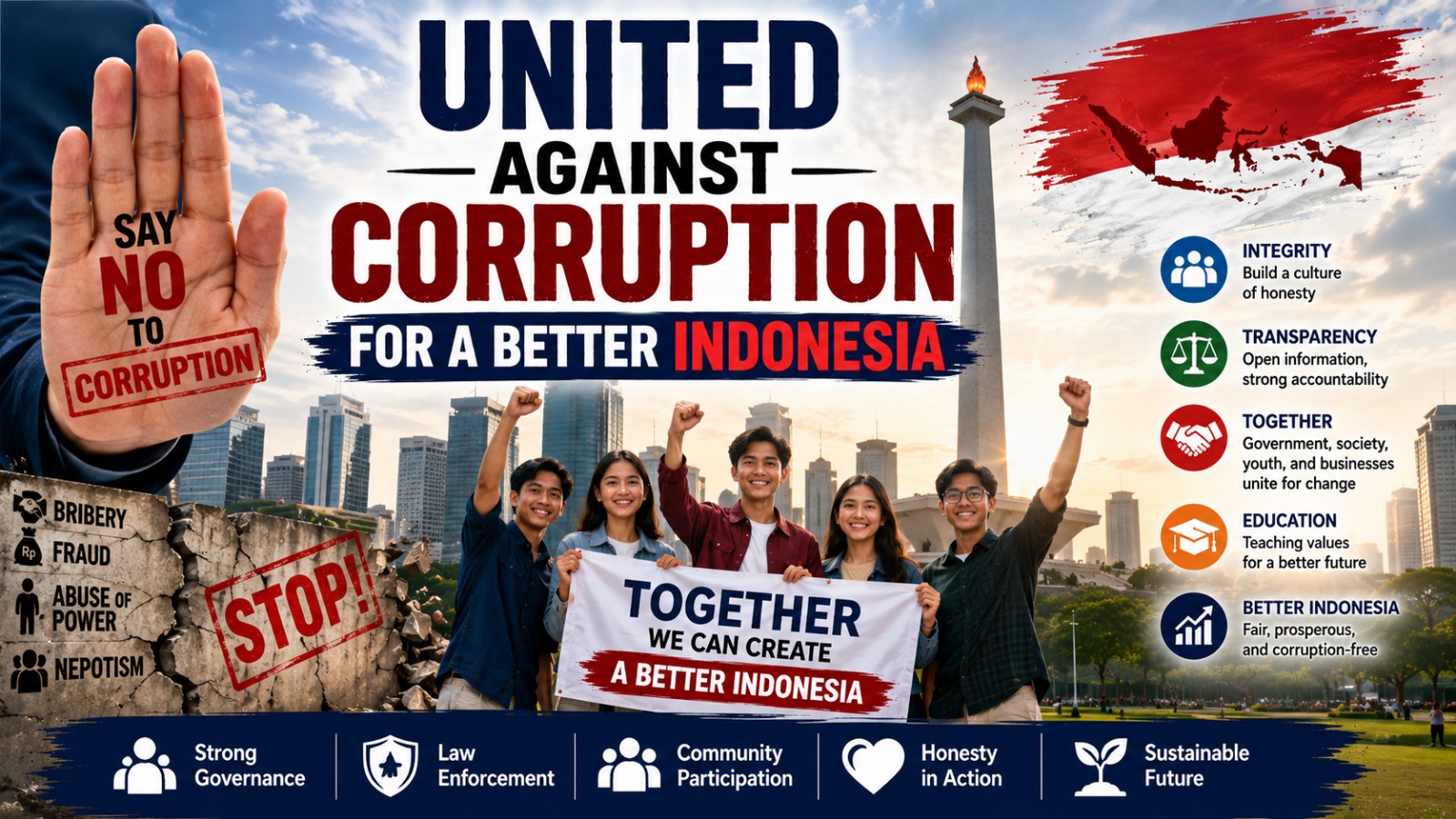
Corruption remains one of the biggest challenges faced by many developing countries, including Indonesia. It affects economic growth, public trust, social justice, and the quality of public services. From misuse of government funds to bribery and abuse of power, corruption can slow national progress and increase inequality within society.
Building a better Indonesia requires collective action from all levels of society. Governments, educational institutions, businesses, communities, and young generations must work together to create a culture of honesty, transparency, and accountability. By standing united against corruption, Indonesia can move toward a fairer and more prosperous future.
UNDERSTANDING THE IMPACT OF CORRUPTION
Corruption is the misuse of authority or public resources for personal gain. Although it may involve individuals or institutions, the negative effects are felt by society as a whole.
1.WEAKENING PUBLIC SERVICES
Funds intended for healthcare, education, infrastructure, and social welfare can be lost due to corruption. This reduces the quality of services available to citizens.
2.INCREASING POVERTY AND INEQUALITY
Corruption often benefits a small group while disadvantaging ordinary people. Poor communities are usually the most affected because they rely heavily on public support systems.
3.REDUCING PUBLIC TRUST
When corruption becomes widespread, citizens may lose confidence in governments and public institutions. This can weaken democracy and social stability.
4.SLOWING ECONOMIC DEVELOPMENT
Investors prefer transparent and stable environments. High levels of corruption can discourage business growth and reduce employment opportunities.
WHY UNITY IS IMPORTANT IN FIGHTING CORRUPTION?
Corruption cannot be eliminated by governments alone. It requires cooperation and active participation from all sectors of society.
1.THE ROLE OF GOVERNMENT
Governments must strengthen transparency, enforce fair laws, and improve accountability in public administration.
2.THE ROLE OF EDUCATIONAL INSTITUTIONS
Schools and universities should teach integrity, ethics, and social responsibility to young generations from an early age.
3.THE ROLE OF MEDIA
Media organizations help expose corruption cases and spread public awareness about the importance of honesty and transparency.
4.THE ROLE OF COMMUNITIES
Communities can support anti-corruption movements by promoting ethical behavior and rejecting dishonest practices in daily life.
THE IMPORTANCE OF ANTI-CORRUPTION EDUCATION
Education is one of the most effective tools for preventing corruption in the long term.
1.TEACHING INTEGRITY VALUES
Children and students should learn values such as honesty, discipline, fairness, and accountability.
2.ENCOURAGING RESPONSIBLE CITIZENSHIP
Young people need to understand their role in protecting public resources and supporting ethical leadership.
3.BUILDING A CULTURE OF TRANSPARENCY
Educational programs can help create awareness that corruption damages everyone, not only governments or institutions.
THE ROLE OF DIGITAL TECHNOLOGY
Modern technology can support anti-corruption efforts in many ways.
1.ONLINE PUBLIC SERVICES
Digital systems reduce direct contact between officials and citizens, minimizing opportunities for bribery.
2.OPEN ACCESS TO INFORMATION
Transparent digital platforms allow citizens to monitor budgets, projects, and public services more easily.
3.DIGITAL REPORTING SYSTEMS
People can use online platforms to report corruption or unethical behavior safely and efficiently.
HOW YOUNG PEOPLE CAN CONTRIBUTE?
Young generations play an important role in shaping Indonesia’s future.
They can reject cheating, support transparency, participate in social campaigns, and promote honesty through digital platforms. Small acts of integrity in schools, universities, and workplaces can create meaningful change over time.
Youth participation is essential because future leadership depends on today’s values and actions.
CONCLUSION
Corruption is a serious obstacle to national progress and social welfare. However, by standing united against corruption, Indonesia can build a stronger, fairer, and more transparent society.
Governments, communities, educational institutions, and young generations all share responsibility in promoting integrity and accountability. Through cooperation, ethical leadership, and public awareness, Indonesia can move toward a brighter future free from corruption.
About the Author
Gusti Ayu Tita P
Author — STEKOM University
An active author focused on academic issues, educational technology, and human resource development in the campus environment.