Urban Farming: A Green Solution for Cities
Gusti Ayu Tita P
15 September 2026
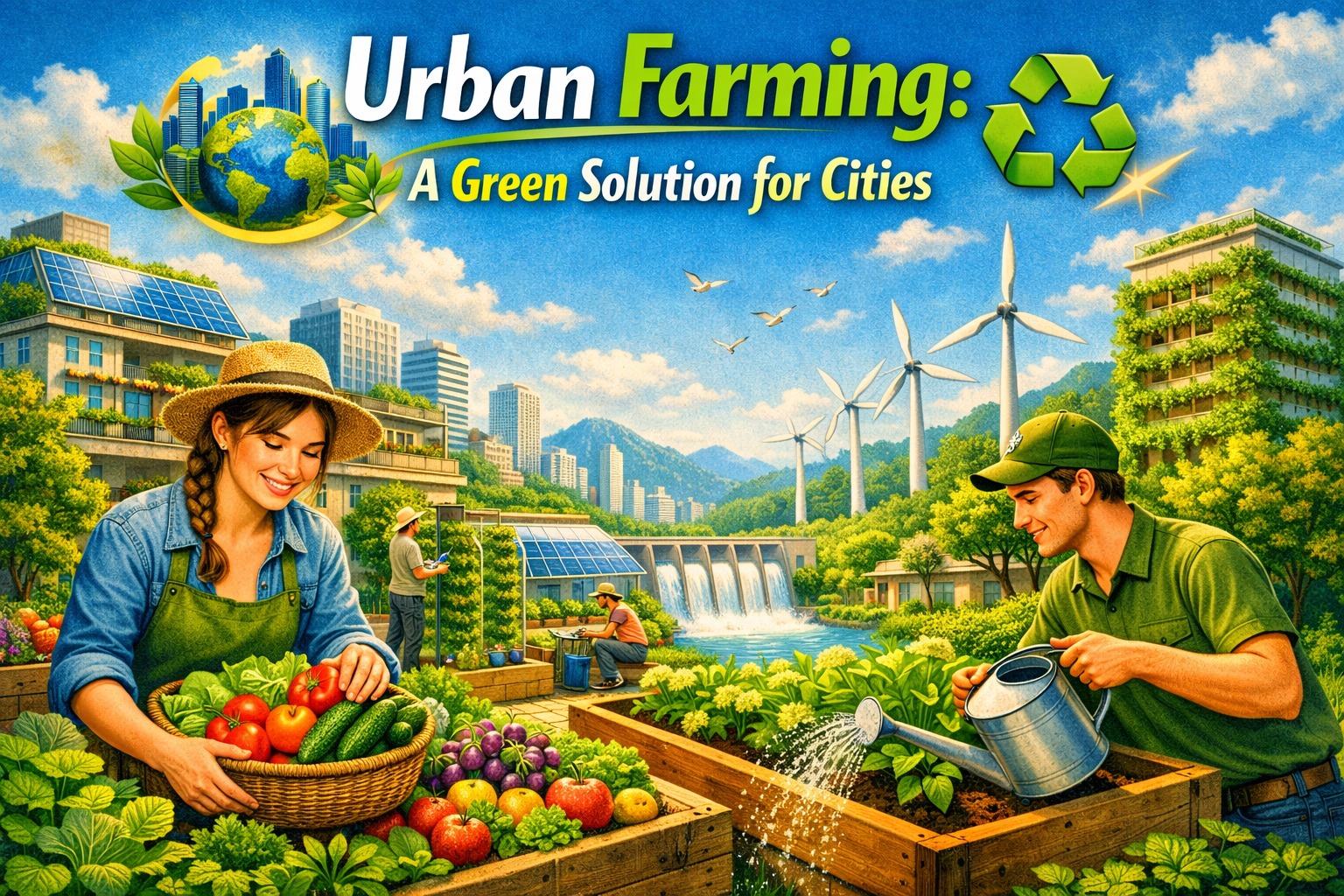
Urban areas continue to grow at an unprecedented pace, bringing challenges such as limited green space, food insecurity, and environmental pollution. As cities search for sustainable solutions, urban farming has emerged as a powerful movement that transforms rooftops, balconies, and vacant lots into productive green spaces. This approach not only improves food availability but also enhances the quality of life for urban residents.
WHAT IS URBAN FARMING
Urban farming refers to the practice of growing, processing, and distributing food within city environments. It can take many forms, including rooftop gardens, vertical farms, hydroponic systems, community gardens, and indoor farming.
Unlike traditional agriculture, urban farming focuses on maximizing limited space and using innovative techniques to grow fresh produce close to where people live. This proximity reduces transportation needs and encourages communities to reconnect with food production.
WHY URBAN FARMING IS IMPORTANT FOR MODERN CITIES
Rapid urbanization has created a gap between food production and consumption. Cities depend heavily on rural areas and long supply chains, which can be disrupted by climate change, economic instability, or global crises. Urban farming helps bridge this gap by providing local, reliable food sources.
It also addresses environmental concerns. Green spaces in cities reduce air pollution, lower urban temperatures, and improve biodiversity. By turning unused spaces into gardens, urban farming contributes to healthier and more resilient communities.
KEY BENEFITS OF URBAN FARMING
1. IMPROVES FOOD SECURITY
Urban farming provides access to fresh and nutritious produce, especially in areas where healthy food options are limited. Local production ensures a steady supply and reduces reliance on imported food.
2. REDUCES CARBON FOOTPRINT
Transporting food over long distances generates significant greenhouse gas emissions. Growing food locally cuts transportation needs and helps reduce the environmental impact of the food system.
3. CREATES ECONOMIC OPPORTUNITIES
Urban agriculture opens doors for small businesses, entrepreneurs, and local markets. From selling fresh vegetables to offering workshops and agritourism experiences, urban farming supports local economies.
4STRENGTHENS COMMUNITY CONNECTIONS
Community gardens bring people together, encouraging collaboration and social interaction. They promote education, wellness, and shared responsibility for sustainable living.
POPULAR URBAN FARMING METHODS
1. ROOFTOP GARDENS
Rooftop gardening transforms unused roof space into productive farms. These gardens can grow vegetables, herbs, and fruits while improving insulation and reducing energy costs.
2. VERTICAL FARMING
Vertical farming uses stacked layers and controlled environments to grow crops efficiently. This method is ideal for cities with limited land and allows year-round production.
3.HYDROPONICS AND AQUAPONICS
Hydroponics grows plants using nutrient-rich water instead of soil, while aquaponics combines fish farming with plant cultivation. Both systems use less water and produce high yields in small spaces.
4.COMMUNITY GARDENS
Shared gardens encourage residents to grow food together. They foster community engagement and provide educational opportunities for children and adults alike.
CHALLENGES OF URBAN FARMING
Despite its benefits, urban farming faces challenges such as limited space, high initial costs, and regulatory barriers. Access to funding, supportive policies, and public awareness are essential to help urban agriculture thrive.
Technology and innovation continue to play a crucial role in overcoming these obstacles. Smart irrigation systems, renewable energy, and efficient farming techniques are making urban farming more accessible and scalable.
THE FUTURE OF URBAN FARMING
As cities aim to become more sustainable, urban farming will likely play a central role in future urban planning. Governments, businesses, and communities are increasingly recognizing the value of integrating agriculture into city life.
With the rise of climate awareness and sustainable lifestyles, urban farming is no longer just a trend. It is becoming a necessity for building greener, healthier, and more resilient cities.
CONCLUSION
Urban farming offers a practical and eco-friendly solution to many urban challenges. By bringing food production closer to consumers, reducing environmental impact, and strengthening communities, it represents a powerful step toward sustainable city living. As more people embrace this movement, cities can transform into thriving green ecosystems that support both people and the planet.
About the Author
Gusti Ayu Tita P
Author — STEKOM University
An active author focused on academic issues, educational technology, and human resource development in the campus environment.