Valuable Lessons from Indonesian History for Future Generations
Gusti Ayu Tita P
8 Agustus 2026
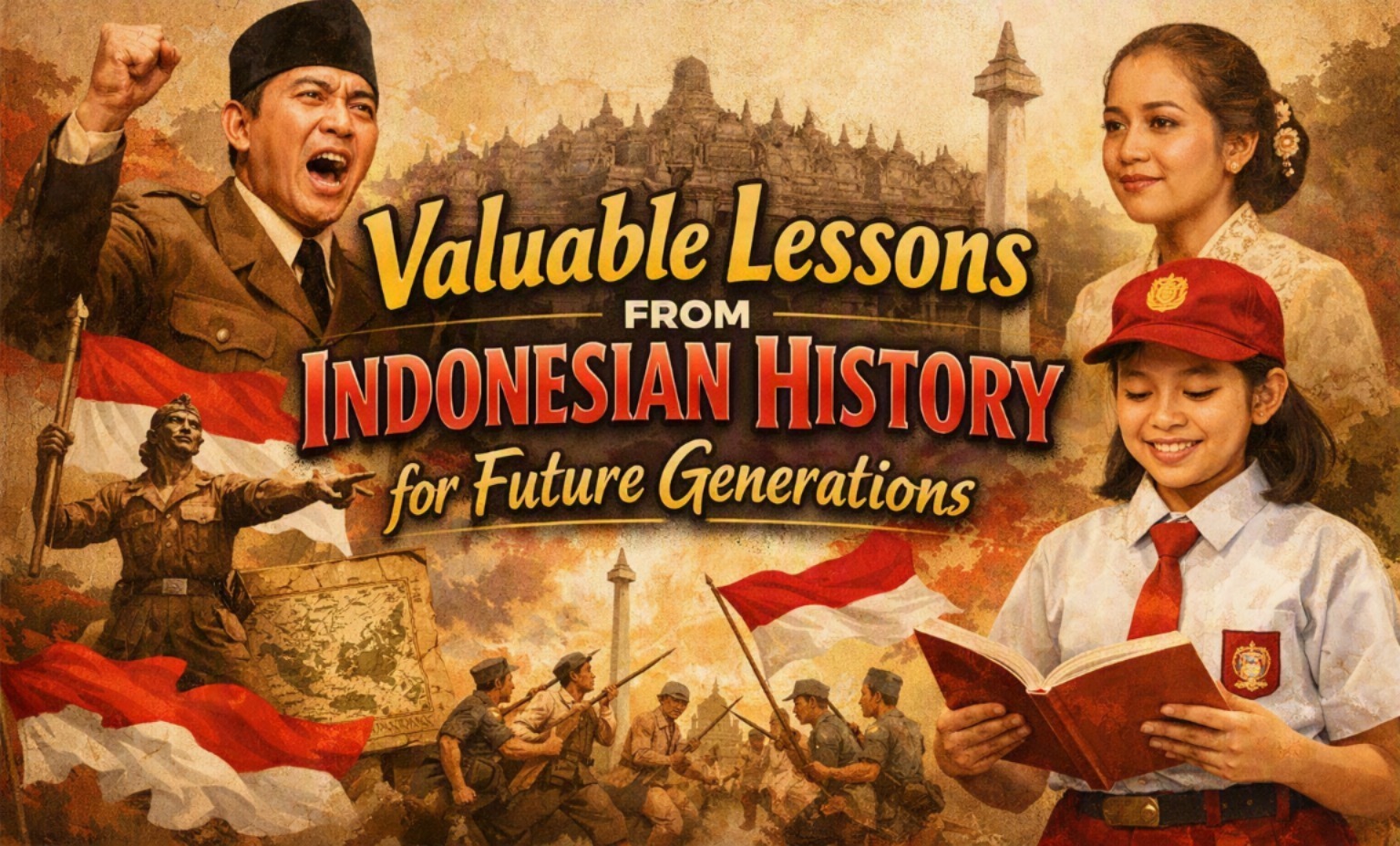
Indonesia has a long and diverse history shaped by kingdoms, trade, colonialism, national movements, independence, and social change. Learning this history is important because it helps younger generations understand how the country developed and why national unity matters. Historical events also provide valuable lessons about leadership, courage, cooperation, resilience, and national identity. By studying the past carefully, future generations can make wiser decisions and avoid repeating serious mistakes. Indonesian history is therefore not only a record of past events but also a valuable source of knowledge for the future.
LEARNING FROM THE STRUGGLE FOR INDEPENDENCE
The struggle for Indonesian independence teaches future generations about courage and perseverance. Before independence was declared on August 17, 1945, Indonesian communities experienced a long period of foreign colonial rule and various forms of resistance. Different figures and organizations contributed to the development of national awareness and the movement toward independence. The Youth Pledge of 1928, for example, demonstrated the importance of recognizing one homeland, one nation, and one language despite Indonesia's cultural diversity. This spirit helped strengthen the idea of Indonesia as a united nation.
The independence struggle also shows that major changes usually require long-term effort and sacrifice. The generation that fought for independence faced political pressure, limited resources, and difficult circumstances. Their experiences teach young people to remain determined when facing challenges. However, history should be understood critically rather than simply glorifying conflict. The most valuable lesson is that freedom, responsibility, and national development require continuous effort from every generation.
UNITY IN INDONESIAS DIVERSITY
One of the most important lessons from Indonesian history is the value of unity in diversity. Indonesia consists of thousands of islands and has many ethnic groups, languages, traditions, and cultural practices. Historical developments showed that cooperation between different communities could create a stronger national movement. The principle of Bhinneka Tunggal Ika, meaning Unity in Diversity, reflects the importance of respecting differences while maintaining a shared national identity.
For future generations, this lesson is especially relevant in the digital era. Social media can connect people from different backgrounds, but it can also spread misinformation, prejudice, and conflict quickly. Understanding Indonesia's history can encourage young people to respect different perspectives and avoid judging others based on stereotypes. A strong society does not require everyone to be identical. Instead, mutual respect and cooperation can turn diversity into a source of strength.
THE IMPORTANCE OF RESPONSIBLE LEADERSHIP
Indonesian history contains many examples of leaders who influenced political and social change. Studying these figures allows future generations to understand both their achievements and the challenges they faced. Historical leaders can provide lessons about vision, responsibility, decision making, and public service. At the same time, young people should examine historical figures critically because every leader operated within particular political and social circumstances.
Responsible leadership is not limited to government officials. Students, community members, entrepreneurs, and professionals can also demonstrate leadership through their daily actions. Honesty, accountability, empathy, and respect for others are important qualities for anyone who wants to contribute to society. By learning from both the successes and mistakes of leaders in Indonesian history, future generations can develop a more thoughtful approach to leadership. This can support the creation of a society that values integrity and responsibility.
RESILIENCE THROUGH TIMES OF CHANGE
Indonesia has experienced significant changes throughout its history, including political transitions, economic difficulties, natural disasters, and social challenges. These experiences demonstrate the importance of resilience and adaptability. Communities have repeatedly had to adjust to changing circumstances while maintaining their cultural identity and social connections. Historical knowledge helps young people understand that difficult periods are part of a nation's development.
Resilience does not mean ignoring problems or refusing to change. Instead, it means responding to difficulties with patience, knowledge, cooperation, and constructive action. Future generations will face new challenges involving technology, climate change, education, employment, and the global economy. Lessons from the past can help them develop the confidence to adapt without losing important national values. A resilient generation can transform challenges into opportunities for innovation and progress.
PRESERVING CULTURAL HERITAGE
Indonesian history is closely connected to its cultural heritage. Traditional dances, music, architecture, languages, clothing, crafts, literature, and local customs represent the experiences and creativity of communities across the archipelago. Historical sites and cultural traditions also provide evidence of how Indonesian society developed over time. Preserving these forms of heritage is important because modernization should not mean forgetting the past.
Future generations have an important role in keeping cultural heritage relevant. Digital technology can help document traditions, introduce local culture to wider audiences, and support educational projects. Young people can learn traditional arts while also using modern media to share cultural knowledge responsibly. Preservation should involve communities because local people often possess valuable knowledge about their own traditions. By combining tradition and innovation, Indonesia can protect its cultural identity while continuing to develop.
AVOIDING THE MISTAKES OF THE PAST
History is valuable not only because of its achievements but also because of its mistakes and conflicts. Indonesia's past includes periods of political tension, social inequality, violence, and discrimination. Studying these difficult chapters can help society understand the consequences of intolerance and irresponsible decisions. Ignoring uncomfortable parts of history can make it harder for future generations to recognize similar problems when they appear again.
Historical education should therefore encourage critical thinking rather than simple memorization. Students should learn to compare sources, understand different perspectives, and distinguish reliable evidence from unsupported claims. This approach is increasingly important because information can spread rapidly through digital platforms. When young people understand how to evaluate historical information, they become better prepared to identify misinformation and historical distortion. Learning from past mistakes can contribute to a more peaceful and responsible future.
CONCLUSION
The greatest lesson from Indonesian history is that the future is influenced by the choices people make today. Young Indonesians can learn from the determination of earlier generations while developing solutions for modern challenges. Education, technology, cooperation, and civic responsibility can help create meaningful progress. Historical knowledge provides context that allows young people to understand why certain national values remain important.
Future generations should not view history as a collection of dates that must simply be memorized. History can become a practical source of wisdom, identity, and inspiration when it is connected to present challenges. By respecting diversity, protecting cultural heritage, thinking critically, and acting responsibly, young people can contribute to Indonesia's development. Understanding the past ultimately helps society build a future that is more united, informed, resilient, and inclusive.
About the Author
Gusti Ayu Tita P
Author — STEKOM University
An active author focused on academic issues, educational technology, and human resource development in the campus environment.