
Village BLT as an Effort to Improve Community Welfare
Gusti Ayu Tita P
9 September 2026
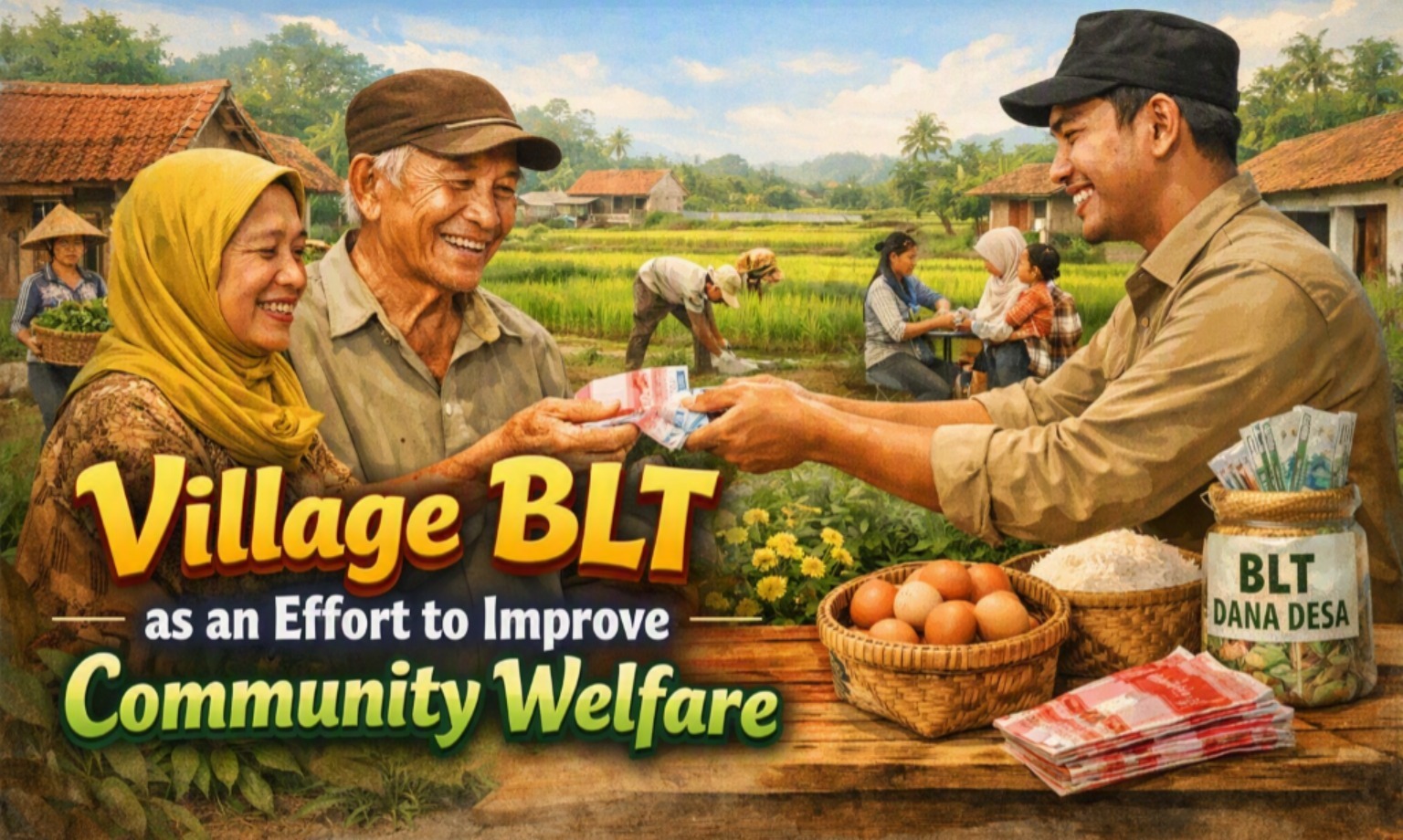
Village BLT, or Village Direct Cash Assistance, is one of the social assistance programs designed to support vulnerable communities at the village level. The program provides direct financial assistance to eligible residents who face economic difficulties. Through this support, households can meet essential needs such as food, health expenses, education, and other daily necessities. Village BLT is therefore not only about providing money, but also about helping families maintain their basic living standards. When implemented properly, Village BLT can become an important part of efforts to improve community welfare.
WHAT IS VILLAGE BLT?
Village BLT is a form of cash assistance funded through the Village Fund and intended for eligible village residents based on applicable government provisions. Its implementation is connected to village-level poverty reduction and social protection efforts. The recipients are determined through a process that considers the conditions and needs of residents. Because village communities have different economic situations, recipient identification needs to be carried out carefully and transparently. This helps ensure that assistance reaches people who genuinely need support.
Village BLT should not be viewed as a permanent source of income for recipients. Instead, the assistance is intended to help vulnerable households deal with economic pressure and maintain their ability to meet basic needs. The implementation also requires coordination between the village government and community institutions. Accurate administrative data and community participation are important to reduce the risk of mistargeting. In this way, Village BLT can function more effectively as a social protection instrument.
HOW VILLAGE BLT CAN IMPROVE COMMUNITY WELFARE?
The most direct benefit of Village BLT is helping eligible households fulfill essential daily needs. Financial assistance can provide additional room in a household budget when income is limited or unstable. Families may use the support according to their immediate priorities, such as purchasing food, paying for transportation, or meeting education-related expenses. This assistance can reduce some of the financial pressure experienced by vulnerable households. As a result, families may have a better opportunity to maintain a more stable standard of living.
Village BLT can also contribute to local economic activity when recipients spend the assistance on goods and services within their communities. Money circulating among local shops, food sellers, and other small businesses can indirectly support village economic activity. However, the impact depends on the amount of assistance, household needs, and local economic conditions. For this reason, Village BLT works best when combined with other programs that strengthen household income and economic independence. Long-term welfare improvement requires more than cash assistance alone.
IMPORTANCE OF ACCURATE VILLAGE BLT RECIPIENT DATA
Accurate data is a fundamental part of effective Village BLT distribution. Village officials need to understand the actual economic conditions of residents so that assistance can be targeted appropriately. Data verification can help identify changes in household circumstances, including changes in income, employment, family composition, or other relevant conditions. Community discussions and field verification can also provide useful information when administrative records do not fully reflect current conditions. Regular data updates are therefore important to maintain fairness in the distribution process.
Transparent recipient selection can also strengthen public trust in village government. Residents are more likely to understand and accept the program when the selection process is clear and based on objective considerations. Complaints and differences in community perceptions should be handled through appropriate village mechanisms rather than ignored. Good administration also helps prevent duplication, outdated information, and potential errors in recipient lists. With reliable data and transparent procedures, Village BLT can be distributed more fairly.
CHALLENGES IN VILLAGE BLT IMPLEMENTATION
Although Village BLT provides important support, its implementation can face several challenges. One challenge is mistargeting, which may occur when available data does not accurately describe the current condition of a household. Another challenge is ensuring that information about eligibility, distribution, and procedures is communicated clearly to the community. Limited administrative capacity can also make data collection and verification more difficult in some villages. These issues can reduce the effectiveness of assistance if they are not addressed properly.
Another important challenge is ensuring that Village BLT supports long-term welfare improvement rather than creating excessive dependence on assistance. Cash support can help families respond to immediate financial difficulties, but it does not automatically increase their income or employment opportunities. Therefore, assistance should ideally be complemented by programs related to skills development, productive economic activities, employment, health, and education. Such integration can help vulnerable households gradually become more economically resilient. The ultimate goal is to ensure that social assistance becomes part of a broader strategy for sustainable community development.
VILLAGE BLT AND SUSTAINABLE COMMUNITY WELFARE
Village BLT can play a meaningful role in protecting vulnerable households from worsening economic conditions. By helping residents meet basic needs, the program can provide short-term financial relief during difficult periods. Its benefits become stronger when distribution is based on accurate data, transparent procedures, and proper monitoring. Village governments also need to evaluate implementation and respond to problems identified by the community. These steps can improve the effectiveness and fairness of the program.
However, community welfare cannot depend on Village BLT alone. Sustainable improvement requires opportunities for people to earn stable incomes, access education and health services, and participate in productive economic activities. Village governments can support these broader goals by connecting social assistance with appropriate village development programs. Community participation is equally important because residents understand local conditions and can contribute to identifying real needs. When these efforts work together, Village BLT can serve as a useful component of a wider strategy to build stronger and more resilient communities.
CONCLUSION
Village BLT is an important form of social protection that can help eligible vulnerable households cope with economic difficulties. Its contribution to community welfare can be seen through support for basic household needs and potential stimulation of local economic activity. Nevertheless, its effectiveness depends heavily on accurate data, transparent recipient selection, proper distribution, and continuous evaluation. Village BLT should complement, rather than replace, broader efforts to improve income, employment, education, health, and economic independence. With responsible implementation, Village BLT can support immediate household needs while contributing to wider efforts to improve community welfare.
About the Author
Gusti Ayu Tita P
Author — STEKOM University
An active author focused on academic issues, educational technology, and human resource development in the campus environment.