
Village BLT Eligibility Requirements Every Community Should Know
Gusti Ayu Tita P
9 September 2026
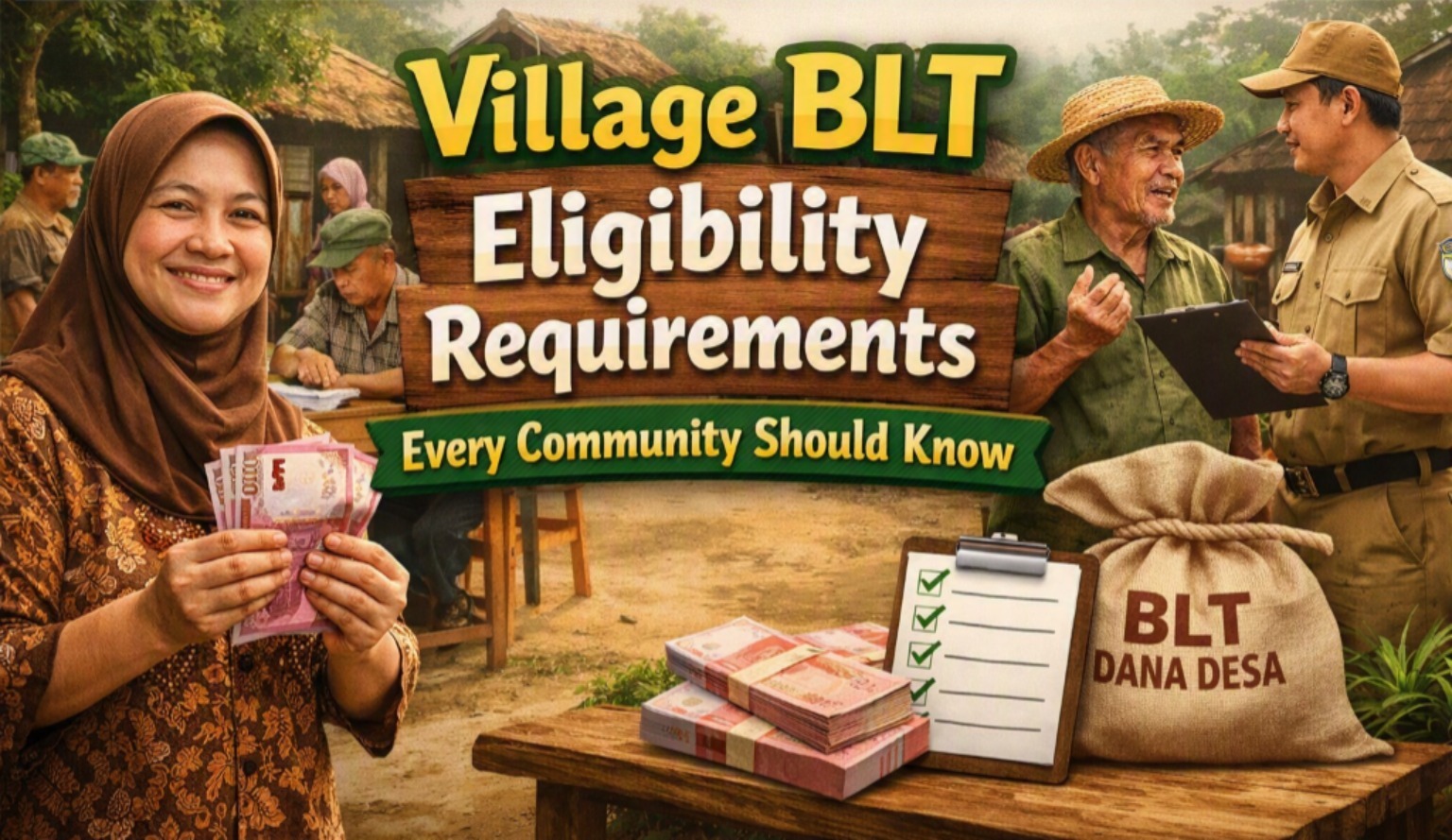
Village BLT or Bantuan Langsung Tunai Desa is a form of direct cash assistance funded through the Village Fund and intended to help families facing extreme poverty. In 2026, the use of Village Funds for BLT focuses on addressing extreme poverty, with government data serving as a reference for identifying potential beneficiaries. The program is designed to provide support to families whose economic and social conditions make them particularly vulnerable. Understanding the eligibility requirements is important so communities can recognize who may qualify and how beneficiaries are selected.
WHAT IS VILLAGE BLT AND WHY IS IT PROVIDED?
Village BLT is direct financial assistance from the Village Fund that is given to beneficiary families after the list is agreed upon through a Village Deliberation. Its main purpose in 2026 is to support efforts to address extreme poverty at the village level. The assistance is therefore not automatically available to every low income household. Instead, the village government must identify families according to applicable criteria and official data.
The assistance can help beneficiary families meet essential daily needs during difficult economic conditions. The regulation sets the maximum amount at Rp300,000 per month per beneficiary family. Payments may be made for a maximum of three months at once, depending on the applicable implementation. This means the actual payment process should follow the beneficiary determination and village financial procedures.
MAIN VILLAGE BLT ELIGIBILITY REQUIREMENTS
The main priority is given to extremely poor families who live in the relevant village and are identified using government data. Identification is based on a ranking that considers relevant social and economic aspects. The purpose of this approach is to direct assistance toward families with the greatest need. A family’s inclusion in the government data is therefore an important reference during beneficiary selection.
If government data on poor families is not available, the village head may determine potential beneficiaries using several specific criteria. These include families that have lost their livelihood, families with members who have chronic or long term illnesses or disabilities, and families that do not receive the Family Hope Program social assistance. Other eligible categories include households consisting of a single elderly member and poor families headed by a woman.
HOW VILLAGE BLT BENEFICIARIES ARE SELECTED?
The selection process is intended to involve the community rather than being decided individually by one official. Potential beneficiaries are discussed and agreed upon through a Village Deliberation, with priority given to families experiencing extreme poverty. The final list is then established through a Village Head Decision. This process is intended to make beneficiary selection more transparent and accountable.
When government data is unavailable, village officials can conduct direct data collection beginning at the neighborhood and hamlet levels. The village government gathers information about residents, including aspects related to age, welfare, education, health, and disability. The collected information is then verified, including verification of the prospective beneficiary's population status. The verified list is presented during the Village Deliberation before the final decision is made.
IMPORTANT DOCUMENTS AND DATA VERIFICATION
Accurate population information is important when determining Village BLT eligibility. The village government verifies the population status of prospective beneficiaries using village administrative data or information from the local population and civil registration office. A beneficiary decision should contain important information such as the person's name, population identification number, address, employment group, number of beneficiary families, and beneficiary category. These requirements help ensure that assistance is directed to the correct households.
If a prospective beneficiary does not have a Population Identification Number, the village government may issue a domicile certificate under the prescribed mechanism. The village government can also facilitate the person in obtaining proper population and civil registration services. This means administrative limitations should not automatically prevent a potentially eligible family from being properly recorded. Nevertheless, the beneficiary still needs to satisfy the applicable eligibility criteria and pass the required verification process.
WHAT COMMUNITIES SHOULD KNOW ABOUT THE PROCESS?
Community members should understand that being economically vulnerable does not automatically guarantee receipt of Village BLT. Beneficiary selection must follow the applicable criteria, government data references, verification procedures, and Village Deliberation. Communities also have a role in ensuring that the information used to identify poor and extremely poor families is accurate. Active community participation can help reduce errors and improve the fairness of the program.
The village government is also required to make information about Village Fund use accessible to the community. Under the 2026 regulation, Village Fund priorities must be published through village information systems or other accessible public media. Communities can therefore pay attention to village announcements and information about the implementation of Village Fund programs. Oversight is also carried out by local government internal auditors, the Village Consultative Body, and the village community.
WHY UNDERSTANDING BLT ELIGIBILITY MATTERS?
Understanding the BLT Eligibility requirements helps residents avoid misinformation about who can receive assistance. It also makes it easier for communities to identify families that may require attention during the data collection process. Clear information can prevent assumptions that Village BLT is distributed simply on the basis of personal requests or informal recommendations. Instead, eligibility is connected to poverty conditions, official data, verification, and community deliberation.
For village governments, accurate beneficiary data is equally important because it supports transparent and accountable implementation. If a beneficiary dies or no longer meets the required criteria, the village can replace that beneficiary through a special Village Deliberation and a new Village Head Decision. Any change must continue to follow the established criteria.
KESIMPULAN
Residents who believe their family may qualify should first check whether their household information has been properly recorded by the village government. They should also ensure that their population data and address information are accurate. If their circumstances involve loss of livelihood, serious illness, disability, being a single elderly household, or being a poor female headed household, they should make sure these conditions are reflected in the village data when relevant. The final determination, however, remains subject to the official selection and deliberation process.
The key point is that Village BLT is targeted assistance, not an automatic payment for every village resident. For 2026, the program prioritizes extremely poor families living in the relevant village and uses government data as an important reference. Where such data is unavailable, the regulation provides alternative criteria and a village based data collection and verification process. Understanding these requirements can help communities participate responsibly and ensure that assistance reaches families who need it most.
About the Author
Gusti Ayu Tita P
Author — STEKOM University
An active author focused on academic issues, educational technology, and human resource development in the campus environment.















