Village BLT Recipient Data and the Registration Process
Gusti Ayu Tita P
9 September 2026
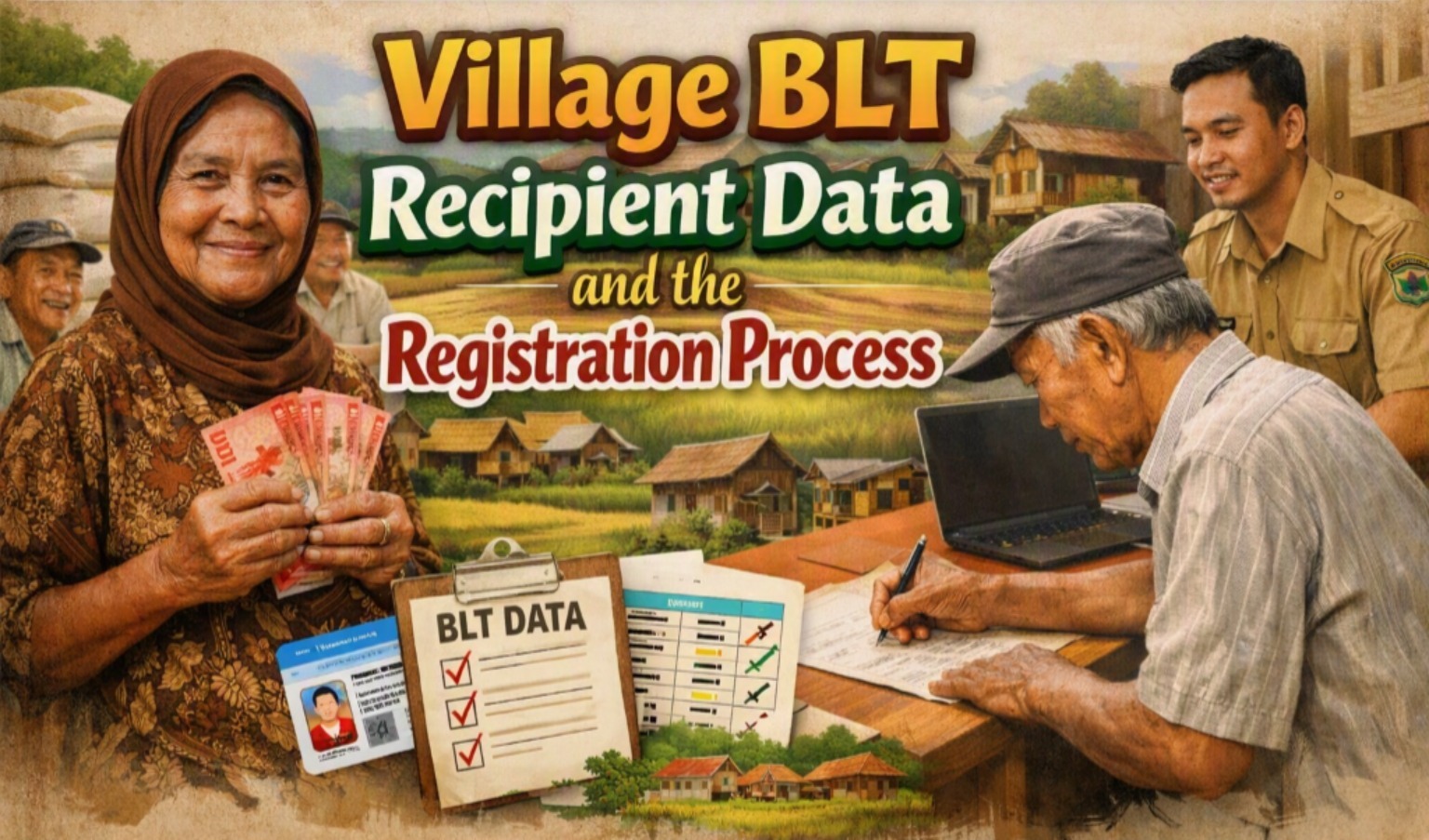
Village BLT or Bantuan Langsung Tunai Desa is a form of direct cash assistance funded through the Village Fund to help families facing serious economic difficulties. In 2026, addressing extreme poverty through Village BLT remains one of the priority uses of Village Fund resources. The program is intended to help eligible families maintain their basic needs and reduce financial pressure. The process of determining recipients is important because assistance must be directed to families who meet the applicable requirements. For this reason, recipient data, verification, and village-level decision making play an important role in the distribution process.
WHAT IS VILLAGE BLT?
Village BLT is a direct cash assistance program managed at the village level using funds allocated through the Village Fund. Its main focus in 2026 is extreme poverty reduction, with the government data serving as an important reference for identifying potential recipients. The assistance is provided to families classified as eligible recipients after going through the required village decision-making process. The amount can be up to Rp300,000 per month per recipient family, and payments may be made for a maximum of three months at once. Therefore, the program is not simply an automatic payment to every low-income household, but a targeted social protection measure.
The implementation of Village BLT is connected to the annual planning and budgeting of the village government. The village must include the relevant allocation in its village budget when the program is implemented. The recipient list is discussed and agreed upon through a Village Deliberation or Musyawarah Desa. After the agreement, the list is formally established through a decision of the Village Head. This mechanism is designed to make the selection more transparent and responsive to actual conditions in the community.
WHO CAN BECOME A VILLAGE BLT RECIPIENT?
The main priority for Village BLT recipients is families experiencing extreme poverty who live in the relevant village. Government data is used as a reference in identifying families who may qualify for the assistance. Where available, the village can prioritize families included in Desil 1 of the government's data for targeting the elimination of extreme poverty. If suitable families in Desil 1 are not available, families in Desil 2 to Desil 4 may be considered according to the applicable provisions. This approach places greater emphasis on the accuracy of poverty data and the actual economic condition of families.
If the necessary government data is not available, the village may identify potential recipients using specific social and economic conditions. These can include families that have lost their source of income, families with members who have chronic illnesses or disabilities, and single elderly households. Poor families headed by women may also be considered under the relevant criteria. A household that receives other social assistance is not automatically excluded under every circumstance in the current framework, so eligibility must be assessed according to the applicable 2026 rules and the family's position in government data. The final decision remains subject to the village deliberation and formal determination process.
HOW VILLAGE BLT RECIPIENT DATA IS COLLECTED?
Recipient data collection generally begins with information available to the village government and relevant government databases. The purpose is to identify households whose economic and social conditions correspond to the program's target. Village officials can review available information and compare it with conditions observed in the community. This process is important because household circumstances can change over time due to unemployment, illness, loss of income, or other factors. Accurate information helps reduce the risk of assistance being given to households that are no longer eligible.
The data should then be examined and discussed before the final recipient list is established. Community information can be important when government data does not fully describe a family's current situation. However, local knowledge should not be used carelessly or without a proper decision-making process. Verification and validation help determine whether the proposed household actually meets the relevant criteria. The resulting list is then discussed in the Village Deliberation before being formally established by the Village Head.
HOW TO REGISTER FOR VILLAGE BLT?
There is generally no single national online registration form that automatically guarantees a person will receive Village BLT. The process is handled through the village government, because recipient determination is made at the village level. Residents who believe they meet the requirements should contact their village office or the officials responsible for social assistance data. They should explain their household circumstances clearly and ask whether their information has been recorded or needs to be updated. The village can then review the information according to the applicable criteria and government data.
Residents should prepare accurate basic information and supporting documents when requested by village officials. These may include identity and household information, although the exact documents can differ depending on local administrative procedures. Providing false information can create problems during verification and may affect the accuracy of the recipient database. Residents should also avoid paying unofficial fees to individuals who promise to guarantee BLT approval. Most importantly, registration or reporting a household's condition does not mean that assistance is automatically approved because the final list must follow the official determination process.
VILLAGE DELIBERATION AND RECIPIENT DETERMINATION
After potential recipients have been identified and reviewed, the proposed list is brought into the Village Deliberation process. This meeting provides a formal mechanism for discussing and agreeing on the families that should receive Village BLT. The discussion should consider government data and the relevant eligibility conditions rather than personal preference. Community participation can also help identify important changes in household circumstances. Once an agreement is reached, the recipient list is established through a Village Head Decision accompanied by the required documentation.
This stage is important because the recipient list is not simply based on a resident's personal request. The village government has to follow the applicable regulations and budget provisions. The formal decision also creates an administrative basis for distributing the assistance. If a recipient's circumstances change and they no longer meet the requirements, the village may need to review and update the recipient data according to the applicable rules. This helps keep the program targeted toward families who genuinely need support.
WHAT HAPPENS AFTER THE DATA IS APPROVED?
Once the recipient list has been formally established, the village government can proceed with the distribution of Village BLT according to the approved budget and payment mechanism. The assistance may be delivered in cash or through a non-cash method, depending on the mechanism used. In 2026, payments may cover a maximum of three months at one time. The maximum assistance is Rp300,000 per month per recipient family, subject to the amount and period approved under the village's implementation.
Recipients should keep any payment records or other evidence provided during distribution. They should also check the amount received and report discrepancies through the appropriate village or local government channel. Village officials have responsibilities for administration, reporting, and accountability in the use of Village Fund resources. The Ministry of Villages also provides public information systems that display Village Fund and Village BLT data, supporting greater transparency.
HOW TO CHECK VILLAGE BLT RECIPIENT INFORMATION?
Residents can begin by contacting their village office to ask about the current recipient list and the status of their household data. If the village provides a public announcement or information board, residents can also check information published through official village channels. Some government systems publish Village Fund and Village BLT information at the regional or national level. However, public databases may not always provide every personal detail of individual recipients because data access and privacy requirements must be considered.
When checking information, residents should use official government sources rather than social media posts or messages from unknown individuals. A person should not assume that they are eligible merely because their name appears on an unofficial list. If information appears incorrect, the resident should ask the village government about the procedure for correcting or updating the data. This approach helps prevent misinformation and reduces the possibility of fraud. It also gives village officials an opportunity to correct administrative errors when appropriate.
IMPORTANT THINGS TO REMEMBER DURING REGISTRATION
The most important point is that Village BLT is targeted assistance, so not every resident is automatically entitled to receive it. Eligibility depends on the applicable criteria, available government data, village deliberation, and the official recipient determination. Residents should provide truthful information about their household's economic and social circumstances. They should also respond to requests for verification from authorized village officials when necessary. Keeping personal and household information updated can make the verification process more accurate.
Residents should be careful about people who request money in exchange for promising Village BLT approval. Official registration should follow the procedures established by the village government, and residents should ask for clear information about any administrative requirements. If a household believes it qualifies but is not included, it can ask the village office for an explanation and request that its data be reviewed. The final result must still follow the official rules and available Village Fund allocation. This makes the process more accountable and helps ensure that assistance reaches families who need it most.
WHY ACCURATE RECIPIENT DATA MATTERS?
Accurate recipient data is essential for making Village BLT more effective. Incorrect data can cause assistance to be received by households that do not meet the intended criteria while other vulnerable families may be overlooked. Regular verification helps the village respond to changes in household conditions. It can also support better planning and reduce disputes among residents. Reliable data therefore benefits both the recipients and the village administration.
The 2026 policy places greater emphasis on using government data as a reference and determining recipients through village deliberation. This combination allows the program to use standardized poverty information while still providing room to consider relevant conditions at the village level. Transparency in the process is equally important so residents understand how recipients are identified. When data collection, verification, deliberation, and distribution are carried out properly, Village BLT can become a more targeted form of social protection for vulnerable families.
CONCLUSION
Village BLT recipient data and registration are closely connected because accurate information is the foundation for targeted assistance. Residents who believe they meet the requirements should communicate with their village government and provide truthful household information. The village then reviews the information using relevant government data and applicable criteria. Potential recipients are discussed through the Village Deliberation before the final list is established by the Village Head. Understanding this process can help residents avoid misinformation and follow the correct procedure when seeking Village BLT assistance.
For 2026, Village BLT remains part of the priority use of the Village Fund for addressing extreme poverty. The assistance can be provided at a maximum of Rp300,000 per month per recipient family, with payments allowed for up to three months at once. Because implementation depends on village budgeting and formal recipient determination, residents should check information directly with their village government. Accurate data, transparent verification, and proper distribution are essential to ensure that the program reaches the families who genuinely need support.
About the Author
Gusti Ayu Tita P
Author — STEKOM University
An active author focused on academic issues, educational technology, and human resource development in the campus environment.